
Insightful and Profound
, Since 1900
Our Services at a Glance
Whether it’s site investigations, well construction, or deep foundations—at THADE GERDES, you’ll find the drilling services you need for your construction project
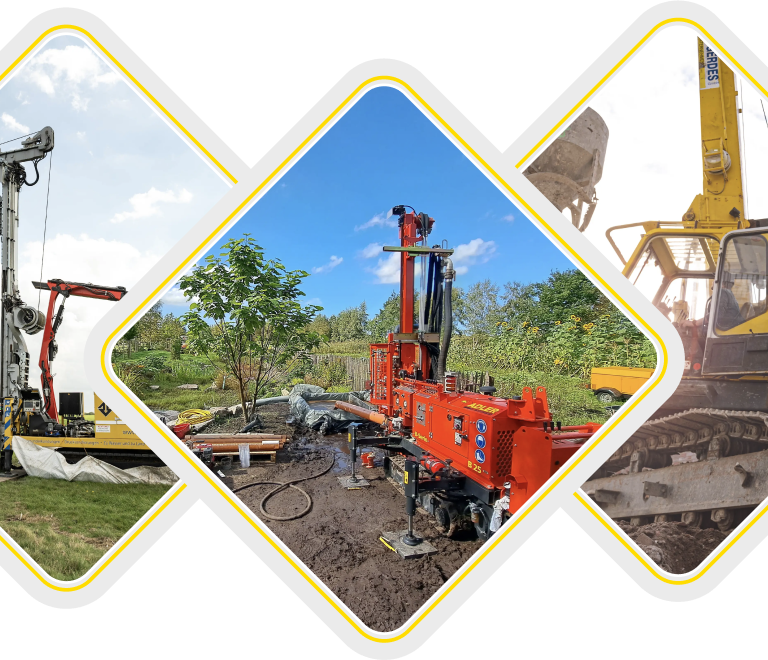

Site Investigations
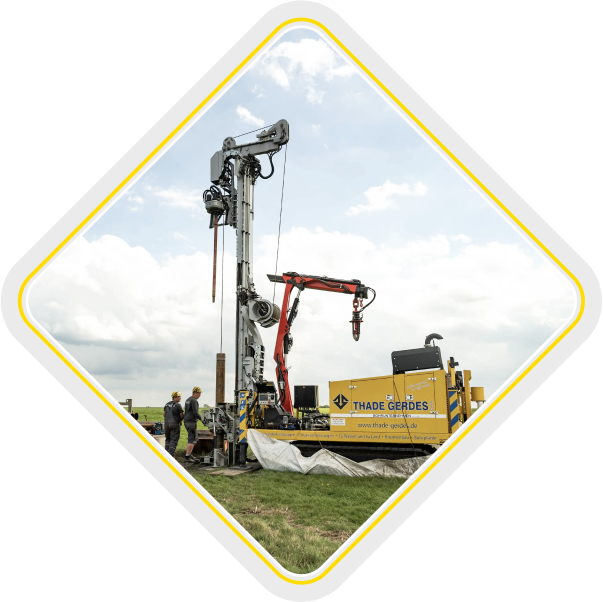
A professional site investigation is essential to ensure that your structure stands securely.
At THADE GERDES, we drill from both land and water!
THADE GERDES offers you:
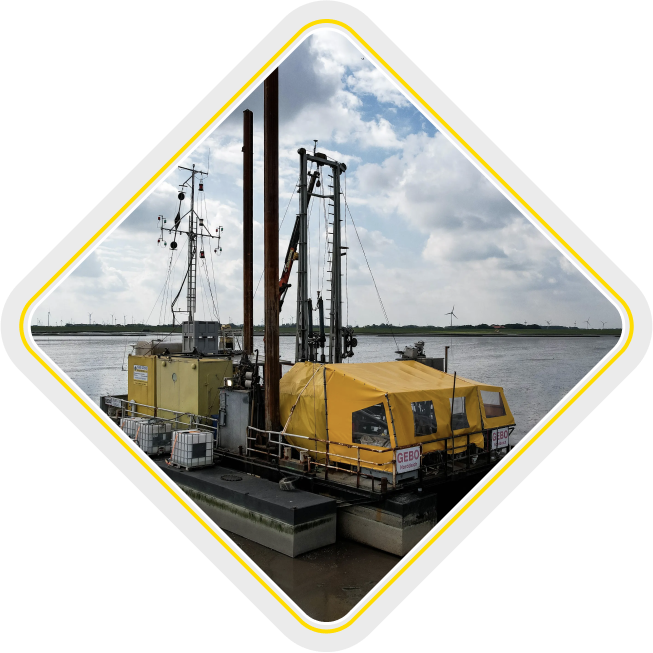
- Sampling and groundwater level measurement in accordance with DIN EN ISO 22475; groundwater monitoring using data loggers
- Soil exploration boreholes in soils up to soil class 5, ranging from 219 to 419 mm
- Soil sampling with and without continuous core extraction
- Documentation: We will provide you with your results digitally or on paper. We offer you the option to receive stratigraphic charts, borehole profiles, and, if applicable, excavation sketches in various software formats in accordance with DIN 4022, DIN EN ISO 14688-1, and DIN 4023, and, of course, in the SEP3 data exchange format.
The electrical cone penetration test (CPT-E), also known as pressure probing, is a minimally invasive, indirect soil investigation method. In this test, a probe is hydraulically driven into the ground. Soil parameters such as tip resistance and local skin friction are recorded electronically and plotted as a curve.
Depending on the requirements, it is also possible to conduct pore water pressure measurements (CPT-U), dissipation tests, wing shear tests (FVT), and surveys of the subsoil for metallic objects (explosive ordnance surveys, CPT-M).
Upon request, we can provide you with the results of the pressure soundings in ASCII format.
The data collected by a CPT is an important basis for determining foundation designs for your structure.
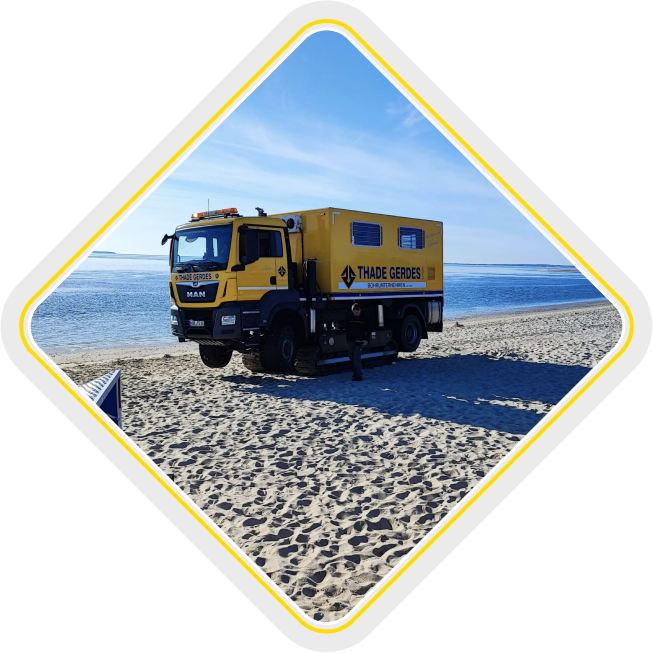
We offer the following procedures:
- CPT-E Tip-Pressure Tests (Measurement of tip resistance and skin friction, including computational determination of the friction ratio)
- CPT-U Pore Water Pressure Measurements (In pore water pressure measurements, in addition to the peak pressure and skin friction, the pressure of the water bound between soil particles is determined with respect to depth.)
- CPT-M magnetometer surveys (This method measures changes in the natural magnetic field in the ground. This allows for the detection of magnetic metal objects, such as unexploded ordnance from past eras, and the determination of their location.)
- Field Wing Tests (FVT) (Electronic field wing tests are used to determine the shear strength of water-saturated, undrained, cohesive soils.)

To ensure we can offer our customers comprehensive site investigations, we outsource some of the work to specialized firms with whom we have enjoyed a trusting and successful working relationship for many years. This way, you receive your site investigation as a one-stop service: We handle all the on-site logistics for you!
THADE GERDES takes over:
For you, together with our long-standing partners and colleagues:
Small-Diameter Drilling / Borehole Surveys
Small-diameter drilling / borehole surveys for
stratigraphic mapping near the surface:
→ Drill diameters from 32 to 80 mm
→ Drilling depths up to 20 m
Dinamometer Penetration Tests (DPx according to DIN EN ISO 22476-2)
→ Light (DPL), medium (DPM), and heavy (DPH) dynamic penetration tests
→ Penetration depth up to 20 m
Soil Investigation Reports and Foundation Recommendations
At your request, we can have the results of the site investigation, measurement data, stratigraphic profiles, and soil and groundwater samples analyzed and interpreted for you. These analyses are conducted by independent specialists to provide you with the best possible and most cost-effective recommendations.
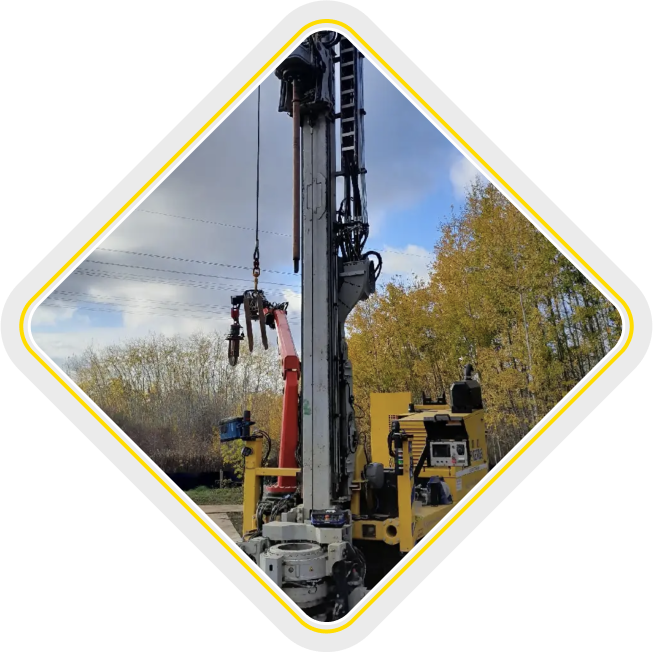
Well Construction
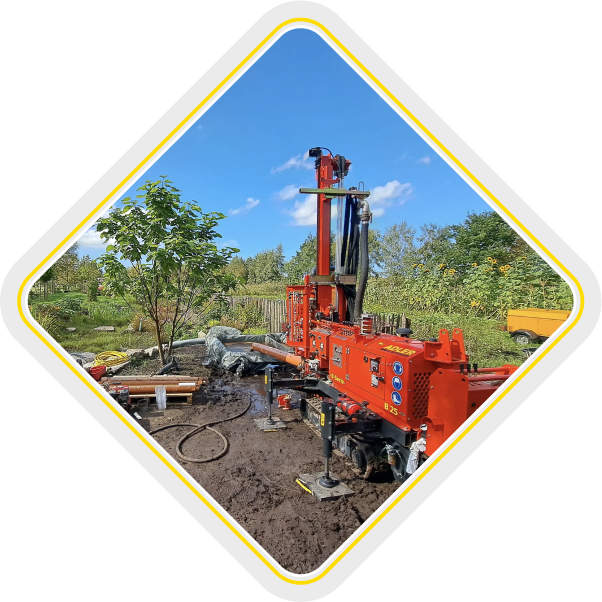
Groundwater is our most valuable resource. We use the latest drilling techniques and draw on our many years of experience to ensure that you can use your well water responsibly. Our work is certified in accordance with the DVGW W120-1 guideline.
When constructing wells, we adapt our methods to local geology and regulations. We use our own equipment for drilling.
With our experienced well drillers, we offer:
Groundwater monitoring stations

Fire hydrant
Garden fountains
→ We can also equip the wells with suitable pumps.
→ We offer you the option of installing data loggers at the groundwater monitoring stations. These devices transmit all essential data via the telephone network to the computer of your choice. This gives you access to the current status at any time without having to travel to the site.
Deep Foundations
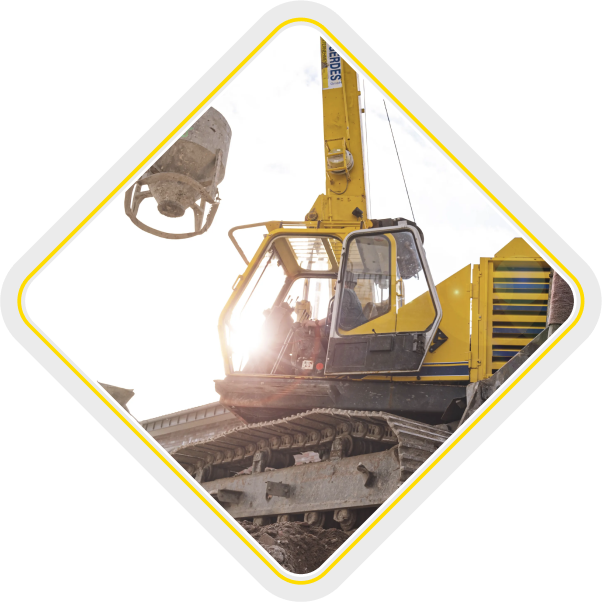
To ensure a secure foundation, we offer a range of pile foundation methods.
We carry out all deep foundation work cost-effectively using our own equipment in accordance with DIN EN ISO 1536 and 12699.
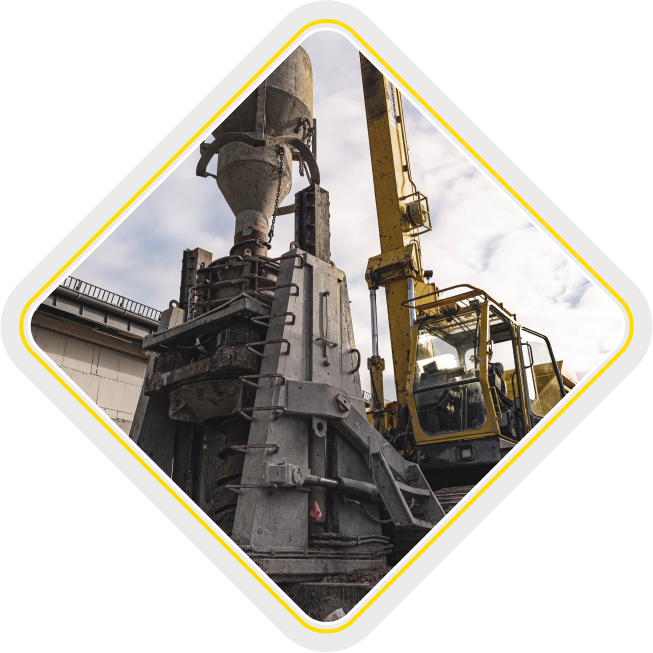
Generally, depending on the project, we offer:
Displacement Screw Piles
Concrete Columns for Residential Buildings
Fixed Points
Suitable for:
- Construction projects that require vibration-free pile installation.
- Sites with sensitive soil conditions, since the soil is primarily displaced.
- Construction projects with low loads, to save costs.
- Residential construction projects that require a vibration-free method.
- Projects designed to avoid costly soil replacement.
- Projects on soft ground that require stable reference points.
- Projects that require precise measurements of position and elevation.
- Projects that are highly susceptible to settlement. For example, this method is ideal for tunnels, locks, and bridges.
Advantages:
- Less soil disturbance due to displacement rather than removal.
- Greater load-bearing capacity due to continuous reinforcement against bending stresses and other loads.
- Easily adaptable to various ground conditions and construction requirements, as no pre-assembly is necessary.
- Construction of foundation piles as geothermal piles. These utilize geothermal energy and contribute to the building's sustainable energy concept.
- A vibration-free method protects adjacent buildings that are not built on deep foundations.
- Low soil displacement due to the full-displacement system.
- Each column supports a load of approximately 200 kN (equivalent to 20 metric tons).
- Deep drilling is possible up to 6 m, depending on the soil.
- Safe and reliable establishment of anchor points by reaching load-bearing soil layers.
- Flexibility achieved by using two drilling methods depending on soil conditions and project requirements.
- Use of drilling equipment that enables precise placement and drilling depth.
- A preliminary soil investigation to determine the appropriate method and equipment.
- Use of the dry drilling method or the auger drilling method, depending on the specific soil and project conditions.
- Once the required depth has been reached, the borehole is lined in accordance with the technical and structural specifications.
Our Approach:
- Inserting the drill pipe with a auger into the ground to construct a pile.
- The watertight, sealed base plate prevents dirt and water from entering the drill pipe.
- Installation of continuous reinforcement from the base of the pile to its head. This allows tensile forces and bending moments—even during construction—to be absorbed without causing damage.
- Concrete placement after installing the rebar cage and removing the drill pipe, while leaving the temporary base plate in the ground.
- A steel pipe (30 cm in diameter) is drilled into the ground and sealed watertight at the bottom with a permanent cap.
- Once the desired depth has been reached, the pipe is filled with concrete and then pulled out.
- Installation of a head reinforcement bar to connect to strip footings.
Suitable for:
- Construction projects that require vibration-free pile installation.
- Sites with sensitive soil conditions, since the soil is primarily displaced.
Advantages:
- Less soil disturbance due to displacement rather than removal.
- Greater load-bearing capacity due to continuous reinforcement against bending stresses and other loads.
- Easily adaptable to various ground conditions and construction requirements, as no pre-assembly is necessary.
- Construction of foundation piles as geothermal piles. These utilize geothermal energy and contribute to the building's sustainable energy concept.
Our Approach:
- Inserting the drill pipe with a auger into the ground to construct a pile.
- The watertight, sealed base plate prevents dirt and water from entering the drill pipe.
- Installation of continuous reinforcement from the base of the pile to its head. This allows tensile forces and bending moments—even during construction—to be absorbed without causing damage.
- Concrete placement after installing the rebar cage and removing the drill pipe, while leaving the temporary base plate in the ground.
Suitable for:
- Construction projects with low loads, to save costs.
- Residential construction projects that require a vibration-free method.
- Projects designed to avoid costly soil replacement.
Advantages:
- A vibration-free method protects adjacent buildings that are not built on deep foundations.
- Low soil displacement due to the full-displacement system.
- Each column supports a load of approximately 200 kN (equivalent to 20 metric tons).
- Deep drilling is possible up to 6 m, depending on the soil.
Our Approach:
- A steel pipe (30 cm in diameter) is drilled into the ground and sealed watertight at the bottom with a permanent cap.
- Once the desired depth has been reached, the pipe is filled with concrete and then pulled out.
- Installation of a head reinforcement bar to connect to strip footings.
Suitable for:
- Projects on soft ground that require stable reference points.
- Projects that require precise measurements of position and elevation.
- Projects that are highly susceptible to settlement. For example, this method is ideal for tunnels, locks, and bridges.
Advantages:
- Safe and reliable establishment of anchor points by reaching load-bearing soil layers.
- Flexibility achieved by using two drilling methods depending on soil conditions and project requirements.
- Use of drilling equipment that enables precise placement and drilling depth.
- A preliminary soil investigation to determine the appropriate method and equipment.
- Use of the dry drilling method or the auger drilling method, depending on the specific soil and project conditions.
- Once the required depth has been reached, the borehole is lined in accordance with the technical and structural specifications.