

Few things worry builders more than the fear of unexpected costs. If the soil isn’t stable, there’s a risk of settlement, cracks, and costly repairs. A site investigation provides peace of mind by determining the actual bearing capacity and identifying risks—such as groundwater, frost-prone areas, or soft soil layers—early on. This gives you clarity, allows you to choose the appropriate foundation, and enables you to plan your construction project reliably—both technically and financially—from the very beginning.
In this blog post, you’ll learn what a site investigation is, how it’s conducted, and what happens if you skip it. We’ll also provide an overview of costs, the legal framework, and the most important reasons why an expert report is a good idea. This will give you a solid foundation for making informed decisions about your construction project.
Table of Contents
Key Points About the Costs of a Site Investigation:
A site investigation determines whether the soil on your property is suitable for your construction project. It analyzes the soil’s bearing capacity, soil conditions, and risks such as groundwater or soil contamination. The results form the basis for the structural analysis and the selection of the appropriate foundation.
For a single-family home, the cost is typically around €2,500, but can rise to as much as €5,000 if additional inspections are required. Without an inspection, there is a risk of significant follow-up costs due to settlement, cracks, or moisture damage, which can easily reach five- or six-figure amounts.
Although there is no legal requirement, banks and building authorities often require an expert assessment. A site investigation thus provides builders with planning certainty, budget clarity, and long-term preservation of the property’s value.
What is a site investigation?
During a site investigation, geotechnical engineers, geologists, and experts examine and evaluate whether the soil is suitable for your construction project. This involves analyzing the soil’s bearing capacity, structure, and potential risks such as groundwater or contamination. The results form the basis for selecting the right foundation and accurately calculating the structural integrity.
Definition of Terms
- Site Investigation: A term referring to all technical tests of the soil, including drilling and laboratory analyses.
- Soil Survey: An easy-to-understand summary of the results, prepared specifically for building owners. The term is often used interchangeably with “site investigation.”
- Site Investigation Report: A detailed report by the expert or geologist containing all measurement results, analyses, and specific recommendations for construction practices.
Real-world examples
- Slopes: The study determines whether slopes or embankments could slide and whether additional retaining walls need to be built.
- Groundwater: If a high water table is detected, the basement requires special waterproofing to prevent water from seeping in.
- Contaminated Sites: If the property was previously backfilled or if the soil is contaminated, the material must be disposed of. Without an investigation, such problems would only become apparent later and prove costly.
A site investigation primarily provides specific recommendations for construction practices and offers insights into the appropriate foundation technique. It also indicates whether additional work—such as retaining walls, waterproofing, or soil replacement—is necessary and what costs builders should budget for these measures.
Site Investigation: An Overview of Costs and Key Factors
The cost of a site investigation varies depending on the project and is influenced by several factors. The primary factors are the size and location of the property, the nature of the soil, and the technical complexity of the investigations.
Typical services included in the cost estimate
- Drilling on the property to extract soil samples
- On-Site Analysis of Pressure Soundings: Initial tests to determine soil type and bearing capacity
- Laboratory Tests: Detailed tests to determine load-bearing capacity, composition, and potential contamination.
- Site Investigation Report including all measurement results and practical recommendations
Factors That Affect the Price
The specific scope of work depends on how many boreholes are required, which analytical parameters need to be tested, and whether there are any special challenges. These include, among other things, soft soils, a high water table, or suspected soil contamination. In addition to the standard investigation, further tests may be advisable, such as:
- Pollutant Analyses for landfills or industrial sites
- Hydrogeological Studies for groundwater management
- Assessments of Geothermal Energy Use for planned heat pump systems
- Supplementary Structural Engineering Reports for Complex or Heavily Loaded Structures
💡 While such additional services do increase the overall cost, they provide important information that helps prevent future problems and high follow-up costs. Additional surveys are often indispensable, especially for construction projects in sensitive locations or with special requirements. They determine whether the foundation will remain stable in the long term and whether construction financing will be approved.
Specific cost example: A standard site investigation for a single-family home costs approximately €2,500. It typically includes two to three boreholes, a cone penetration test, and a written soil investigation report. If a hydrogeological survey is necessary—for example, due to a high water table—or if there is suspicion of contamination, the total cost can rise to €5,000 .
Is a soil investigation required?
From a purely legal standpoint, there is no general requirement to have a site investigation conducted. Theoretically, a builder could construct a building even without an expert report. In practice, however, this is hardly possible and extremely risky for the following reasons:
- Standards and Regulations: DIN 4020 and the respective state building codes stipulate that verified soil properties must be available to ensure the structural stability of a building. These cannot be reliably determined without a site investigation.
- Liability of Designers: Architects and structural engineers need a site investigation report to correctly calculate structural loads. If they work without this data, they risk making serious design errors and are personally liable in the event of damage.
- Mortgages and Financial Assistance: Banks and funding agencies such as KfW also frequently require a soil survey as a prerequisite for a construction loan or government funding. Without this document, a loan application may be denied.
- Building Departments and High-Risk Areas: In certain cases—such as suspected contaminated sites, sloped terrain, or groundwater issues—building departments may also require an expert assessment. For more information on the process with the building department, see the guide “Building Permits for Homeowners.”
💡 Please note: Even without a legal requirement, a site investigation is now almost always a mandatory part of new construction projects. It minimizes risks, provides planning certainty, and prevents high follow-up costs resulting from undetected soil problems.
That's why you should never skip a site investigation
Failing to conduct a site investigation can have serious consequences. Without precise knowledge of the subsoil, you are literally building in the dark. The following risks often don’t become apparent until it’s too late.
- Settlement: If the ground isn’t stable, your building will slowly settle unevenly. The consequences include cracks in the masonry, crooked doors and windows, and renovation costs in the five- to six-figure range.
- Moisture: An unexpectedly high water table can cause moisture to seep into basement walls. This leads to mold, damage, and a significant loss in property value.
- Additional Costs: If planning is lacking, foundations may need to be reinforced or dug deeper later on. This cost trap can quickly blow a budget.
A concrete example: You often don’t notice problems until the excavation is complete. If groundwater unexpectedly seeps in during this process, retrofitting the basement with a waterproofing system becomes unavoidable. The cost for this is approximately €350 per square meter. For a basement area of 100 m² , that comes to €35,000 in additional costs! These costs are incurred solely for the waterproofing to prevent further consequential damage.
Here's How a Site Investigation Is Conducted
A site investigation provides you with reliable results regarding the bearing capacity of your property in a short amount of time. All important data is collected, evaluated, and documented in a report. This forms the basis for sound structural analysis and realistic cost planning. The process consists of five steps:
1. Inquiry and Coordination
As the building owner, you hire an engineering firm or a soil consultant. During a brief preliminary meeting, the construction project, property location, and desired services are discussed.
2. Drilling
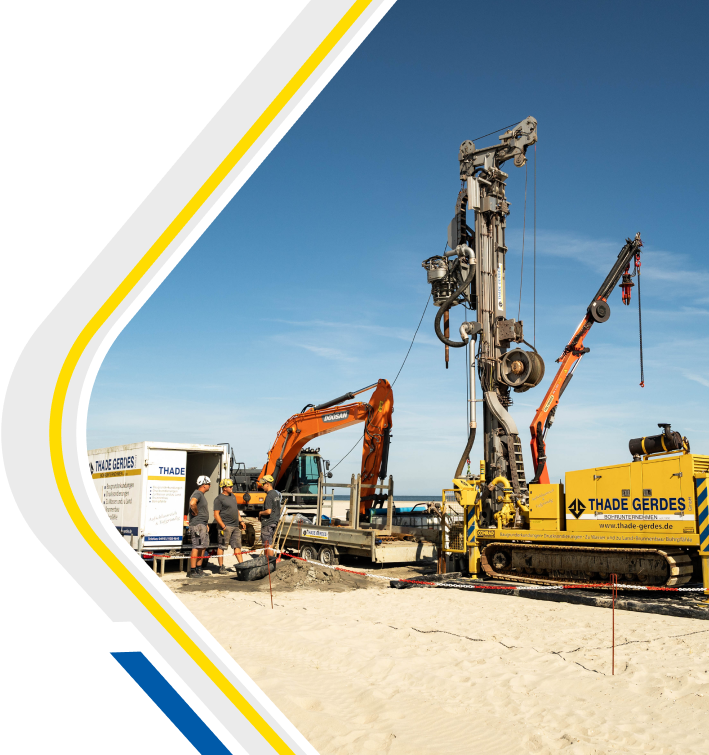
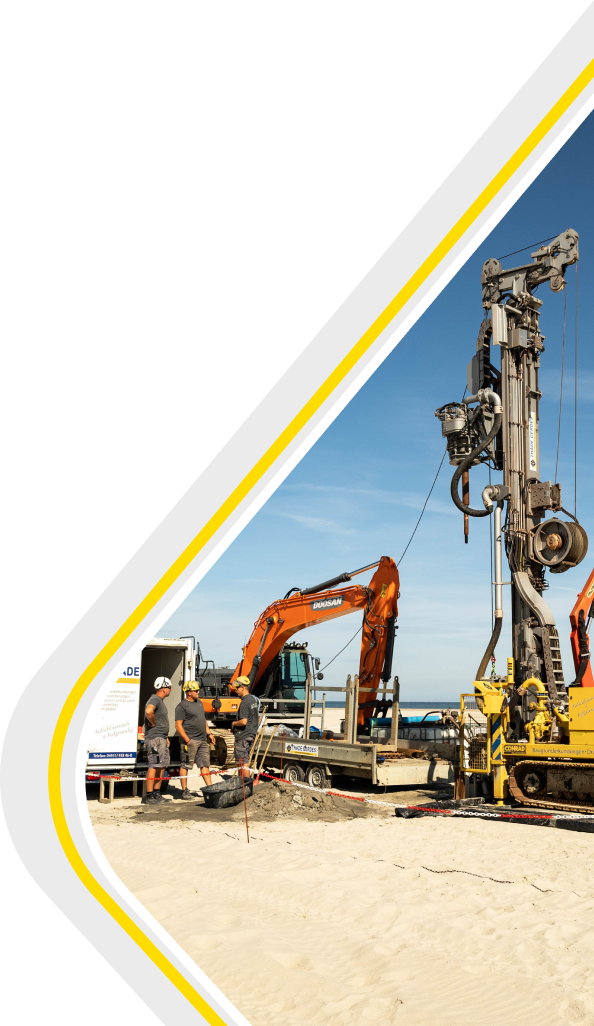
A team arrives at the construction site with small-scale equipment. Several small boreholes—formerly known as rammed-core borings—are driven about 4 to 6 meters into the ground. Soil samples are collected.
3. Soil Tests
One or more pressure soundings are performed using a special device to determine the bearing capacity of the soil.
4. Laboratory Analysis
The soil samples are analyzed in the laboratory, for example, to determine soil type, moisture content, or potential contaminants.
5. Expert Report
Based on all the data, the expert prepares the site investigation report, which includes the findings and specific recommendations for foundation design, waterproofing, or other measures.
💡 The actual drilling is usually completed within a day. Laboratory analyses and the preparation of the report typically take only a few days. Overall, the processing time is two to three weeks, depending on the project size and the scope of the investigations.
5 Reasons Why a Site Investigation Is Worth It for Your Construction Project
1. Safety for Structural Engineering
The load-bearing capacity of the soil determines the stability of the entire building. A soil investigation provides the necessary data so that structural engineers can plan reliably.
2. Protection Against Costly Damage
Settlement, cracks, or moisture damage are largely caused by a lack of knowledge about the building site. An expert assessment identifies risks early on and prevents remediation costs in the five- to six-figure range.
3. A Clear Basis for Financing Decisions
Many banks and financing institutions, such as KfW, require a soil survey. Without this, it is often not possible to obtain a construction loan.
4. Planning and Budget Certainty
The expert report indicates whether special measures such as waterproofing, retaining walls, or deep foundations are necessary. This allows for realistic cost estimates and helps avoid unpleasant surprises.
5. Increasing and Preserving Value
A house built on a solid foundation retains its value over the long term. Buyers and investors are increasingly looking for documented soil investigations as proof of quality.
Are you looking for a specialized company to conduct a site investigation? Then schedule your free, no-obligation initial consultation with Thade Gerdes, your expert in soil investigation and specialized civil engineering.
Why You Should Hire Thade Gerdes for Your Site Investigation
✔ Over 125 Years of Experience in Specialized Civil Engineering
Since 1900, we have specialized in soil investigations and civil engineering. Thanks to this knowledge, accumulated over generations, your project will also be built on a solid foundation right from the start.
✔ Low Noise Emissions
Our modern drilling techniques keep noise and vibration levels as low as possible. This is a key advantage when building in densely populated areas or sensitive environments.
✔ For construction projects on land and in water
Whether on solid ground, near the coast, or in bodies of water: We handle the entire process, from soil investigation and analysis to the safe installation of deep foundations.
✔ Quick Project Launch
From obtaining the necessary permits to resource planning: Our team coordinates every step to ensure your construction project gets off to a smooth start without delays.
✔ Clear and Fair Pricing Structure
Our quotes are transparent and clearly structured. You’ll always know exactly which services are included, and you won’t have to worry about any hidden additional costs.
✔ On-Time Completion
We work according to binding schedules. Through precise organization, we ensure that your construction project is completed reliably and on time.
✔ Responsibility for the Environment and Resources
Protecting soil and groundwater is an integral part of how we work. In accordance with DVGW W120-1 certification, we meet the highest standards for sustainable construction in the area of groundwater.
✔ Personal Support
Throughout the entire project, you’ll have a dedicated contact person who will be there to assist you and keep you regularly updated on progress.
✔ Experience with projects of all sizes
From private construction projects to large-scale public projects: We deliver professional results and reliably adhere to all agreed-upon terms and conditions.
Take advantage of these benefits at Thade Gerdes and schedule your no-obligation, free consultation!
Conclusion: A Site Investigation as the Foundation for Your Safe Construction Project
A site investigation is an essential step in construction planning. It provides critical data on the soil’s bearing capacity, composition, and risks. Only with this information can structural engineers properly design the foundation and plan for necessary measures such as waterproofing, retaining walls, or deep foundations.
The appraisal typically costs no more than €5,000. Without an inspection, however, you risk facing five- to six-figure renovation costs due to settlement, cracks, or moisture damage. A soil investigation provides you with planning certainty, helps you avoid unforeseen expenses, and lays the foundation for maintaining your property’s value over the long term.
Plan your construction project with confidence: Book your no-obligation, free consultation with Thade Gerdes today.
Frequently Asked Questions About the Cost of a Site Investigation
What is a site investigation?
A site investigation includes all technical tests used to determine whether a property is suitable for a construction project. This includes drilling, probing, and laboratory analyses. The process culminates in a site investigation report that summarizes the results and provides specific recommendations for structural engineering, foundation design, and any additional measures that may be necessary.
How much does a soil investigation cost?
The costs depend heavily on the project. For a single-family home, they are usually around €2,500, depending on the number of boreholes and laboratory analyses. If additional services such as hydrogeological surveys or contaminant analyses are required, the total cost can rise to as much as €5,000.
Is a site investigation required?
There is no general legal requirement. Nevertheless, it is almost always necessary in practice: DIN 4020 and state building codes require verified soil properties. Architects and structural engineers can hardly do their jobs properly without a soil investigation report, and banks or funding agencies require one for construction financing. In high-risk areas (e.g., those with groundwater, slopes, or suspected contaminated sites), the building authority may mandate an expert report.
Who conducts a site investigation?
Geologists, geotechnical engineers, or soil investigation experts are responsible for this work. Often, a publicly appointed geotechnical expert conducts the investigation, particularly for more complex construction projects. They work with drilling crews who take soil samples on site and perform cone penetration tests to measure bearing capacity. These samples are then analyzed in the laboratory. Finally, the expert prepares a written geotechnical report that includes all results and recommendations for action.
How long does a site investigation take?
The actual drilling usually takes only one workday. The expert typically needs a few days for laboratory analyses and evaluation. Overall, building owners can expect a processing time of two to three weeks, depending on the project size and scope of the investigation.
What happens if I don't have a soil investigation done?
Anyone who skips a survey risks incurring high follow-up costs. Unstable soil can lead to settlement, which can cause cracks in the masonry, crooked doors and windows, or even structural problems. A high water table, for example, can—without a preliminary inspection—make it necessary to retrofit the basement with waterproofing, which costs around €35,000 for a 100 m² area. The expert report, costing just a few thousand euros, can therefore save you from damages in the five- to six-figure range.

