

Deep Foundations: The Safe Construction Method for Foundations on Northern German Soils

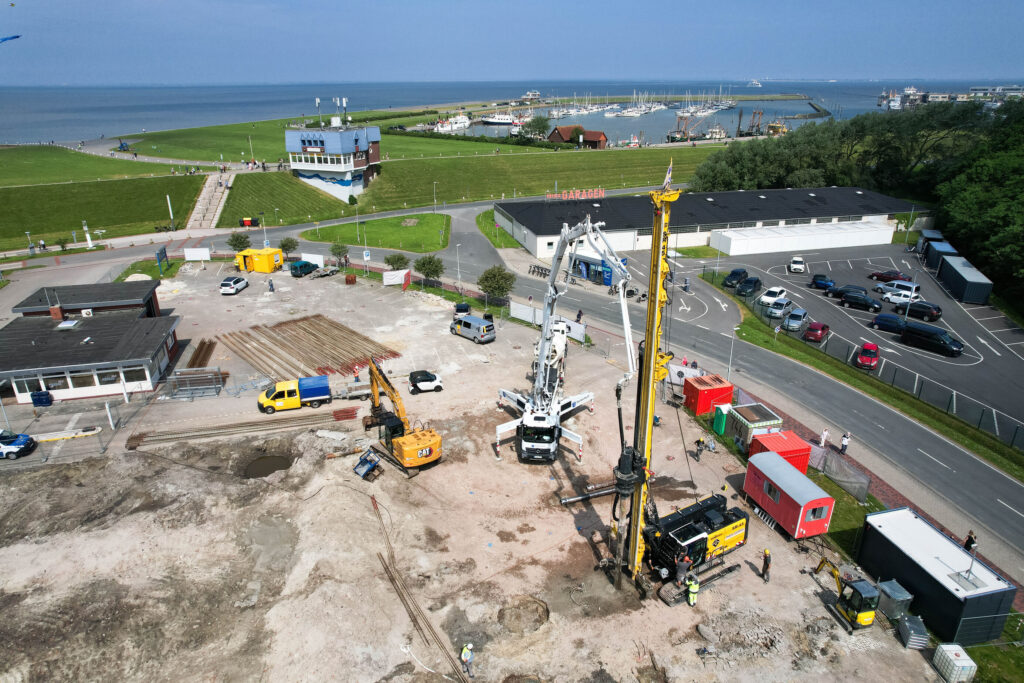
Pile Foundation for a Vehicle Fleet in a Coastal Region

A house is only as strong as its foundation, and this is precisely where the challenge begins for many construction projects in northern Germany. Between the marshlands, the coast, and the moors, the soil is often soft, damp, and has low bearing capacity. What looks idyllic can quickly become a technical hurdle for builders and architectural firms. After all, where the ground gives way, special solutions are needed to ensure that structures stand securely for the long term.

That is exactly what deep foundations do: They transfer a building’s loads deep into the ground until stable layers are reached. This ensures that the foundation remains load-bearing even if the subsoil changes or the groundwater level rises. In this article, you’ll learn why deep foundations are indispensable for construction projects on northern German soils, what methods are available, and what benefits you’ll enjoy by securing your foundation with a deep foundation.

Table of Contents

Key Points at a Glance

Construction projects in northern Germany often face a particular challenge: The soil is soft, damp, and frequently not stable enough to support a simple shallow foundation. Deep foundations provide a solution here by transferring the structure’s loads deep into stable soil layers. This ensures that the foundation remains safe and load-bearing even as the water table rises or soil conditions change.

There are various types of deep foundations—ranging from pile and bored piles to micropiles or well foundations—which are used depending on the soil conditions and project requirements. The advantage: Structures remain stable over the long term, damage caused by settlement is prevented, and the investment pays off through lower follow-up costs.

Deep foundations are essential for safe, durable buildings, especially on the marshlands and coastal soils of northern Germany.

What is a deep foundation?

Before a structure can stand securely, its foundation must be precisely tailored to the characteristics of the soil. Choosing the right type of foundation—one that reliably transfers the structure’s load to the subsoil—is crucial for this. In this section, you’ll learn what deep foundations are, how they work, and when they become essential for a safe foundation.

Definition

Deep foundation refers to a method used in modern construction in which the loads of a structure are transferred deep into the ground until load-bearing soil layers are reached. While in a shallow foundation the foundation rests on the topsoil, in deep foundation, a connection is established between the foundation and the deeper subsoil .

This is typically achieved using pile structures, bored piles, or well foundations, which serve as load-bearing elements. These types of piles are often made of reinforced concrete, wood, or steel and are driven deep enough into the ground to achieve the necessary load-bearing capacity. This construction method reliably distributes the weight of the structure, thereby minimizing settlement and preventing damage to the building’s structure, such as cracks in the facade or masonry.

Deep foundations thus ensure that structures stand securely even on soft soil or in difficult ground conditions—even where groundwater levels fluctuate or on damp coastal soil.

Deep Foundations vs. Shallow Foundations

The most important difference between deep foundations and shallow foundations lies in the depth and construction method of the foundation.

In the case of a shallow foundation , the structural load distributed across load-bearing soil layers at a shallow depth —usually up to about one meter. This method is suitable for small structures or for lots where the soil conditions are stable and uniform.

The deep foundation , on the other hand, is used when the layers near the surface are too soft, too wet, or too uneven. In this case, piles or bored piles are driven into the ground to transfer the loads to deeper, compacted soil layers or to bedrock.

This method is indispensable, especially in coastal regions or the marshlands of northern Germany, where the soil consists of loamy, water-saturated layers. It ensures that a structure retains its stability—even if the upper soil layers change due to groundwater or weather conditions. This makes deep foundations a reliable solution for construction projects with challenging soil conditions, whereas shallow foundations quickly reach their limits under such conditions.

When is deep foundation work necessary?

Deep foundations are always required when the subsoil does not have sufficient bearing capacity or the soil is heterogeneous—that is, firmer in some places and softer in others.

Such conditions are particularly common in marshy and coastal soils , where clay, peat, sand and silt in alternating layers. If a foundation rests on such an unstable mixture, over time this can lead to Settings, cracks in the masonry, or warping may occur.

That is why, when new construction on soft or damp soil, as well as for additions or extensions to existing structures, deep foundations are often the safest choice. They ensure that the structure’s loads are transferred to deeper, stable soil layers—where the ground can reliably support the weight.

Also properties with a high water table or varying soil conditions pose special challenges for the foundation. In these cases, a shallow foundation is usually no longer sufficient. The same applies to large or heavy structures such as bridges, industrial buildings or multi-story buildingssubject to enormous structural loads.

In addition, climate change is altering soil conditions in many regions—heavier rainfall, drying soils, and rising groundwater levels place additional strain on foundations. Deep foundations provide lasting stability, prevent damage, and protect building owners from costly renovations in the long term.

What types of deep foundations are there?

Depending on soil conditions and the construction project, there are various types of deep foundation systems. They all share the same goal: to transfer the structure’s loads deep into the ground, where stable layers provide sufficient bearing capacity. Which method is chosen depends on factors such as the composition of the subsoil, the groundwater level, or the size of the structure. In northern Germany, the following methods are primarily used:

Driven Pile Foundation
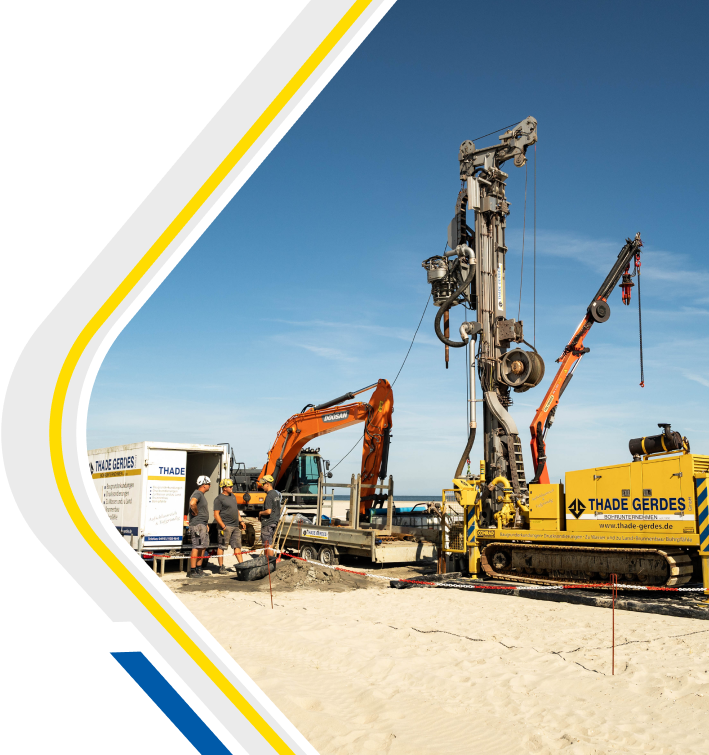
Driven-pile foundations are the most commonly used type of deep foundation—especially in regions with marsh or coastal soils. In this method, long piles made of reinforced concrete, steel, or wood are driven deep into the ground. These piles transfer the structure’s loads either through their tips to load-bearing soil layers or through friction along their surfaces. The major advantage: driven pile foundations can be specifically adapted to soil conditions. Even in soft, water-saturated layers, they provide reliable stability and prevent settlement or soil displacement. The disadvantage: due to the vibrations involved, this method is less suitable for sensitive construction environments. In northern Germany, it is therefore primarily used for large-scale construction projects, such as bridges, port facilities, or technical infrastructure, where noise and vibrations are not a concern.

Drilled Piles
Drilled piles are primarily used in areas where environmental conditions are sensitive—such as in residential areas, near neighboring buildings, or on confined construction sites. Unlike driven piles, they are not driven into the ground but are drilled into it without causing vibrations. The resulting cavity is then filled with concrete and steel reinforcement. This method is particularly quiet, vibration-free, and allows for precise work, making it ideal for inner-city projects or renovations in built-up areas. In addition, bored piles can be used on almost any type of soil, even where the water table is high or the subsoil is uneven.

Micropiles
Micropiles are thinner piles, usually only a few centimeters thick, made of steel pipes or reinforced concrete, which are driven into the ground under high pressure. They are particularly suitable for renovations, additions, or expansions of existing structures when there is no room for large equipment. Despite their small size, micropiles offer a surprisingly high load-bearing capacity and are a safe solution even in unstable soil. When combined with modern grouting techniques, they can be precisely adapted to the specific soil conditions.

Well Foundation
Well foundations are used less frequently, but still play a role in specific projects in northern Germany. In this method, a cylindrical shaft—known as a well—is gradually lowered into the ground. It serves as a load-bearing structure that transfers loads to deeper, more stable layers. This method is primarily used for massive structures, such as towers, silos, or bridge piers. Due to its uniform load transfer and stable construction, the well foundation is particularly suitable for areas with varying soil layers or a high water table.

Combined Methods
In some cases, a single method is not sufficient. In such cases, combined foundation methods are used—such as a combination of pile and shallow foundations—to increase bearing capacity while optimizing construction costs. Particularly in regions with heterogeneous soils, such as those commonly found in northern Germany, such hybrid solutions offer maximum flexibility and safety. This allows the foundation to be precisely tailored to the on-site conditions.
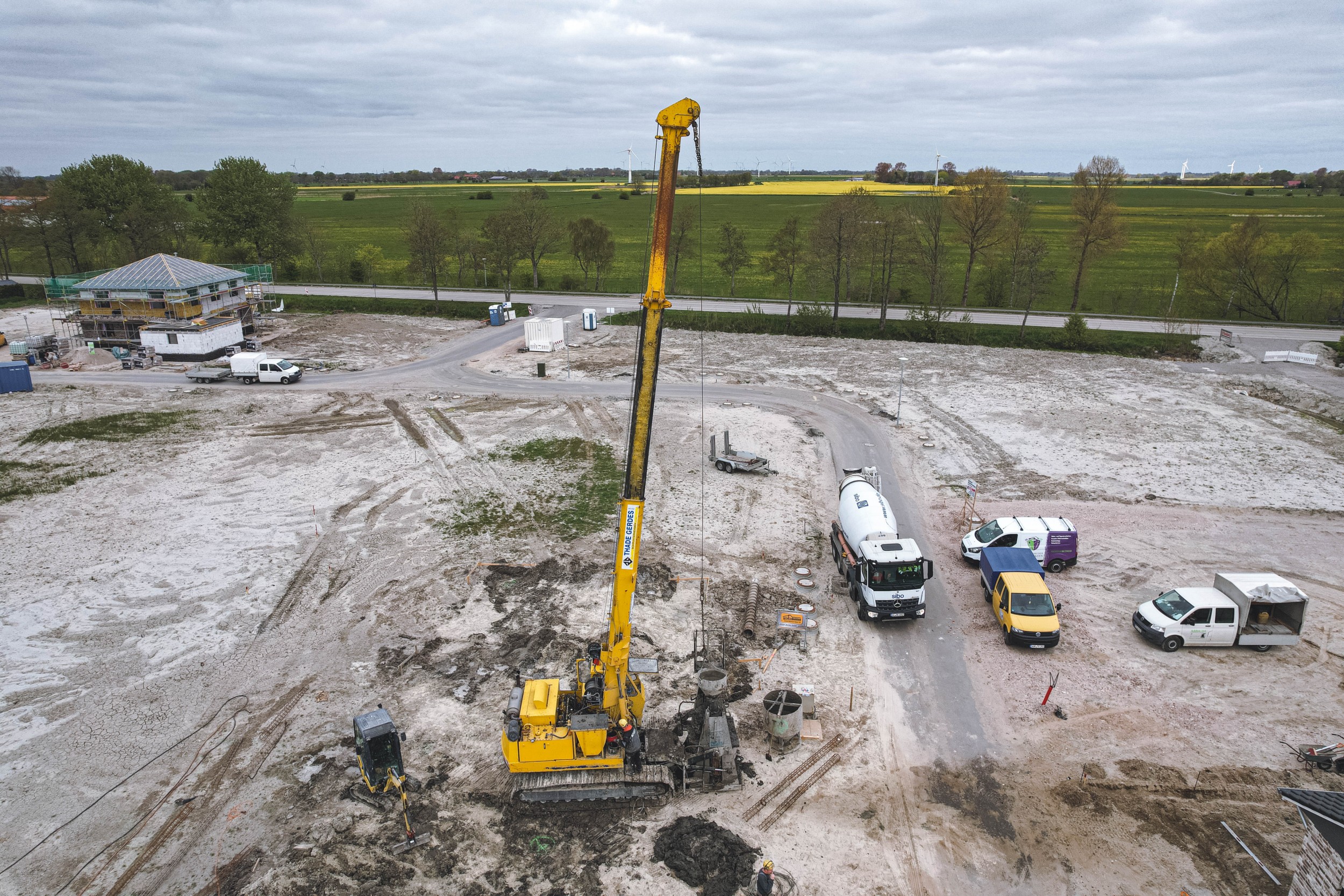

Pile-driving rig in northern Germany

5 Reasons Why Deep Foundations Are Essential in Northern Germany's Soils

Anyone building in northern Germany is familiar with the unique soil conditions: soft marshlands, damp coastal regions, and a high water table constantly put the stability of a foundation to the test. In these areas, the subsoil is often not stable enough to distribute a structure’s loads evenly. This is precisely where deep foundations demonstrate their strengths. In this section, we’ll present the five most important reasons for using deep foundations in the soils of northern Germany.

Reason 1: Soft marsh and coastal soils require special construction methods

The biggest difference between northern Germany and other regions lies in the soil conditions. While the south and low mountain regions feature firmer subsoil such as rock or dense clay, soils in northern Germany often consist of marsh, bog, or alluvial sediments. These layers are soft, water-saturated, and compact under pressure—a problem for any shallow foundation. A deep foundation, on the other hand, transfers the structural loads to deeper, compacted soil layers, where bearing capacity is permanently ensured.

Reason 2: Fluctuating groundwater levels affect bearing capacity

Another important factor is groundwater. In many areas of northern Germany, it lies only a few decimeters below the surface. If the water table rises—for example, due to heavy rain or coastal flooding—the soil loses its strength and can no longer reliably support the weight of a structure. Deep foundations provide protection against this because they anchor the pile structures in deeper, stable layers that remain unaffected by groundwater. This ensures that the foundation remains stable even if the upper soil layers become saturated.

Reason 3: Preventing sagging, cracks, and moisture damage

On soft or saturated soil, settlement is almost inevitable. These uneven movements of the subsoil lead to cracks in the masonry, slanted floor slabs, or sagging parts of the building. Deep foundations specifically prevent such damage because the pile foundation supports the structure independently of the unstable upper soil layers. In addition, they reduce the risk of moisture damage, as the foundation is better protected against rising damp—a crucial advantage in regions with constantly fluctuating soil moisture levels.

Reason 4: Stability Despite Proximity to the Coast and Climate Change

The North German coastal region faces challenges not only from its soil conditions but also, increasingly, from climate change. Rising groundwater levels, heavier rainfall, and frequent storm surges place greater stress on every foundation. Traditional shallow foundations quickly reach their limits under these conditions. Deep foundations, on the other hand, reliably transfer loads to stable layers—deep enough to ensure stability and safety even under changing environmental conditions. This ensures that the structure remains protected in the long term, even as the soil changes.

Reason 5: Differences from Other Regions in Germany

In other parts of Germany, soil conditions are often much simpler. Rocky subsoil or dense layers of clay provide a natural foundation that is sufficient even for shallow foundations. In the north, however, the subsoil is usually heterogeneous—that is, composed of several different soil types in an uneven distribution. Here, load-bearing material alternates with soft, water-saturated layers, leading to unpredictable movements in the subsoil. For this reason, deep foundations in northern Germany are not an option but a prerequisite for ensuring a building’s long-term structural safety.

What are the advantages of deep foundations?

Deep foundations ensure that a building remains stable even when the surface soil does not have the necessary bearing capacity. They create a connection between the foundation and deeper, load-bearing soil layers, thereby offering several key advantages for building owners and designers.

✔ Stable Structural Stability
Deep foundations ensure long-term stability, even on soft soils or in varying ground conditions. While a shallow foundation distributes its load only near the surface, a deep foundation transfers the structure’s loads deep into the ground. This ensures that a building remains stable and secure even in the face of fluctuating groundwater levels, settlement, or moisture.

✔ Protection Against Settlement and Damage
By driving piles into the ground, the load is distributed evenly across load-bearing layers. This prevents the subsoil from shifting unevenly—a common cause of cracks in masonry or sagging foundations. Deep foundations ensure that the building structure remains protected in the long term and help avoid costly repairs.

✔ Safety in Areas with Fluctuating Groundwater Levels
In regions with high groundwater levels or significantly fluctuating soil moisture, deep foundations provide additional safety. Even if the upper layers soften, the foundation remains firmly anchored. Especially in northern Germany, where marsh and coastal soils are often water-saturated, this advantage is crucial to the service life of a structure.

✔ Planning Certainty
Deep foundations also pay off from an economic standpoint. Although their construction is initially more complex than that of shallow foundations, they offer long-term planning reliability and protect against unexpected additional costs. Builders benefit from a foundation that remains stable over the long term and does not require expensive repairs or renovations. This ensures that budgets are reliably adhered to and the value of the structure is safeguarded over the long term.

✔ Modern Technology with a Sustainable Approach
Current construction methods, such as bored pile foundations or micropiles, are precise, low-vibration, and resource-efficient. This not only protects the surrounding environment and reduces noise emissions but also makes deep foundations suitable for confined construction sites and inner-city areas.

✔ Protection against consequential damage caused by climate change
Rising groundwater levels, heavy rainfall, and soil desiccation place new demands on foundations. Deep foundations address these challenges by functioning independently of the properties of the upper soil layers. As a result, the structure remains stable and secure even under changing environmental conditions.

✔ Enhanced Preservation of the Structure’s Value
A stable foundation is not only technically important but also economically significant. Structures with professionally installed deep foundations retain their value over the long term because they are less susceptible to damage. Therefore, investing in a solid foundation is also an investment in the longevity of a structure.

💡 Tip: Experience and proper planning are especially important when dealing with difficult soil conditions. Specialized companies with regional expertise, such as Thade Gerdes, are thoroughly familiar with the unique characteristics of northern German soil and know which types of piles or construction methods are best suited for each specific location. Ask now , your deep foundation specialist!

Conclusion: Secure your foundation with deep foundations

Deep foundations provide stability where the soil reaches its limits. Especially in northern Germany, where marsh and coastal soils are soft, moist, and highly unpredictable, deep foundations are the foundation for any stable structure. They ensure that loads are reliably transferred to load-bearing layers and that your building remains firmly anchored even under changing soil conditions.

Those who choose deep foundations are investing in stability, the longevity of their structures, and planning certainty. Rather than having to repair costly damage later on, the foundation is laid correctly from the start—technically sound, economically sound, and durable.

So it’s clear: Deep foundation work is not an optional extra, but a prerequisite for a safe and sustainable foundation—especially in the north.

If you want to put your construction project on a solid foundation, contact Thade Gerdes. As an experienced expert in deep foundation systems in northern Germany, he combines regional soil knowledge with modern technology—for structures built to last. Contact your deep foundation today!

Frequently Asked Questions About Deep Foundations

Deep foundation is a drilling method in which the loads of a building are transferred deep into the ground until load-bearing soil layers are reached. While shallow foundations rest on layers close to the surface, deep foundations create a firm connection between the foundation and deeper soil—usually through pile structures, bored piles, or well foundations. This method ensures that structures stand securely even on soft or damp soils and do not settle or deform. It is particularly indispensable for the stability and load-bearing capacity of a structure in northern Germany, where marsh and coastal soils are often not load-bearing.

Deep foundations are always required when the surface soil is not stable enough or when soil conditions vary significantly. Typical examples include marshlands and coastal regions, where the subsoil consists of soft, water-saturated layers. Deep foundations are also necessary in cases of high groundwater levels, large structures, or uneven building sites to prevent settlement, cracks, or moisture damage. By transferring the structure’s loads to deeper soil layers, the foundation remains permanently stable—even under changing weather and climate conditions.

The most important difference lies in the depth and load distribution. With a shallow foundation, the weight of the structure is distributed across load-bearing soil layers at a shallow depth—usually up to one meter. This method is suitable for small buildings or firm ground. Deep foundations, on the other hand, transfer the structure’s loads to deeper layers that remain stable and load-bearing even in the presence of moisture or groundwater. This makes them particularly suitable for soft, non-load-bearing soils, such as those found in northern Germany. In short: Shallow foundations bear the load “at the surface,” while deep foundations bear the load “deep within the ground,” thereby ensuring greater safety and durability.

Depending on the site conditions and project requirements, different methods are used:
  • Driven-Pile Foundation: Precast piles made of reinforced concrete, steel, or wood are driven deep into the ground and transfer the loads to load-bearing strata.
  • Drilled piles: These are drilled rather than driven—quiet, vibration-free, and ideal for confined or built-up areas.
  • Micropiles: Slim piles for renovations or smaller construction projects with limited space.
  • Well Foundations: Cylindrical shafts that are lowered in stages, e.g., in massive structures such as towers or bridges.
These methods can also be combined to achieve optimal load-bearing capacity and cost-effectiveness, particularly in the case of complex soil conditions in northern Germany.
In northern Germany, the soils are soft, moist, and often characterized by high groundwater levels. Deep foundations provide the necessary stability here by transferring the structural loads deep into the ground. This prevents settlement, cracks, and moisture damage. Additional advantages include:
  • Durability: The foundation remains structurally sound over the long term.
  • Planning Certainty: No unforeseeable renovation costs due to soil settlement.
  • Safety: Protection against rising groundwater levels and extreme weather conditions.
  • Sustainability: Modern methods such as bored piles are both environmentally friendly and precise.
This means that deep foundation work in the north is not an option, but rather a prerequisite for safe structures.

Not all building sites are the same, and this is precisely where the strength of a regional specialist company comes into play. In northern Germany, soil types vary greatly: from soft marsh soils to peat layers to sandy coastal areas. An experienced specialist in deep foundation engineering understands these differences and knows which pile types and methods are best suited for each location. A regional expert like Thade Gerdes brings not only technical expertise but also an understanding of local climatic and geological conditions.
