

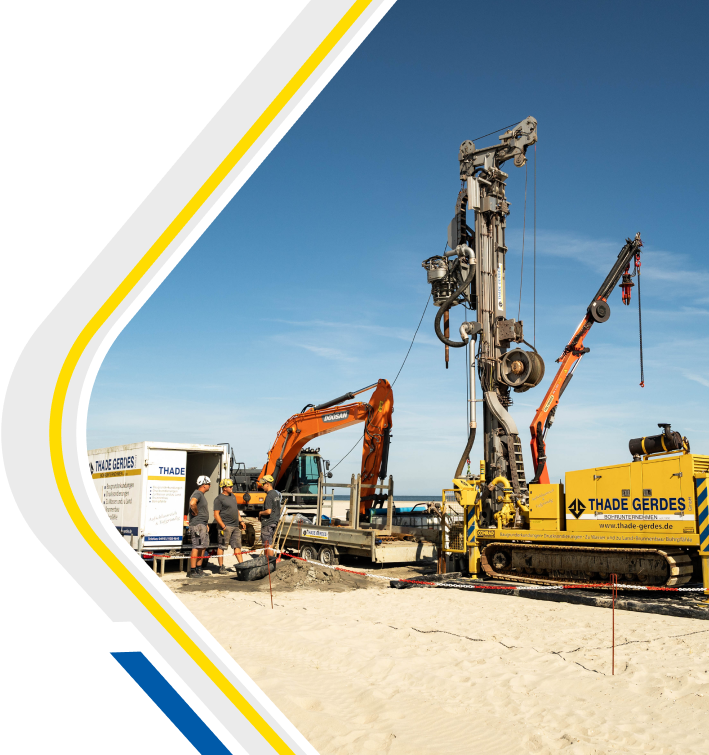
Not every lot meets the right conditions for a simple foundation, and that’s exactly what can quickly become a problem during construction planning. Soft soil, a high water table, or significantly varying soil layers mean that a traditional shallow foundation reaches its limits. In such cases, a pile foundation offers a safe alternative: It reliably transfers the building’s loads to deeper, load-bearing soil layers, thereby providing long-term protection against settlement, cracks, or other structural damage.
In this article, you’ll learn when pile foundations are necessary, what types are available, what costs to expect, and how good planning and proper execution can save you money.
Table of Contents
Key Points at a Glance
Pile foundations are always required when the soil at the site is not stable enough—for example, in cases of soft, damp, or highly variable soil layers. It ensures that a building’s loads are transferred to deeper, stable layers, thereby providing long-term protection against settlement, cracks, or other consequential damage.
The type of pile to be used, the required depth of the foundation, and the appropriate methods depend on the soil conditions, the building, and the specific circumstances. Costs, accordingly, vary as well.
In this article, we’ll use specific examples to show you when pile foundations make sense, what cost factors come into play, and why good planning often pays off as early as the first phase of construction. You’ll also learn how Thade Gerdes , as an experienced partner, can help you identify the right foundation method early on.
What is a pile foundation?
Not every type of soil is stable enough to safely support a house or other building. Especially in the case of soft or heavily saturated soil, a simple shallow foundation is often insufficient. The foundation would settle over the short or long term. In these cases, a deep foundation is required, and that’s exactly where pile foundations come into play.
In this process, load-bearing piles are driven deep enough into the ground so that they transfer their weight to stable soil layers below, often several meters below the surface. This creates a foundation that provides reliable support even when the upper soil layers can barely bear any load. Pile foundations thus ensure that buildings remain structurally sound over the long term, even in difficult soil conditions.
4 Real-World Examples
Pile foundations are used more often than many people realize. Especially in areas with soft soil, such as in northern Germany, they are the rule rather than the exception. Whenever the soil cannot provide reliable support or special requirements exist, a pile foundation is the safer choice to prevent settlement, cracks, or costly repairs. The following four examples illustrate typical situations in which this deep foundation method is used.
1.
On soft soil with a high water table
In many areas of northern Germany, especially in moor and marshlands, the subsoil consists of soft, water-saturated layers such as peat or silt. These layers give way under load, which can lead to cracks, sagging corners, or tilting after just a few months. With pile foundations, however, the weight of a building is transferred to deeper, load-bearing soil layers, thereby providing lasting protection against settlement.
2.
In the case of uneven ground caused by backfilling
On former industrial sites or backfilled brownfields, the soil is often a mixture of construction debris, loose soil, and poorly compacted areas, which leads to uneven settlement. A shallow foundation would settle unevenly in such locations, with serious consequences for the entire structure. Piles, however, provide the necessary stability here because they are anchored below these problematic layers.
3.
For structures subject to heavy loads
Whether it’s multi-story residential buildings, large industrial facilities, or bridges: as soon as a structure is heavy or covers a large area, the normal foundation is often no longer sufficient to support it safely. A pile foundation then ensures that these loads are transferred evenly and securely into deeper, more load-bearing soil layers, providing durable and safe support.
4.
For time-sensitive construction projects and difficult soil conditions
When a construction project needs to move quickly but the soil conditions are challenging, soil replacement is often not an option. It is expensive, labor-intensive, and time-consuming. In such cases, pile foundations are often the better choice because they are installed directly where the soil is stable. This approach can save a great deal of time and money, especially for new construction in flood-prone areas or on hard-to-access lots.
In short: Pile foundations are not a special-case solution, but rather often a safer foundation method—especially when the soil is challenging or the structure has specific requirements. Planning early and thoroughly investigating the building site will save you from problems, repairs, and unnecessary costs down the road.
What types of posts are there?
The type of piles used in a pile foundation depends on several factors, such as soil conditions, the planned structure, and structural requirements. However, the water table, space constraints on the property, and accessibility to the construction site also play a key role. The goal is always to transfer the loads of a structure to deeper, more stable soil layers, which are often significantly deeper than they appear at first glance.
Below, we present five types of posts that are particularly common in practice.
Driven piles
Driven piles are among the classic pile systems used in civil engineering. They are driven into the ground with great force until a load-bearing soil layer is reached. This method works particularly well when the subsoil is not too soft and the required bearing capacity is available at a relatively shallow depth.
One advantage of this method is that it is relatively quick and often less expensive than other types of piles. However, it generates a lot of noise and can cause noticeable vibrations—which is why driven piles are typically used on larger construction sites, such as in bridge construction, transportation infrastructure projects, or on expansive properties where no sensitive neighboring buildings are affected.
Drilled piles
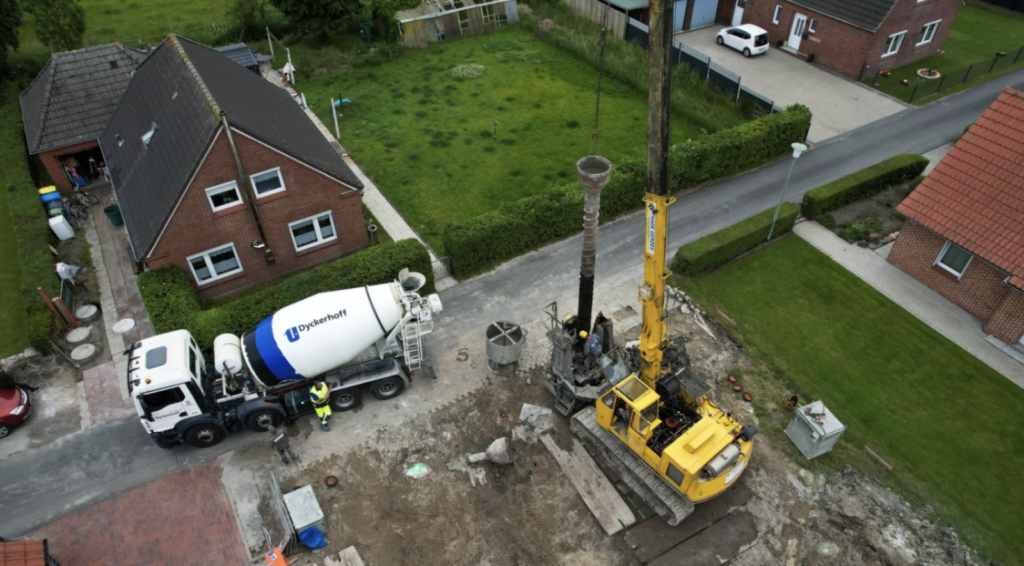
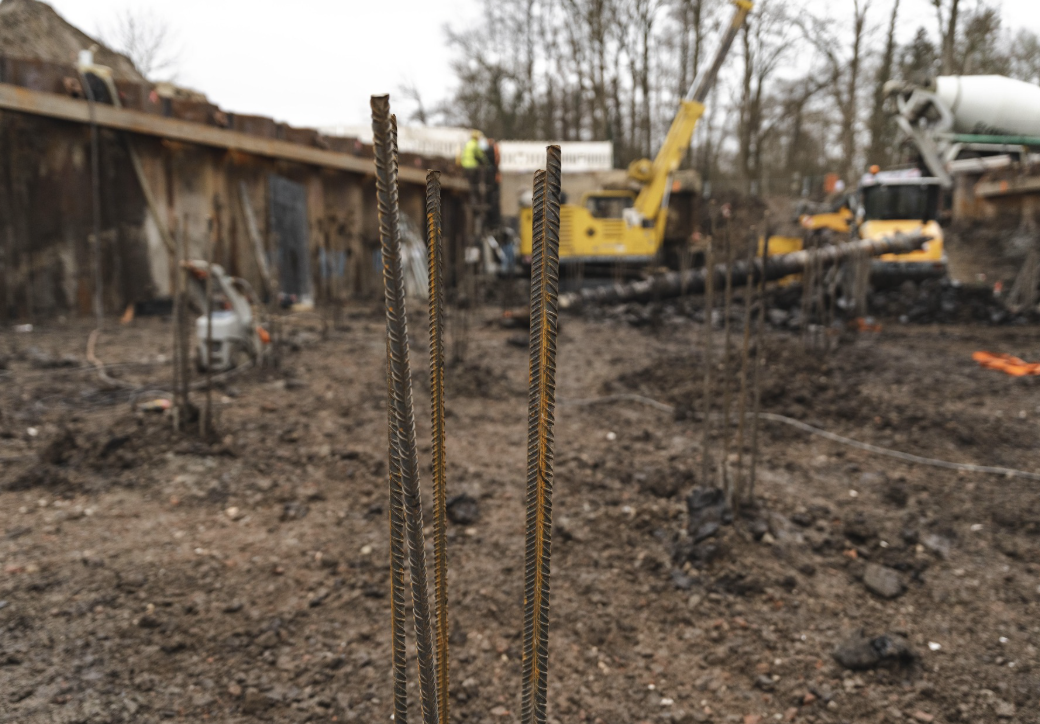
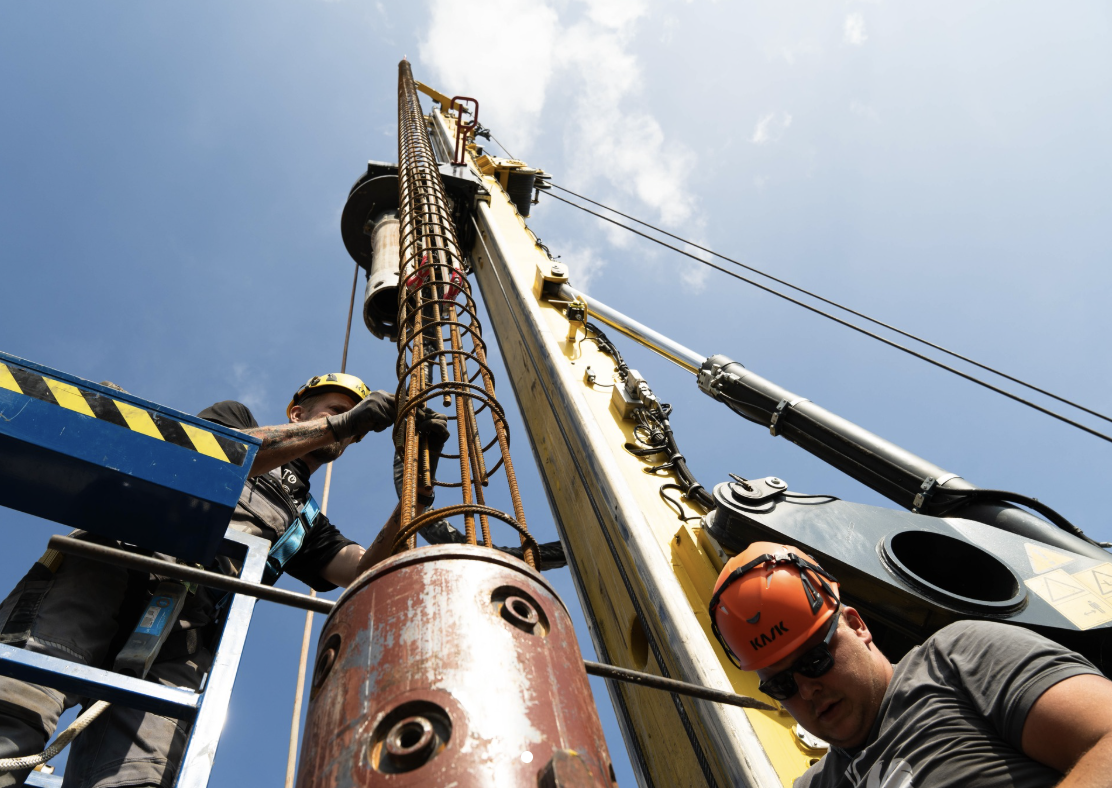
Drilled piles are used wherever precision and minimal vibration are essential. Unlike driven piles, they are not driven into the ground but are drilled into it. The borehole is then reinforced with steel and filled with concrete. This creates a load-bearing pile that reliably transfers loads to deeper layers.
This method is particularly well-suited for confined construction sites and sensitive environments such as residential areas and downtown locations because it is significantly quieter and produces less vibration than other methods. Drilled piles also demonstrate their strengths in variable soil conditions or where the water table is high. This makes them a preferred option for many new construction projects, as well as in situations where other types of piles reach their limits.
Micropiles
Micropiles are used whenever there isn’t enough space for large equipment or when conditions are particularly challenging—for example, when working on existing structures, in confined spaces, or during renovations. The piles usually consist of slender steel tubes that are driven into the ground with great force and then grouted in place. Despite their small diameter, they provide a surprising amount of stability—at least where no heavy loads are applied.
Particularly practical: Micropiles can be easily connected to existing foundations and are therefore ideal when a building needs to be retroactively reinforced or expanded, such as during renovations, additions, additions of extra stories, or the retrofitting of older structures. This method also works reliably in hard-to-reach areas, such as under parts of a building or in courtyards.
Displacement piles
If the goal is to excavate as little soil as possible during installation, a different type of pile is needed: the displacement pile. With this method, the soil is not removed but displaced to the side—hence the name. This offers two advantages: First, there is no excavated soil to dispose of; second, the soil around the pile becomes compacted, providing additional stability.
Displacement piles are particularly popular for cohesive soils, soft coastal subsoils, or time-sensitive construction projects. The process becomes especially efficient when, depending on the equipment and soil conditions, either full-displacement or partial-displacement methods are used. While the full-displacement method requires slightly more machine power, the partial-displacement system can be carried out with lighter equipment—ideal for small and medium-sized construction projects where time and effort must be kept in check.
Screw piles
Anyone looking for a quick and easy foundation method for smaller construction projects often turns to screw piles. These piles function like giant metal threaded screws: They are mechanically screwed into the ground, without any excavation, concrete, or long curing times. They can bear loads immediately after installation, which significantly reduces time and effort on the construction site.
They are primarily used for lightweight structures such as decks, carports, fences, or solar panels—in other words, anywhere where extreme load-bearing capacity isn’t required. One particularly practical feature is that screw piles can be removed from the ground if necessary, making them a smart solution for temporary structures as well. However, they are not suitable for larger or heavier buildings.
🔎 Tip: If you’d like to learn more about pile foundations and find out which piles are right for your construction project, click here.
What factors determine the cost of a pile foundation?
The cost of a pile foundation depends on many factors and is therefore difficult to estimate as a flat rate. Every property has different conditions, every type of soil reacts differently, and the building itself also has its own unique requirements. Whether it’s a single-family home or a larger new construction project, the actual cost of a pile foundation is determined by a combination of various factors.
In this section, we’ll show you which factors have a particularly strong impact on costs and what you should keep in mind when planning your construction project to avoid unpleasant surprises.
1.
Soil Conditions
The properties of the subsoil are one of the most important cost factors in pile foundation construction. The deeper the load-bearing layers are located or the more difficult the soil is to work with—for example, in the case of cohesive clay, peat, silt, or significant groundwater influence—the more complex and expensive the construction becomes.
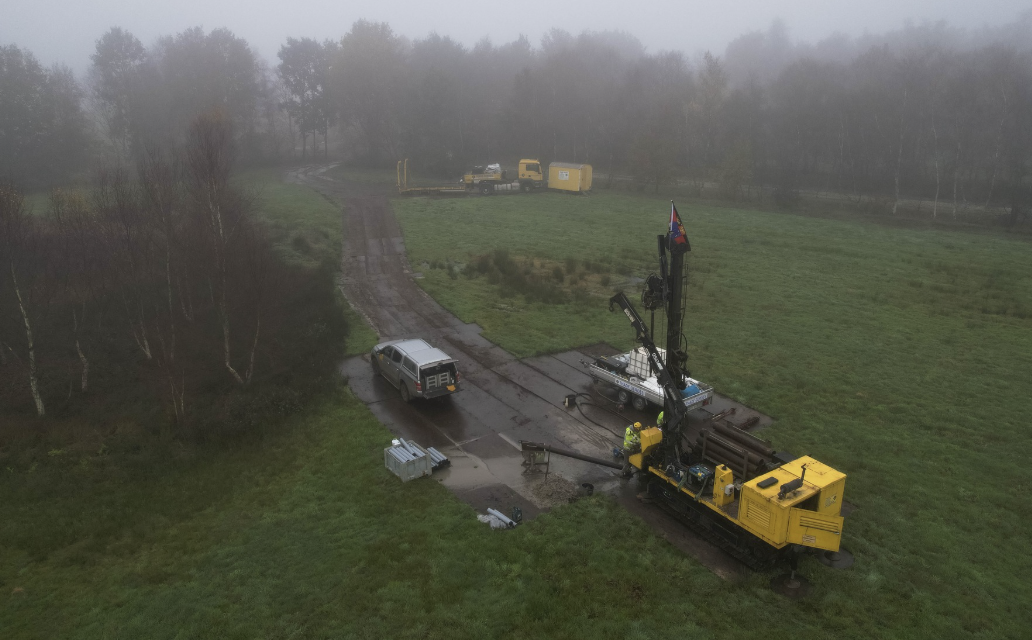
Especially in the case of very soft or heavily mixed soil layers, not only does the technical complexity increase, but so does the risk of delays or rework. That is why a detailed soil investigation report is so important: It reveals early on what the soil conditions are and helps ensure that pile foundations are planned realistically and that unnecessary additional costs are avoided.
🔎 Tip: If you’d like to learn more about soil investigations and find out why a soil assessment is especially beneficial for your construction project, click here.
2.
Length and Diameter of the Posts
The depth and diameter of the piles have a direct impact on costs. This is because the longer the pile, the more material is required, and the more time and machinery are needed for installation. Diameter also plays a key role: Larger piles require more concrete, more rebar, and, in most cases, more powerful equipment.
The dimensions of the piles depend on the load that must be supported and on the results of the soil investigation. Anyone who plans too conservatively or makes blanket assumptions too early risks having to make changes later on, which can ultimately end up being significantly more expensive than a realistic calculation from the start.
3.
Type of Pile System
Not all pile foundations work the same way, and there are also significant differences in cost between the various methods. Driven piles are often considered cost-effective when the subsoil is suitable and noise or vibrations aren’t an issue. Drilled piles, on the other hand, are quieter to install and easier to customize, but they generally cost more.
Other systems, such as micropiles or displacement piles, also have their own requirements and price ranges. The right method always depends on the interplay between the soil conditions, building requirements, and on-site conditions, and should ideally be determined early on in collaboration with an experienced partner.
4.
Accessibility and Space Availability
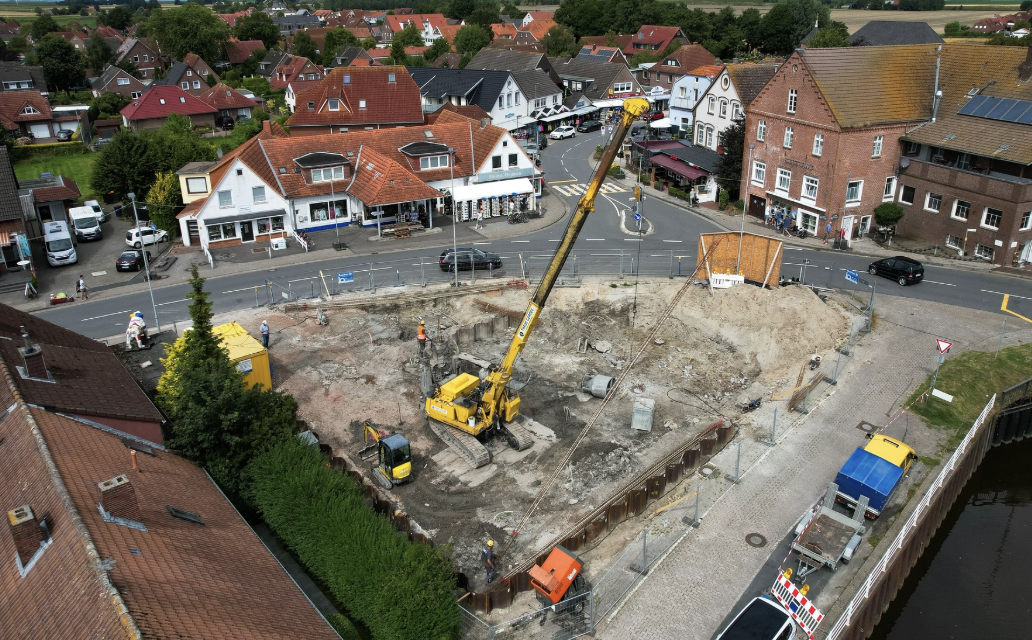
How accessible a construction site is has a direct impact on the amount of work involved and, consequently, on the costs. Does heavy equipment need to be transported along narrow access roads? Is there enough space to maneuver? Conditions like these make the installation process more labor-intensive, often slower, and therefore more expensive.
Particularly for inner-city projects or properties in challenging locations, tailored procedures and often smaller machines are required, which entails additional planning steps. Taking this into account early on helps avoid unnecessary additional costs later on due to improvised solutions on the construction site.
5.
Load Requirements and Structural Analysis
The weight of a building and how those loads are distributed play a key role in the selection and design of pile foundations. The higher the loads, the stronger the piles must be. This may mean using more piles, larger diameters, or a greater foundation depth.
Special structural requirements—such as those involving uneven load distribution, elevated sections, or high wind and snow loads—also affect the design. All of this not only influences the technical planning but also has a direct impact on costs. Anyone who makes overly general estimates here will quickly fall into a cost trap.
6.
Regional Price Differences and Market Conditions
The cost of pile foundations depends not only on the soil conditions or the construction method, but also on the location. In some regions, there are many specialized companies, while in others there are only a few providers. This affects prices. In addition, there are regional differences in material costs, transportation distances, and regulatory requirements.
The general market situation also plays a role: When capacity is tight, prices for concrete or steel rise, or there are a particularly large number of projects underway at the same time, this can have a significant impact on quoted prices. That’s why it’s worth obtaining quotes early on, rather than waiting until the situation becomes urgent.
7.
Planning, Expert Reports, and Incidental Costs
The actual pile driving work often accounts for only a portion of the total cost. Added to this are items that are easily overlooked but can quickly add up. These include, for example, the soil investigation report, structural calculations, structural analysis, and setting up the construction site. Transporting specialized equipment and coordinating with government agencies can also quickly become costly.
And don’t forget: The planning phase also takes time and money, especially if the right method needs to be carefully selected or adapted to an existing building. Thinking about these things early on can help you avoid a lot of trouble and unnecessary additional costs later on.
Conclusion: The cost of a pile foundation depends on many different factors, ranging from the soil conditions and the construction method to planning and logistics. Those who plan thoroughly early on and are aware of all the influencing factors can not only make realistic cost estimates but also often achieve targeted savings.
Here's how the costs of a pile foundation break down
The cost of a pile foundation in a specific case can only be determined by looking at the actual project. Nevertheless, a sample calculation can help give you a better sense of the order of magnitude and the total cost.
Calculation Example: Single-Family Home with Soft Clay Soil
Suppose a single-family home is to be built on a lot with cohesive soil that has poor bearing capacity, such as clay. The geotechnical report recommends approximately 12 bored piles, each 15 m long and with a diameter of about 42 cm. The average cost per running meter of bored pile ranges—depending on the region and the scope of work—between 150 and 200 euros net.
This roughly results in the following pile costs:
12 posts × 15 m × 150–200 €/linear meter = 27,000 € to 36,000 € net
Other typical utility costs
In addition to pile production, there are other services that are sometimes essential. Here are some guidelines:
Performance | Estimated Costs* |
Site Investigation Report | approx. 1,500–3,000€ |
Structural Analyses | approx. 1,500–2,000€ |
Quality testing in accordance with regulatory requirements | approx. €2,000–€20,000 |
*Depending on the region and scope
What this sample calculation shows
💰 The piles themselves account for the largest portion of the cost, but the associated expenses should not be underestimated either.
💰 The depth of the foundation and the method used have a major impact on the total cost.
💰 Without reliable planning, additional costs can quickly arise. That’s why a thorough soil survey is the most important basis for any cost estimate.
Overview of Average Prices by Pile Type and Square Meter
Driven pile | approx. 80–150 € per meter |
Bored pile | approx. 150–300 € per meter |
Micropile | approx. 250–500 € per meter |
Screw pile | approx. 80–120 € per meter |
Displacement Pile | Approx. 100–150 € per meter |
⚠️ Important: Anyone who tries to cut corners on the foundation runs the risk of facing repairs or even having to rebuild the foundation later on, and these are almost always more expensive than a solid pile foundation from the start.
That's why you should never skip pile foundations when the soil is soft
At first glance, pile foundations often seem like an unnecessary extra cost, especially for smaller construction projects. But anyone building on difficult soil who opts for a cheaper shallow foundation instead is usually cutting corners in the wrong place. That’s because soft subsoil made of clay, peat, or silt can quickly give way under the weight of the building. The consequences: uneven settlement, crooked walls, or cracks in the masonry—including mold growth on the walls. The situation becomes particularly critical for houses with basements or solid masonry. Once the damage has occurred, the only option is usually a labor-intensive foundation retrofit, which is not only expensive but also technically complicated and often involves major alterations to the existing house. In many cases, installing pile foundations early on would have saved not only money but also a great deal of stress.
On the other hand, those who plan early have a clear advantage: The right foundation not only ensures the stability of the house but also protects the property’s value in the long term, especially in regions with high groundwater levels, damp soil, or on slopes. The sooner and more thoroughly the soil conditions are examined, the more precisely you can plan. A pile foundation may seem more expensive on paper at first, but it saves you from unpleasant surprises whose costs are definitely not worth it for you.
If you are currently planning a construction project and are considering pile foundations, Thade Gerdes is the right person to contact. With over 125 years of experience, a wide range of pile systems, and a deep understanding of a wide variety of soil conditions, the team will guide you from the initial idea to the finished project. Request a quote for your pile foundation now!
Conclusion: That's why setting up your business the right way saves you money and stress.
Pile foundations aren’t always absolutely necessary, but in many cases they’re exactly the right choice. Especially when dealing with soft soil, high groundwater levels, heavy buildings, or limited space, they’re often crucial for a structure’s stability, safety, and long-term viability. Cutting corners here risks, in the worst-case scenario, costly damage, loss of value, and time-consuming repairs.
What is often underestimated is this: With good planning, the costs of a pile foundation can be realistically estimated early on. And those who work with experienced experts can even make targeted savings—for example, by choosing the right type of pile, optimizing the foundation depth, or using a more efficient method.
This is exactly where Thade Gerdes comes in: with years of experience, technical expertise, and an honest assessment of which type of pile is right for your construction project. This ensures that your foundation doesn’t become a cost trap, but rather a solid foundation for your entire construction project. Request a quote now for your pile foundation now!
Frequently Asked Questions About the Cost of Pile Foundations
1. When is a pile foundation necessary?
Pile foundations are necessary when the upper soil layers do not have sufficient bearing capacity to safely support the planned structure. Typical situations include soft or water-saturated soils such as peat, clay, or silt; a high water table; heavily mixed soil layers; or structures subject to heavy loads. Pile foundations are also used in situations with limited space, difficult access, or for massive structures such as apartment buildings, industrial buildings, or bridges. They provide stability where a shallow foundation is no longer sufficient.
2. What is the average cost of a pile foundation?
The cost of a pile foundation depends on many factors: pile length, diameter, the chosen pile system, soil conditions, construction site logistics, and the structure’s load. On average, prices range from €150 to €300 per running meter for bored piles; driven piles are often less expensive, while micropiles or displacement piles tend to be more expensive. For a typical single-family home on soft soil, you can expect total costs ranging from €27,000 to €36,000 net, depending on the foundation depth, region, and number of piles. A detailed soil investigation report provides the best basis for a reliable cost estimate.
3. What types of piles are used in deep foundation systems?
There are various pile systems that are used depending on the application and soil structure. The main types are:
- Pile driving (are driven forcefully into the ground)
- Bored piles (are drilled and filled with concrete)
- Micropiles (slender steel tubes for confined spaces or existing structures)
- Displacement piles (displace the soil without causing vibrations and without excavation)
- Screw piles (are driven in mechanically, without concrete)
Important: Each method has its advantages and disadvantages, depending on the soil conditions, project size, and accessibility.
4. How can we prevent the pile foundation from becoming more expensive than planned?
The most important foundation is a professional site investigation report that reliably analyzes soil conditions. Based on this, the appropriate foundation type—including structural calculations, selection of the pile system, and a precise cost estimate—can be determined. If you consult an experienced specialist early on, such as Thade Gerdes from the outset can avoid risks, change orders, and additional costs. Realistic planning starting from the initial design phase saves money during construction.
5. What role does groundwater play in the design of pile foundations?
A high water table has a significant impact on the choice of pile system. With conventional shallow foundations, water can cause considerable problems because it compromises the stability of the foundation. Pile foundations offer a clear advantage in this regard, as they transfer loads below the aquifers. Drilled piles and displacement piles are particularly well-suited for such conditions, provided the foundation is properly planned and executed.
6. Is a pile foundation necessary even for a single-family home?
Yes, even for a single-family home, pile foundations may be necessary—for example, if the lot is on peat soil, the basement is planned to be particularly deep, or the foundation slab will bear a heavy load. Even smaller buildings can experience settlement if the subsoil is inadequate. In such cases, pile foundations are worthwhile in the long term, as they prevent consequential damage and ensure stability—often right from the first shovel full of dirt.
7. How do I find the right partner for a pile foundation?
It is important that the partner not only handles the execution but also provides advice during the planning phase. Thade Gerdes works with building owners, architects, and planners starting with the feasibility analysis and offers all services related to pile foundations from a single source: consulting, structural design, selection of the appropriate method, and construction—including specialized solutions for high groundwater levels, confined spaces, or challenging soil conditions. This ensures that the right method can be identified early on and implemented reliably.

