

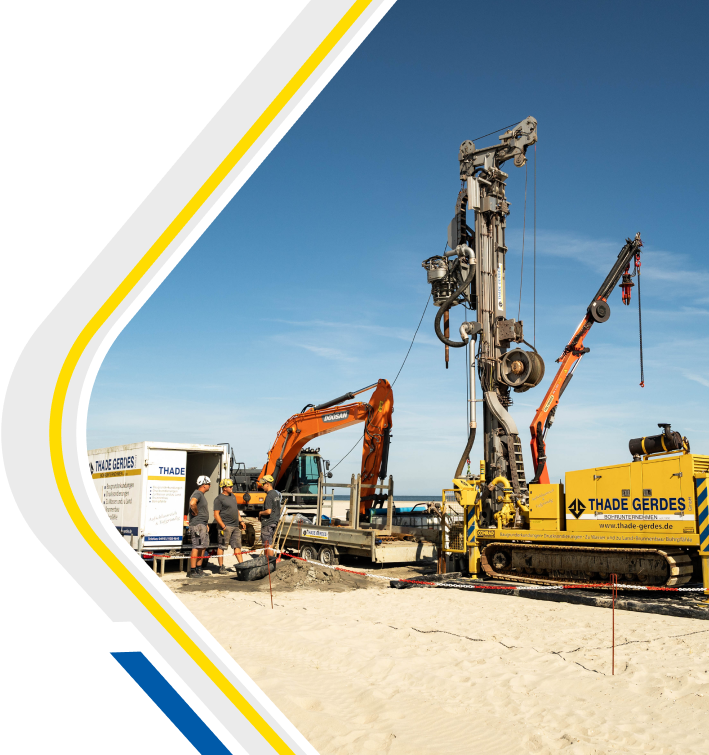
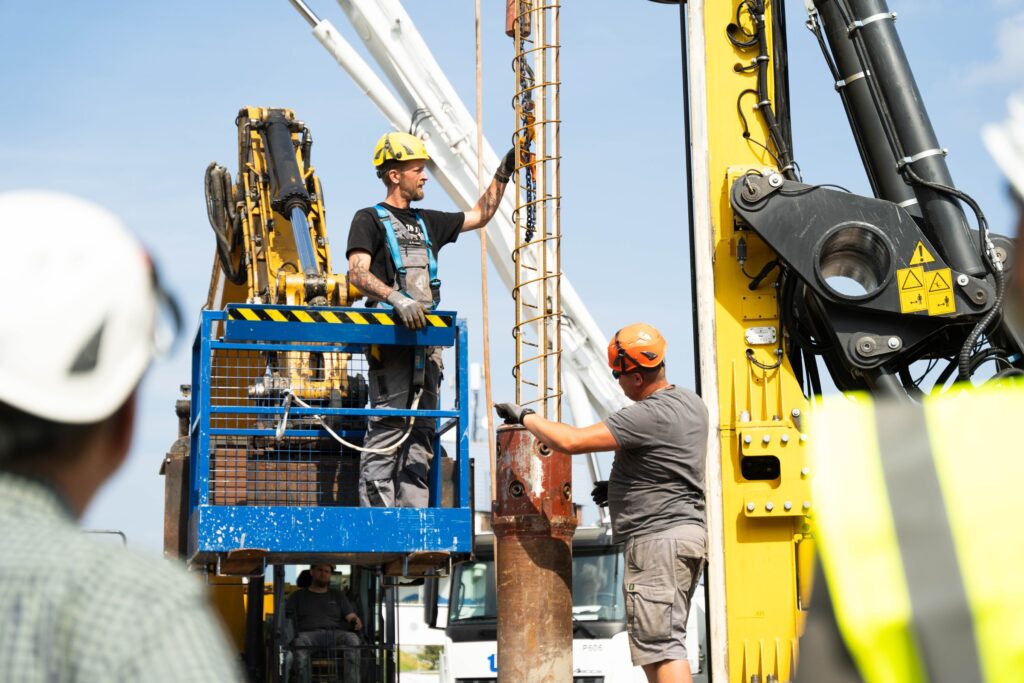
Heavy rainfall, rising groundwater levels, or drying soils radically alter the conditions of the building site. Foundations that seemed sturdy just yesterday are now beginning to falter. As the invisible backbone of every structure, the foundation ensures load-bearing capacity. Only deep foundations reliably transfer loads to deeper layers. This ensures that buildings remain safe even when soils near the surface become too soft or dry out.
In this article, you’ll learn what deep foundations are and how they differ from shallow foundations. You’ll discover the new challenges that climate change poses for foundations and how to overcome them. We’ll also discuss how deep foundations ensure the long-term stability of structures. Finally, we’ll show you how to find a reliable contractor for your deep foundation project.
Table of Contents
Key Points About Deep Foundation Systems:
Climate change is altering the building site: rising groundwater levels, heavy rainfall, droughts, and frost are pushing the limits of traditional foundations.
Under these conditions, shallow foundations are often no longer sufficient, as the soil layers near the surface lose their bearing capacity.
Deep foundations transfer structural loads to stable deep layers or bedrock using piles or similar methods, thereby ensuring the long-term safety of structures. They provide protection against settlement, frost damage, and dynamic loads. They are indispensable for houses, bridges, and industrial facilities.
Deep Foundations vs. Shallow Foundations: The Key Differences
The foundation is the load-bearing element of a structure. It ensures that loads are evenly distributed into the ground and that a building remains stable over the long term. Depending on soil conditions and the structure’s load, a distinction is made between different types of foundations: deep foundations and shallow foundations.
| Shallow foundation: suitable under certain conditions if … | Deep foundation: essential if … |
| … the soil near the surface is stable (to a depth of about 1 m). | … the near-surface soil layers do not provide sufficient bearing capacity. |
| … these are small structures (e.g., carports, sheds, garages). | … heavy structures such as houses, bridges, or industrial facilities are built. |
| … a cost-effective and quickly implementable foundation is needed. | … climate impacts such as heavy rainfall, rising groundwater levels, or periods of drought must be taken into account. |
| … no significant climatic effects, such as drying out, softening, or settlement, are expected. | … with a focus on long-term durability, frost resistance, and sustainability. |
💡 At first glance, shallow foundations seem more cost-effective. However, they quickly reach their limits in difficult soil conditions and in the face of the effects of climate change. Deep foundations, on the other hand, ensure that structures remain stable over the long term.
4 Challenges Posed by Climate Change and How to Overcome Them with Deep Foundations
Foundations are an often-overlooked risk in any building, and climate change is exacerbating this vulnerability. Rising groundwater levels, extreme precipitation, and parched soils are placing increasing pressure on shallow foundations. Without forward-looking planning, building owners face the risk of significant damage and loss of value. The following four challenges illustrate why shallow foundations are unreliable and how deep foundations provide long-term stability for structures.
1.
Rising groundwater levels and heavy rainfall
A rising groundwater table and frequent heavy rainfall events cause the soil to become saturated and lose its load-bearing capacity. As a result, foundations in layers close to the surface quickly reach their load limits.
Mitigation measure: Deep foundations transfer the loads of a structure to deeper, load-bearing layers or directly into bedrock. This ensures structural stability even during flooding or when the groundwater level is persistently high.
2.
Drying out of cohesive soils
As a result of prolonged dry spells, cohesive soils such as clay, peat, or loam dry out. They shrink, develop cracks, and cause settlement problems that jeopardize the stability of a foundation.
Mitigation measure: With deep foundations, the structural loads are not transferred through these sensitive soil layers. As a result, desiccation and shrinkage do not affect the structure’s bearing capacity.
3.
Dynamic Loads
In addition to climatic changes, dynamic forces such as wind loads, traffic vibrations, and seismic effects are increasingly affecting structures. Shallow foundations are particularly sensitive to these loads.
Mitigation measure: Pile foundations, a type of deep foundation, provide stability in this context. They ensure that structures remain stable even under dynamic loads.
4.
Long-Term Security for the Future
Climate change is altering soil moisture, the water balance, and the bearing capacity of near-surface layers. As a result, shallow foundations are no longer a reliable choice at many sites.
Mitigation Measures: Deep foundations ensure the long-term stability of structures because they are unaffected by changing conditions. They thus provide a stable foundation for houses, bridges, industrial facilities, and other structures in critical environments.
💡 The effects of climate change make it clear that shallow foundations are no longer a reliable foundation. Deep foundations protect structures against water, drought, frost, and dynamic loads. They provide the necessary resilience to ensure that projects will stand the test of time for decades to come.
How to Find a Contractor for a Future-Proof Building Foundation
A strong foundation determines whether your construction project will stand the test of time for decades to come, especially under challenging conditions and in the face of climate change. That’s why you should rely on experts who can professionally plan and execute deep foundation work. These are the most important criteria when selecting a contractor:
- Years of expertise: An experienced contractor understands the challenges posed by different soil conditions and knows how to reliably carry out even complex projects.
- Clear Cost Breakdown: Transparent cost estimates build trust and prevent unpleasant surprises as the project progresses.
- Personalized Support: A dedicated contact person will answer all your questions about future security, planning, and implementation in a practical and easy-to-understand manner.
Why Thade Gerdes is the right choice for your deep foundation project: Thade Gerdes has extensive experience in specialized civil engineering and follows standardized procedures. A team of experts provides personalized support to clients and ensures that every project stands firm even under demanding conditions. This gives you peace of mind, allows you to invest sustainably, and lays the foundation for a structure that will stand the test of time.
Are you still looking for the right contractor for your deep foundation project? Then schedule your free, no-obligation consultation with Thade Gerdes!
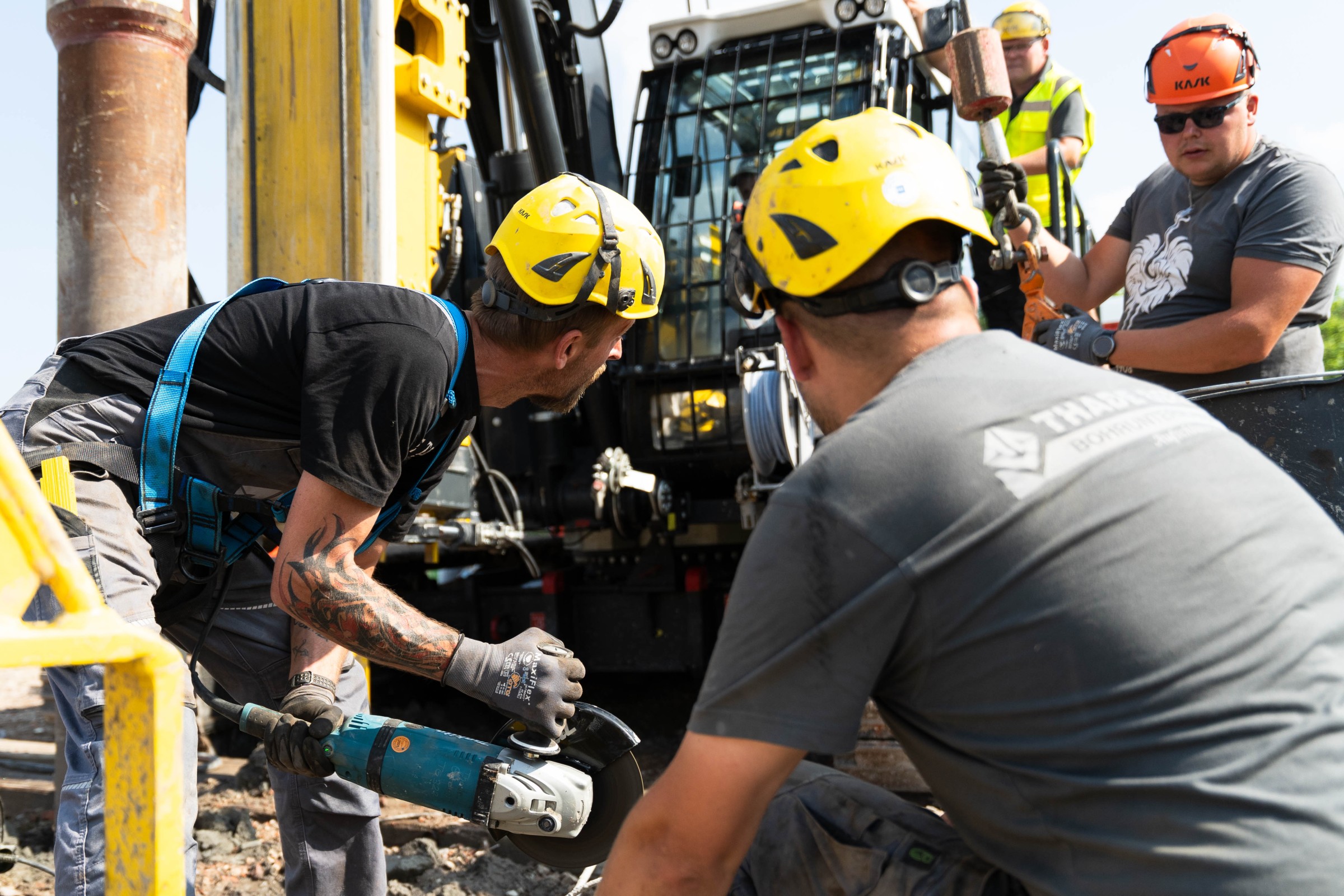
An Overview of the Benefits of Working with Thade Gerdes
✔ More than 125 years of experience in specialized civil engineering
For over a century, we have been reliably executing specialized civil engineering projects. Thanks to this expertise, we can also safely carry out your construction projects.
✔ Low Noise Emissions
Our modern drilling methods reduce noise and vibration to a minimum. This is a decisive advantage for projects in sensitive environments.
✔ A Wide Range of Services on Land and in Water
From soil investigations and pile drilling to challenging work on the water, we offer you a comprehensive range of services.
✔ Quick Project Kickoff
Our team coordinates all necessary steps—from obtaining permits to planning the resources for our work—so that your construction project can begin without delays.
✔ Transparent Pricing Structure
With transparent pricing, you maintain full control over your budget at all times. There are no hidden additional costs.
✔ Reliable Adherence to Deadlines
Our project managers ensure that processes are followed and that your construction project is completed on schedule.
✔ Sustainability and Environmental Protection
We operate in accordance with the requirements of the DVGW W120-1 certification and prioritize resource-efficient practices that protect the soil and groundwater.
✔ Personal Support
A dedicated contact person will guide you through the entire project and keep you regularly updated on its progress.
✔ Professional Execution of Public and Private Projects
Whether public or private projects, we always deliver solid results and meet all deadlines.
Take advantage of the benefits offered by Thade Gerdes and schedule your free, no-obligation consultation!
Conclusion: Starting a business that’s ready for the future, despite new challenges
Climate change is noticeably altering conditions in the building site: rising or falling groundwater levels, heavy rainfall, or periods of drought are placing increasing strain on shallow foundations. Deep foundations provide the necessary stability here because they transfer structural loads to load-bearing deeper layers or to bedrock. This ensures that structures remain durable, safe, and retain their value even under difficult conditions.
With Thade Gerdes, you have a specialized company at your side that combines expertise, certified processes, and personalized support.
Get started on your safe construction project with Thade Gerdes today. Schedule your no-obligation, free initial consultation!
Frequently Asked Questions About Deep Foundations
What is a deep foundation?
A deep foundation is a foundation that transfers structural loads to deeper soil layers or directly into bedrock. This is typically achieved using piles, the length of which depends on the bearing capacity of the soil. Deep foundations are always used when the subsoil near the surface is too soft.
When is a shallow foundation no longer sufficient?
Shallow foundations are not sufficient if the subsoil becomes soft due to climatic influences, such as when the soil is waterlogged or dried out. In such cases, deep foundations or soil replacement are necessary.
What is soil replacement?
Soil replacement is a construction method in which soft or non-load-bearing layers of soil are removed and replaced with load-bearing material such as gravel or crushed stone. This improves the subgrade and prepares it to support the loads from the structure.
How does soil replacement differ from deep foundation?
In soil replacement, the non-load-bearing soil near the surface is replaced. Deep foundation systems, on the other hand, transfer the structure’s loads via piles or similar methods to deeper, more stable layers or to bedrock. They are used when the subsoil is unsuitable over significant depths or when high loads and climate-related risks must be taken into account.
How does climate change affect foundations?
Rising groundwater levels, heavy rainfall, or periods of drought can alter the subsoil. This can lead to settlement, which causes damage to structures. That is why it is important to build the structure on a sturdy foundation.
How does a deep foundation protect against the effects of climate change?
In this construction method, loads are transferred to deeper, stable soil layers. By selecting an appropriate pile length, the bearing capacity is maintained even when the soil near the surface is too soft.

