

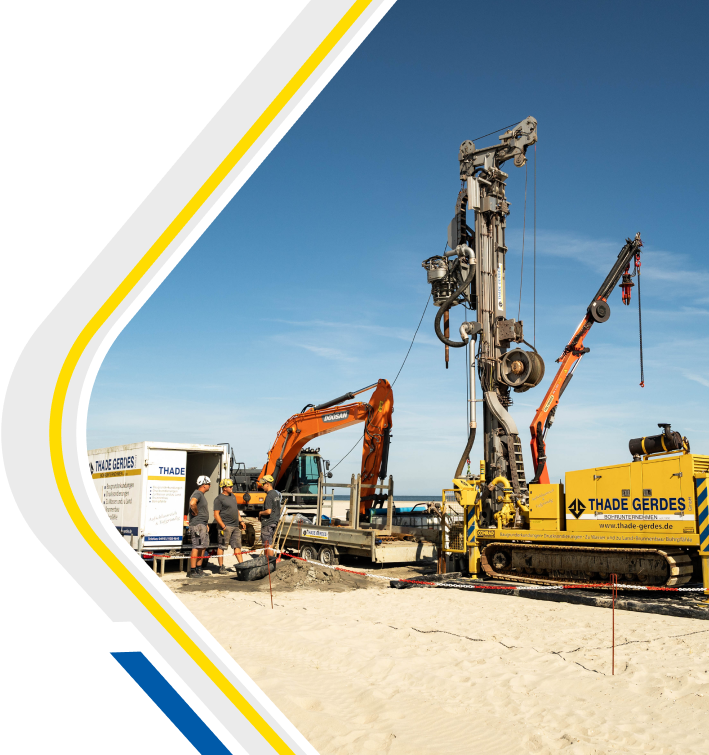
Every structure needs a solid foundation to remain stable over the long term. However, if the soil on your building site is too soft, a pile foundation may be the ideal solution. This technique not only ensures the building’s long-term stability but also helps reduce costs. With a pile foundation, you can overcome challenging soil conditions and avoid costly repairs.
The following article provides a detailed look at the advantages, process, and costs of pile foundations and shows you how to carry out your projects in a robust and cost-effective manner. We’ll show you the different types of pile foundations available and what they’re best suited for. Using our practical checklist, you’ll see at a glance the 9 tips you absolutely must keep in mind when planning and selecting your pile foundation. This way, you’re guaranteed to make the right decision for your construction project.
Table of Contents
Key Points About Pile Foundations:
Pile foundations provide a safe and durable solution when the subsoil does not have sufficient bearing capacity to support the structure. They are particularly advantageous in difficult soil conditions, such as soft soil.
With various types of piles—such as driven piles, bored piles, micropiles, displacement piles, and screw piles—it is possible to find the right method for every construction project.
Pile foundations are environmentally friendly, space-efficient, and offer long-term cost savings due to their long service life. |
What is a pile foundation, and what is it used for?
A pile foundation is a deep-foundation technique in which load-bearing piles are driven into the ground. The goal is to transfer the weight of a structure to deeper, more stable soil layers. This technique is used when the upper soil layers are too soft to support the structure. Examples include clay soils, backfill, or peaty soils, which lose stability when it rains and therefore require a deeper foundation.
The 5 Different Types of Posts
There are 5 different types of piles, which are used depending on the geological conditions and the requirements of the construction project. Choosing the right pile is crucial for the stability of the entire structure and the cost-effectiveness of your project.
- Driven piles are driven into the ground by hammering. They are a cost-effective option for pile foundations. Driven piles are often used in areas with firm but insufficiently load-bearing soil, and the noise and vibrations they generate do not disturb anyone or cause any damage.
- Drilled piles are installed by drilling into the ground and cause less vibration than driven piles. This makes them the ideal pile foundation in urban areas without a high water table.
- Micropiles are smaller piles and more complicated to install. For this reason, they are used, for example, in the careful renovation of older buildings to reinforce their foundations. They are also particularly well-suited for tight construction sites or buildings.
- Displacement piles are drilled into the ground with minimal vibration and noise. They are particularly suitable for soft soils, such as loam, peat, or clay. Displacement piles can be installed relatively quickly and cost-effectively.
- Screw piles are driven into the ground and cause only minimal vibrations. They are particularly well-suited for light loads, such as carports, sunrooms, garages, etc.
Are you building on a site with soft soil or challenging subsoil conditions? If your building site lacks sufficient bearing capacity, a pile foundation is a worthwhile option. Even for large construction projects, such as high-rises, bridges, or wind farms, pile foundations are almost always required to ensure the necessary stability. In Venice, for example, nearly all buildings are built on piles because the ground is too soft to support heavy loads.
How does a pile foundation work?
The pile foundation process consists of several steps, which vary depending on geological conditions and construction requirements. However, the basic principles remain the same.
1. Soil Investigation and Planning: Before work on the pile foundation can begin, a detailed geotechnical investigation must be conducted. This provides information about the soil’s bearing capacity and helps in selecting the correct type of pile.
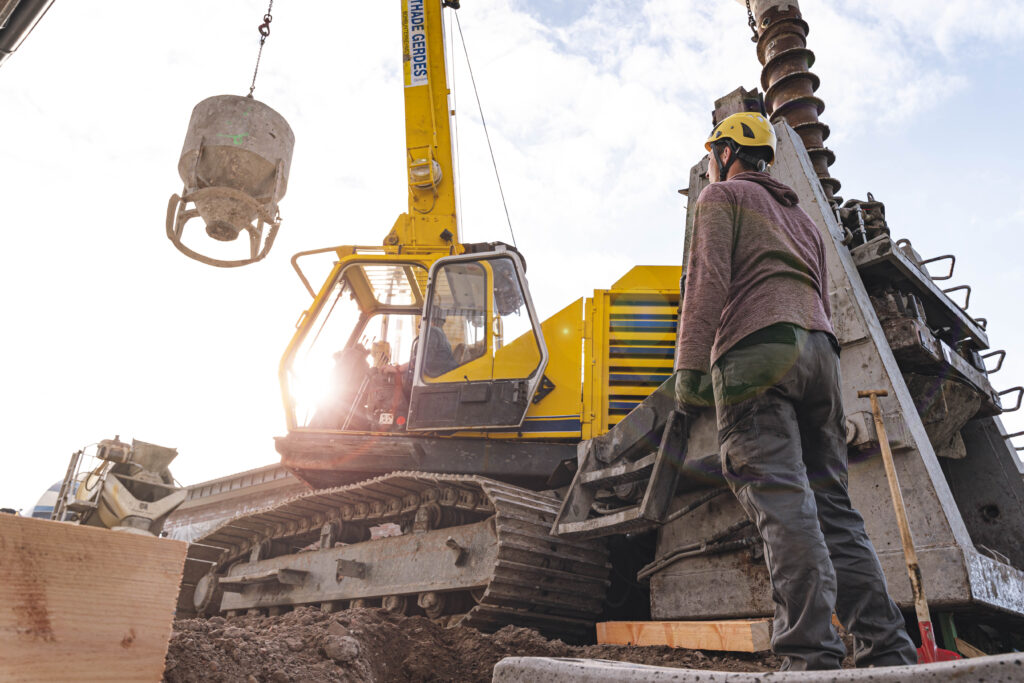
2. Setting Posts: The actual process of pile installation depends on the type of pile. For driven piles, the piles are driven into the ground by hammering, while for bored piles and displacement piles, a hole is drilled into which the pile—consisting of steel reinforcement and ready-mix concrete—is inserted.
| 💡The selection of the right bored pile depends primarily on soil conditions, construction requirements, local conditions, environmental factors, project size, and the geotechnical investigation report. For every construction project, the appropriate type of bored pile is selected based on these factors to ensure a stable and durable foundation. |
The 4 Key Benefits of Pile Foundations for Your Construction Project
The use of pile foundations offers four key advantages that you should consider for your construction project:
✔ Durability even in difficult soil: Pile foundations provide a solid foundation, even when the soil near the surface soil near the surface is not load-bearing. They transfer the structure’s load to deeper, more stable soil layers.
✔ Environmentally Friendly Method: Although pile foundations require more material than other types of foundations, they generate less excavated soil that needs to be hauled away. This helps protect the environment.
✔ Space-saving: Pile foundations require less space than traditional foundations. This makes them particularly suitable for tight construction sites.
✔ Cost-effective: At first glance, pile foundations cost more than shallow foundations. However, the cost of sampling and then disposing of the soil—which is relatively expensive—is often overlooked in cost calculations. This expense then puts a significant strain on the budget. So, overall, deep foundations are not necessarily more expensive than shallow foundations these days.
If you have a construction project under challenging conditions, pile foundations could be the ideal method for completing it safely and cost-effectively.
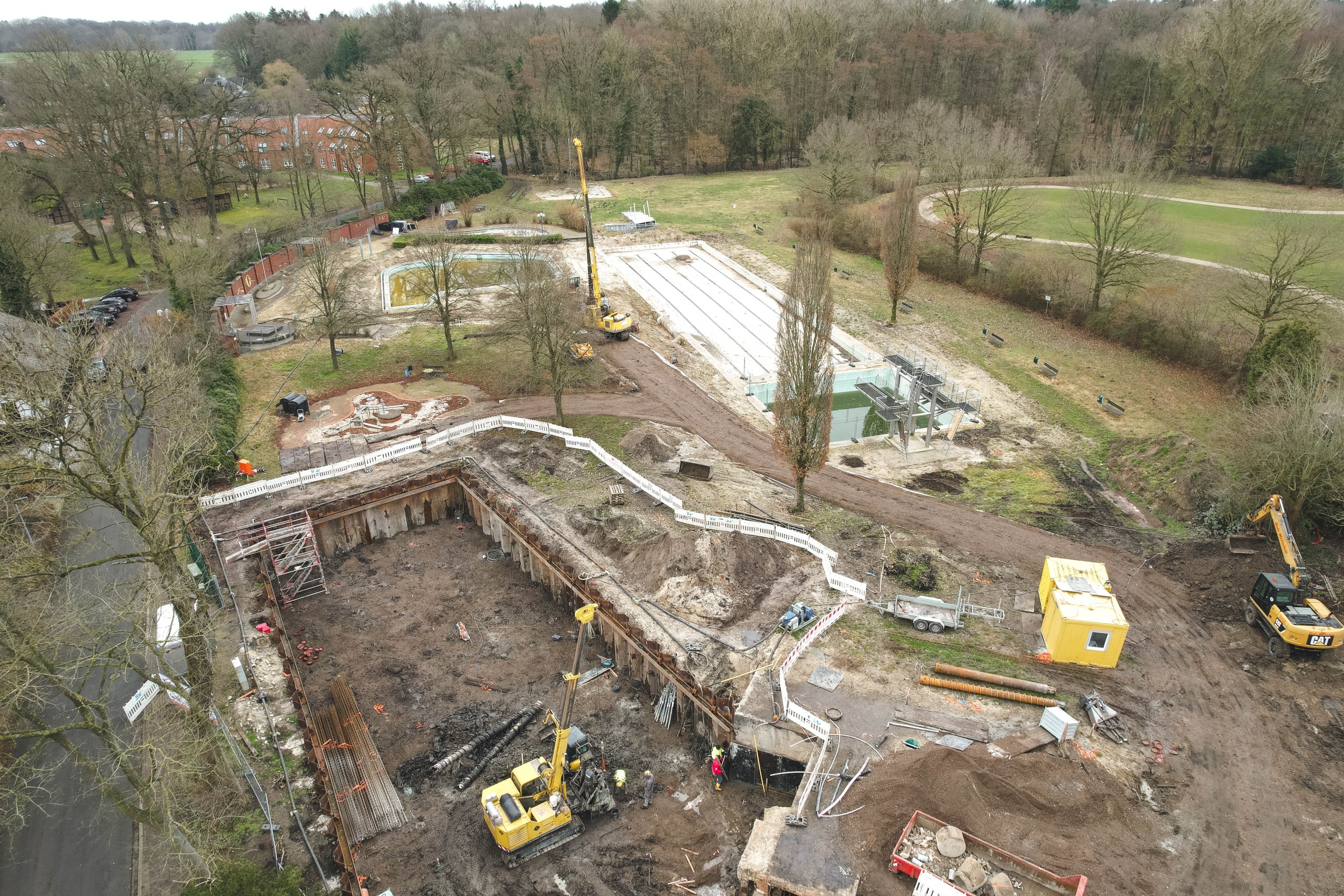
What costs can you expect for a pile foundation?
The cost of a pile foundation varies widely. It depends on various factors, such as the geological conditions of the building site and the depth and type of piles. In cold regions, for example, the foundation must be anchored at a depth below the frost line. This is the only way to prevent damage caused by frozen ground. This depth varies depending on the geographic location and must be taken into account during the planning phase.
| Driven pile: | 50 and 150 EUR per meter |
| Bored pile: | 150 to 300 EUR per meter |
| Micropile: | 200 to 500 EUR per meter |
| Screw pile: | 100 to 200 EUR per meter |
| Displacement pile: | 80 to 130 EUR per meter |
| 💡Despite higher initial costs compared to other types of foundations, pile foundations offer significant long-term savings. Their long service life and lack of maintenance make them a cost-effective solution over the entire lifespan of the structure. |
9 Tips to Keep in Mind When Planning and Selecting Your Pile Foundation
1. Conduct a soil test. It is essential for selecting the right type of stake.
2. Select a post type. Make your decision based on the geological conditions and your budget.
- Driven piles are cost-effective.
- Drilled piles, when less noise and vibration are required and the water table is far below the surface (ideal for urban areas)
- Micropiles, when space is limited and the loads are lighter.
- Vibration-free displacement piles are particularly suitable for soils such as loam, peat, or clay.
- Screw piles for exceptionally easy installation, ideal for soft soil and small construction projects with minimal vibration.
3. Take the construction time into account. The various methods of pile foundation construction differ in terms of construction time. Keep this in mind to avoid delays. For example, driven piles can be installed particularly quickly, while micropiles are more time-consuming.
4. Keep an eye on costs: The costs of the various pile foundation types vary. Take these into account when planning your budget.
5. Plan for future developments. If you know whether changes in the building’s use are to be expected, for example, you can take these factors into account. This ensures that your buildings will have a long service life.
6. Avoid common mistakes. They can lead to cost overruns and instability.
- Error 1: Inadequate geotechnical investigation—an inaccurate analysis of soil conditions can lead to incorrect planning.
- Mistake 2: Underestimating the construction time. Be sure to allow enough time for complex techniques such as bored piles.
- Mistake 3: Ignoring future geological changes. Make sure the foundation remains stable in the long term .
7. Factor in long-term maintenance costs, even though pile foundations do not require maintenance. Estimate the likelihood of repairs, especially under extreme geological conditions.
8. Consider the environmental friendliness of the method. Avoid unnecessary waste of materials and soil excavation. Choose a provider that complies with strict environmental regulations and uses sustainable practices.
9. Choose the right provider with experience and expertise. This person should be familiar with the specific construction conditions and possess the necessary technical expertise.
Are you still looking for the right contractor for your pile foundation? Then schedule your free, no-obligation initial consultation with Thade Gerdes — your expert in specialized civil engineering.
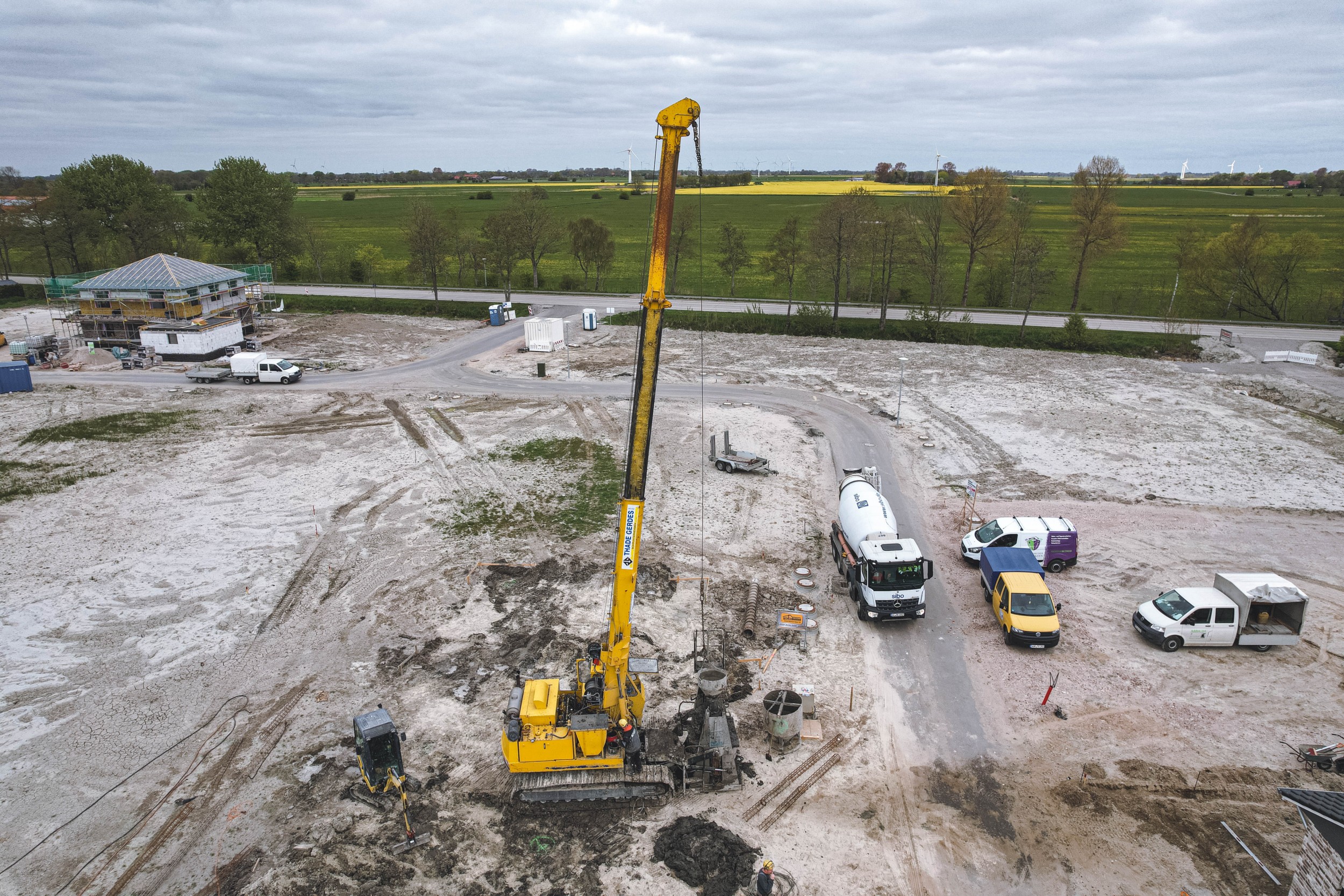
An Overview of the Benefits of Working with Thade Gerdes
✅ Over 125 years of experience in civil engineering and pile foundation work
Thanks to our many years of expertise, we know how to carry out your construction project safely and efficiently.
✅ Low Noise Emissions
With our modern drilling methods, we ensure that deep foundation work is carried out with virtually no noise or vibration.
✅ Comprehensive services, both on land and in water
Our services encompass a wide range of methods, from detailed site investigations to deep foundations—both on land and in water.
✅ Quick Project Launch
Thanks to our experienced team, we ensure a smooth start by coordinating all tasks—from permits to resource planning—quickly and efficiently.
✅ 100% Cost Transparency
With our clear pricing structure, you always know exactly what services you’re getting. You don’t have to worry about any unexpected additional costs.
✅ On-Time Delivery
Our project managers ensure that your deadlines are met—with timely and reliable execution.
✅ Environmentally Conscious Practices
Protecting the environment and conserving resources is important to us. We comply with all relevant regulations to protect the soil and groundwater, and we are certified according to DVGW W120-1.
✅ Personal Support
Your direct contact person is available to assist you with any questions or concerns and will keep you regularly updated on the progress of your project.
✅ Professional Execution of Private and Public Projects
Whether private or public projects—we always deliver solid results and meet all deadlines.
Take advantage of the benefits Thade Gerdes has to offer and schedule your free, no-obligation initial consultation!
Conclusion: Why Pile Foundations Are the Best Choice for Your Construction Project
Pile foundations are the ideal solution when the soil at your construction site does not have sufficient bearing capacity to safely support the structure over the long term. Piles ensure long-term stability, are environmentally friendly, save space, and minimize future repair costs.
Thanks to the wide variety of pile types—such as driven piles, bored piles, micropiles, displacement piles, and screw piles—it is possible to find the right solution for every construction project that meets the geological conditions and project requirements. In the long term, pile foundations not only offer a high level of safety but are also cost-effective and sustainable. If you want to carry out your construction project safely, quickly, and in an environmentally responsible manner, a pile foundation is the perfect choice.
Get your construction project off to a safe start with Thade Gerdes and schedule your no-obligation, free initial consultation!
Frequently Asked Questions About Pile Foundations
When is a pile foundation necessary?
Pile foundations are required when the soil layers near the surface do not provide sufficient bearing capacity to support the structure. This is the case, for example, with soft soils.
How much does a pile foundation cost?
The cost of a pile foundation varies depending on the type of pile and soil conditions. Driven piles cost about 50 to 150 EUR per meter, while bored piles can cost up to 300 EUR per meter. Micropiles are the most expensive, costing up to 500 EUR per meter, but they offer specific advantages in tight or difficult construction conditions.
What is the difference between a driven pile and a bored pile?
Driven piles are installed by driving them into the ground, which is quick and cost-effective. Drilled piles, on the other hand, are drilled into the ground without causing vibrations or noise, making them ideal for urban areas.
How does a pile foundation work?
In pile foundation construction, load-bearing piles are driven into the ground to transfer the structure’s load to deeper, more stable soil layers. The process involves a soil investigation, the selection of the appropriate pile, and installation by drilling, driving, or screwing.
What types of posts are there?
There are various types of piles, such as driven piles, bored piles, micropiles, displacement piles, and screw piles. The choice depends on the geological conditions, the construction requirements, and the required bearing capacity.
What are the advantages of pile foundations?
Pile foundations provide long-term stability for structures, are particularly environmentally friendly because they require less material and excavated soil, and save space. They are ideal for challenging soil conditions and reduce future maintenance costs.
What is the difference between shallow foundations and deep foundations?
The main difference between shallow foundations and deep foundations lies in the depth to which the foundation is poured. Shallow foundations are built directly into load-bearing soil at a shallower depth. This requires a solid subsoil capable of supporting the structure’s load. Deep foundations, such as pile foundations, are installed in deeper, more stable soil layers to transfer the loads from buildings to soils that do not have sufficient bearing capacity at the surface. Deep foundations are primarily required in soft soils.

