

Table of Contents
Most errors in site investigation do not occur on the construction site. They arise during the planning phase—insufficient investigation, exploration that is too shallow, or the selection of the wrong methods. This leads to incorrect assumptions about the site conditions.
The consequences don’t become apparent until later. Settlement, cracks, or moisture problems arise even though the structure was planned long ago. The real problem, then, lies not in the soil, but in how the site investigation was planned.
In this article, we’ll show you how to properly plan a site investigation, determine the appropriate scope, and avoid common mistakes from the start.
Key Points on Site Investigation at a Glance
- A site investigation provides the foundation for planning your construction project, as it reliably determines the bearing capacity, layers, and properties of the soil.
- The scope, depth, and methods of the investigation must be appropriate for the site and the structure so that all relevant parameters and risks are fully assessed.
- Too few test points, insufficient depth of investigation, or incorrect methods can lead to an inaccurate assessment of the subsurface and cause risks associated with the building site to go undetected.
- Missing or incomplete information about the building site often leads to settlement, cracks, or problems with groundwater, resulting in high additional costs during construction.
1. Why a Site Investigation Determines the Foundation of Your Building
A site investigation forms the basis for every decision regarding your building’s foundation. It provides the data used to evaluate the bearing capacity and behavior of the soil under load. Only then does it become clear how the subsoil reacts to the loads imposed by the structure and what its actual properties are.
Based on this, a decision is made as to which type of foundation is appropriate. If the soil is stable and uniform, a shallow foundation is often sufficient. If, on the other hand, the soil is unstable or consists of varying layers, a deep foundation is required.
If this information is missing or incomplete, the establishment of the company cannot be determined with certainty. Instead of reliable results, planning is based on an uncertain foundation.
2. How Many Tests Your Building Site Really Needs
There is no set number of surveys. It always depends on the soil conditions and the planned construction project.
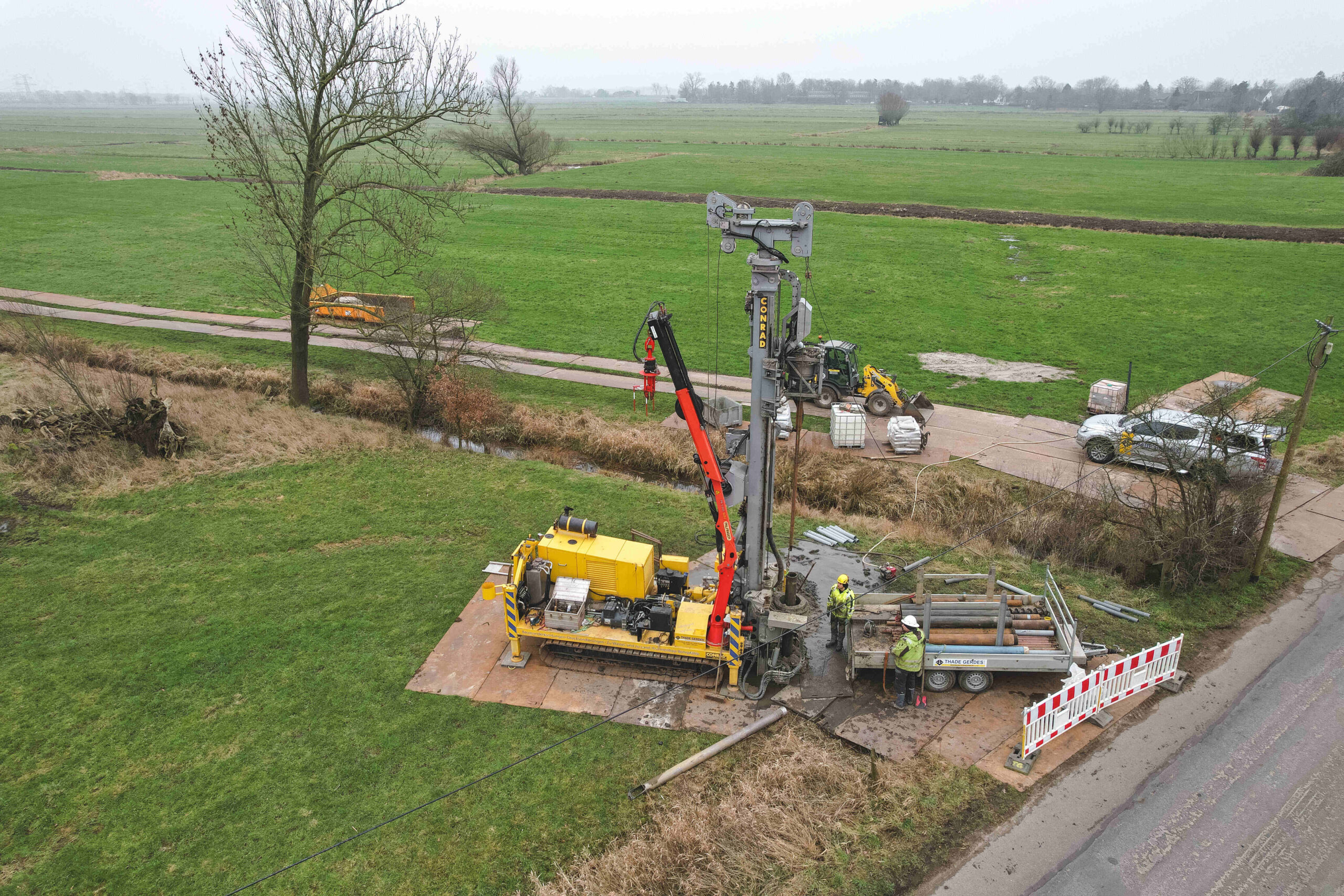
The subsoil is examined at several points through drilling and probing. This is the only way to obtain an accurate picture of the actual conditions underground. The goal is to create a continuous subsoil profile covering the entire area. It shows the composition of the individual soil layers and how they behave beneath the structure.
If the soil has a uniform structure, just a few test points are often sufficient. The layers can be reliably mapped. The situation is different with variable soils. Different layers, inclusions, or soft zones require significantly more testing to ensure that all relevant areas are accounted for.
If too few points are surveyed, the actual stratigraphic profile remains incomplete. Critical areas in the subsoil go undetected, and the assessment of the foundation soil is based on incomplete information.
3. How deep you need to investigate the subsoil to avoid risks
The depth of exploration determines whether critical layers are detected at all.
Site investigations assess soil conditions at various depths. The key factor here is not the surface, but the area beneath the foundation.
That is precisely where the loads from the structure are transferred into the ground.
That’s what matters when it comes to the depth of exploration
- The load-bearing layers must be fully documented
- The underlying zones also influence settlement behavior
- The appropriate depth depends on the size and load of the structure, as well as the soil conditions encountered.
- Groundwater and soft layers further alter the behavior
What happens if the level of exploration is too low?
If the investigation does not go deep enough, critical areas underground will remain hidden.
- Soft layers or layers prone to settlement are not detected
- The load-bearing capacity is overestimated
- The building is being designed on the wrong basis
The problem doesn’t become apparent until later. Settlement occurs even though the surface layers appear to be stable. What matters is not what is visible on the surface, but what lies beneath the foundation.
4. Which site investigation methods yield truly meaningful results
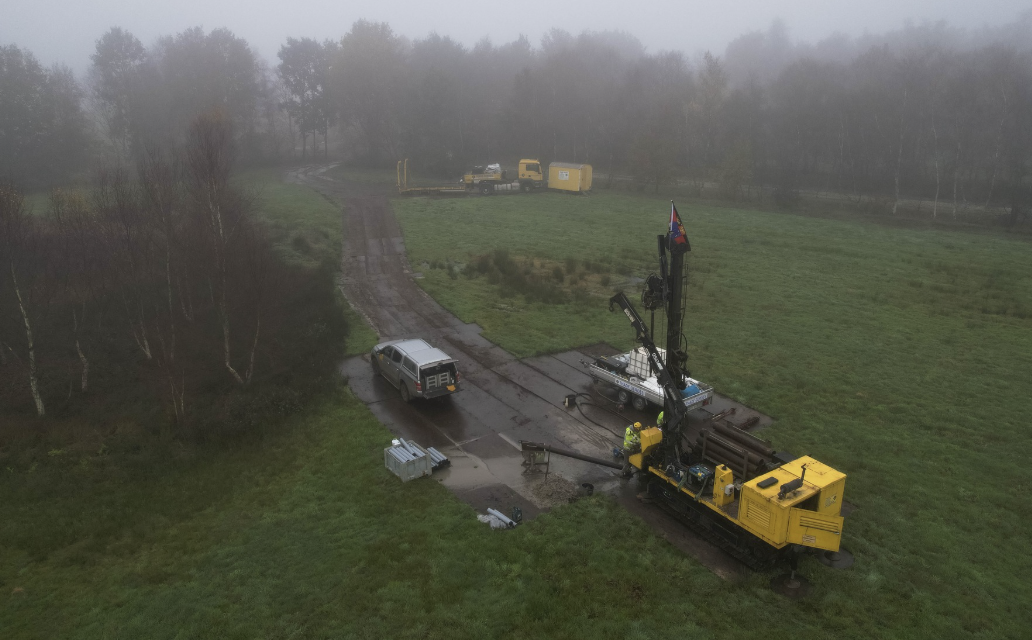
No single method provides a complete picture of the subsoil. Each method captures only certain properties of the soil. Only by combining several methods can a well-founded assessment be made.
These methods are used in geotechnical investigationsDrilling
- collect soil samples from various depths
- illustrate the geological structure and the sequence of strata
- enable laboratory analyses of properties and composition
Pile Driving Tests
- measure the resistance of the subsoil
- provide information on packing density and load-bearing capacity
- deliver quick results right on the spot
Pressure Soundings
- continuously measure soil strength at various depths
- accurately show transitions between different layers
- enable a detailed assessment of load-bearing capacity
- reach greater depths than dynamic probing
Boreholes reveal what lies beneath the ground. Dynamic or static load tests show how the soil behaves. Only when combined do they provide a reliable overall picture of the building site.
If only one method is used, important parameters remain unclear. The properties of the subsoil are not fully characterized, and the results cannot be reliably evaluated.
5. These 3 mistakes in site investigation lead to incorrect assumptions
Errors in site investigation rarely occur by chance. They almost always follow the same pattern. Inadequate planning results in a lack of important information about the site. This is precisely what leads to incorrect assumptions and risky decisions regarding the structure.
These Are the Most Common Mistakes in Site Investigation-
Insufficient investigations
Important areas of the subsoil are not assessed
Layers remain undetected, and the wrong foundation is chosen -
Insufficient depth of investigation
Load-bearing and non-load-bearing layers are incorrectly assessed
The actual bearing capacity of the soil is not correctly evaluated -
Inappropriate methods
Key data on bearing capacity and soil behavior are missing
The subsoil is assessed only near the surface
All three errors lead to the same result: the site conditions are misjudged. The design is then based not on actual conditions, but on incomplete data. This affects the bearing capacity, settlements, and the behavior of the soil under load.
6. What Impact Does the Lack of Site Data Have on Costs and the Construction Process?
Missing or incomplete site data rarely goes without consequences. The problems usually don’t become apparent until the construction project is already underway or has been completed. That is precisely what makes them so critical.
Typical Consequences of Inadequate Site Investigation- Settlement in a structure: The ground gives way under the load, causing the building to settle unevenly.
- Cracks in walls and foundations: Stress is caused by different movements in the subsoil.
- Water damage caused by groundwater: Moisture seeps in because the soil conditions were misjudged.
- Mold growth caused by settlement cracks: Moisture penetrates through barely noticeable cracks in the masonry because the building has settled unevenly.
If problems are not identified until the construction phase, making adjustments is time-consuming:
- Foundations must be reinforced or retrofitted with piles.
- Construction schedules are being delayed due to additional work
- Trades must be realigned
- Delays and extensions of the construction period result in incalculable additional costs
The highest costs arise when damage becomes apparent only after completion. Renovations then directly affect the building’s structure and result in significant additional costs.
7. How to Properly Incorporate the Results of the Site Investigation into Your Planning
Site investigation does not end with field testing. It consists of three key steps: conducting the tests, evaluating the results, and formulating an appropriate foundation recommendation.
Only when all the data is available and correctly interpreted can a solid foundation for planning be established.
The results must then be specifically incorporated into the design. This includes the selection of the foundation type, the sizing of the foundation, and how to address special soil conditions such as groundwater or soft layers.
This is exactly where the difference lies. The data alone is not enough. What matters is how it is analyzed and translated into technical measures.
This requires experience in site evaluation and foundation engineering. Only then can the correct conclusions be drawn from the investigation results and translated into a safe design.
An experienced specialist firm can identify early on what measures are necessary and how risks associated with the building site can be specifically addressed. This is exactly where Thade Gerdes comes in, guiding building owners from the initial assessment through to a practical foundation recommendation.
If you want to set up your site investigation correctly from the start, request a site investigation directlyto have your project professionally reviewed.
Why You Should Conduct Your Site Investigation with Thade Gerdes
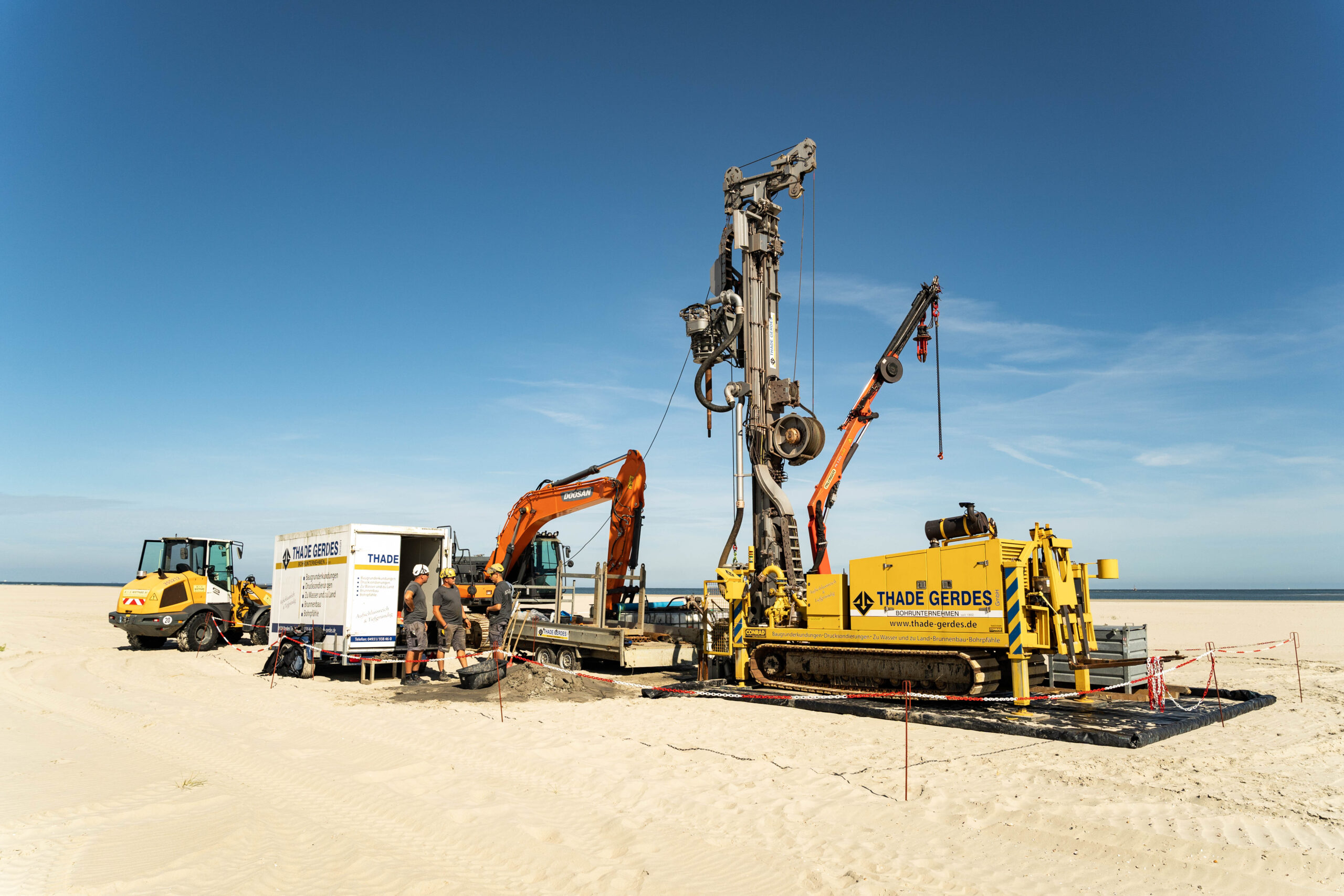
Accurate site investigation depends entirely on experience, technology, and thorough analysis. This is exactly where Thade Gerdes comes in.
✔ More than 125 years of experience in the field of geotechnical engineering
For more than a century, the company has been specializing in building sites, subsoil, and foundation engineering. This knowledge, gained from numerous projects, is directly incorporated into your site investigation.
✔ Gentle Methods for Sensitive Construction Environments
Modern equipment ensures that drilling and probing are carried out with as little vibration as possible. This is particularly important in densely built-up areas or near existing buildings.
✔ Site Investigation for a Wide Range of Applications
Whether it’s a traditional onshore construction project, projects near the coast, or work in aquatic environments, our site investigation services are tailored to the specific conditions and carried out with technical precision.
✔ A Structured Process for a Quick Project Launch
From the initial consultation through the planning of the surveys to their execution. Every step is coordinated so that your construction project can begin without delays.
✔ Transparent Services and Cost Estimates
You’ll receive an overview of which tests are being conducted and what results are available. This allows you to plan the scope of your site investigation.
✔ Reliable execution according to fixed schedules
The site investigation is carried out in coordination with your construction schedule. Deadlines are met so that subsequent work can begin without any delays.
✔ Careful Handling of Soil and Groundwater
Work is carried out in accordance with applicable standards regarding the handling of sensitive areas such as groundwater and the subsoil.
✔ A dedicated point of contact throughout the entire project
You’ll always have a direct point of contact who is familiar with the status of the site investigation and can provide specific answers to your questions.
✔ Experience ranging from single-family homes to large-scale projects
Whether it’s a small construction project or a complex undertaking, the site investigation is tailored to the scope, requirements, and site-related risks.
Get your site investigation right from the start and request your site investigation nowto ensure your construction project is supported by expert knowledge.
8. Conclusion: Why a Thorough Site Investigation Protects Your Construction Project
A site investigation determines whether your construction project is based on a solid foundation or on assumptions. The scope, depth, and methods must be precisely tailored to the site conditions and the project.
Insufficient investigations, an inadequate level of detail, or inappropriate methods can lead to an incorrect assessment of the subsoil. The consequences often do not become apparent until later and result in significant additional costs.
A professionally planned site investigation, on the other hand, provides reliable data. It clarifies bearing capacity, soil behavior, and potential risks, and enables the selection of a safe foundation system.
This is exactly where experience sets itself apart from uncertainty. Those who properly assess the building site can identify early on what measures are necessary and how risks can be specifically addressed.
If you want to ensure your construction project is built on a solid foundation from the very beginning, submit your request for a site investigation and have the key parameters of your building site professionally assessed.
9. FAQ: Frequently Asked Questions About Site Investigation
What exactly is examined during a site investigation?
During a site investigation, the properties of the subsoil are systematically assessed. This includes the nature of the soil, its bearing capacity, the layers in the subsoil, and the effects of groundwater.
The methods used include drilling with soil sampling, dynamic load testing, and static load testing. The results are analyzed in the laboratory and summarized in a geotechnical report.
Why is site investigation so important for building owners?
For building owners, site investigation forms the basis for reliable planning. Without this information, it is impossible to determine whether the subsoil is suitable for the planned structure.
A lack of data significantly increases the risk associated with the building site. Typical consequences include settlement, cracks in the building, or problems caused by groundwater.
What methods are used to investigate the building site?
The choice of methods depends on the on-site conditions and the requirements of the construction project.
Commonly used methods include:
- Drilling to collect soil samples
- Pressure testing to determine bearing capacity
- Laboratory tests to analyze the properties of individual layers
Only the combination of these methods provides a sound assessment of the subsoil.
How is a site investigation report prepared?
The geotechnical report is compiled in several steps. First, boreholes are drilled and cone penetration tests are conducted on-site. The soil samples are then analyzed in the laboratory.
Based on this data, the results are evaluated and compiled into a report. This report includes all key parameters, recommendations regarding the foundation, and information on potential risks associated with the building site.
How many surveys are required for a construction project?
The number of tests depends on the size of the construction project and the nature of the building site.
On uniform soils, fewer test points are sufficient. In the case of variable soil layers or unclear conditions, additional boreholes and test pits are required to obtain a complete picture.
What risks arise without adequate site investigation?
Without adequate investigation, the building site cannot be fully assessed.
This often leads to:
- Settlement in the Structure
- Cracks in the building
- Water Damage Caused by Groundwater
- Mold Damage Caused by Moisture in Cracked Walls
- unplanned adjustments during construction
These risks cause technical problems and significant additional costs.
How long does it take to conduct a site investigation?
On-site work, such as drilling and test excavations, usually takes only a few days. The subsequent laboratory analysis and the preparation of the soil investigation report take a few more days.
Overall, depending on the project, builders should expect it to take about three to four weeks.
What role does the site plan play in geotechnical investigation?
The site plan is an important basis for planning the investigations. It shows where the structure is to be located on the property and where the boreholes and test pits will be drilled.
This ensures that all relevant areas of the building site are surveyed and that the results can later be correctly applied to the construction project.

