


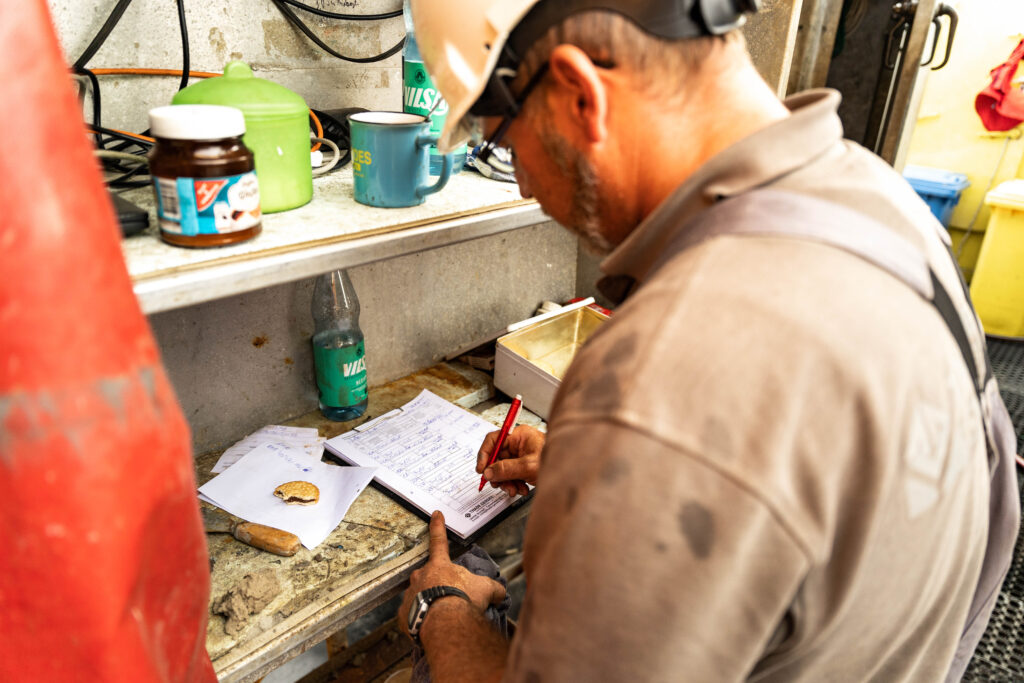
Anyone who wants to calculate the bearing capacity of the soil usually looks for a formula. In practice, however, a simple calculation is not enough. This is because the bearing capacity of the soil always depends on the actual conditions at the specific site, such as soil type, stratigraphic structure, and water conditions. These values must first be determined through a site investigation. Only on this basis can an assessment be made as to which foundation type is suitable for the construction project.
If it turns out that the layers near the surface do not provide sufficient bearing capacity, deep or pile foundations may be necessary. In this article, you’ll learn why specific soil properties are required to calculate bearing capacity, how these are determined, and what factors influence them. We’ll also show you how the results are evaluated and how they influence the choice of foundation. This will help you lay the groundwork for a sound foundation decision.
Table of Contents
Key Points on Calculating Soil Bearing Capacity:
It is not possible to calculate the bearing capacity of the soil without specific soil data. Only a site investigation can provide reliable data on soil bearing capacity and prevent poor decisions regarding foundation design.
Soil type, stratigraphic structure, and moisture conditions have a significant impact on bearing capacity and vary depending on the site; therefore, blanket assumptions can lead to incorrect results.
The determined values directly determine the type of foundation: If the bearing capacity is insufficient, a deep foundation or pile foundation is necessary to safely transfer the loads.
Why don't calculations work without ground values?
Anyone who wants to calculate the bearing capacity of the soil needs specific input data. These include parameters such as compaction density, grain size distribution, consistency, moisture content, angle of internal friction, and settlement behavior. These values describe how the soil behaves under load. However, without a site investigation, this data is not available.
Instead, assumptions are often used—based, for example, on empirical data or general soil classes. The problem is that these assumptions rarely correspond exactly to the actual conditions on the property.
This results in unreliable calculations that directly affect the construction project:
- Bearing capacity is misjudged because actual soil parameters are missing
- Incorrect choice of foundation, since the soil’s load-bearing capacity is not properly assessed
- Inappropriate foundation types are implemented and must be adjusted later
It is precisely these retroactive adjustments that cause delays in the construction process and significantly increase the technical workload. As a rule, this can be avoided by conducting soil investigations early on.
What factors influence bearing capacity and soil load-bearing capacity?
The bearing capacity of the soil is not determined by a single value, but rather by the interaction of the following factors.
- Soil Type: Sand, clay, loam, and peat react differently to stress.
- Layer Structure: Load-bearing and soft layers may alternate.
Groundwater Conditions: Groundwater affects the strength and settlement behavior of the soil.
Bearing Capacity of the Soil: Describes how the soil deforms under load.
These factors vary greatly from one property to another. Even within a single building lot, conditions can change significantly with depth. For this reason, it is not possible to make general statements about bearing capacity.
The situation becomes critical when several unfavorable conditions occur simultaneously. For example, soft soil combined with varying soil layers can prevent loads from being distributed evenly. In such cases, the bearing capacity of the upper soil layer is insufficient. The result: Deep foundations are required, in which the loads are transferred via piles to deeper, load-bearing layers.
Where do the required soil values come from?

The required soil data are not derived from estimates, but rather from targeted on-site investigations and laboratory analysis of soil samples. The following methods are used as part of a site investigation:
- Boreholes provide soil samples from various depths and reveal the stratigraphic structure.
- Pressure Soundings measure soil resistance directly in the ground and provide information about bearing capacity.
- Laboratory analyses examine the collected samples for parameters such as density, moisture content, and strength.
Each of these methods provides some of the key information. Only by combining all the results can a well-founded assessment of soil conditions be made.
How are the results evaluated?
The soil data collected are compiled and analyzed in the geotechnical report. The goal is to assess the soil’s load-bearing capacity under load and to determine the appropriate foundation system based on this assessment.
The focus is on:
- Soil Bearing Capacity
→ what loads can be supported and at what depths load-bearing layers are located - Soil Behavior Under Load
→ whether settlement or deformation is to be expected - Determining the Type of Incorporation
→ Which type of foundation is technically required?
The evaluation is always conducted in the context of all the data collected. Individual values are not meaningful; what matters is the interaction of the soil parameters.
The geotechnical report then serves as the basis for structural design and construction. Errors in the assessment directly lead to incorrect assumptions about the soil’s load-bearing capacity and, consequently, to risks during the construction process.
What factors influence the choice of business structure?
The bearing capacity of the soil determines how the loads from a structure are transferred.
Basically, there are two possible scenarios:
- Sufficient bearing capacity in the upper soil layer
→ Shallow foundation possible; load transfer through near-surface layers - Insufficient load-bearing capacity
→ Deep foundations are required because the soil cannot safely support the loads
If the bearing capacity is insufficient, piles are used:
- Load transfer to deeper, load-bearing layers
- Bridging soft or non-load-bearing soil zones
The choice of foundation is based directly on the results of the soil investigation and the determined bearing capacity.
What are some common mistakes made when estimating load-bearing capacity?
Errors in estimating load-bearing capacity usually arise not from complicated calculations, but from a lack of foundational knowledge. Two causes are particularly common:
- Waiver of a Site Investigation
→ There is a lack of specific data on soil type, stratigraphic composition, and groundwater conditions - Assumptions about the ground without actual measurements
→ Decisions are based on empirical data rather than actual conditions
The problem: Without reliable data, load-bearing capacity is often misjudged. The consequences often don’t become apparent until later in the construction process:
- Settlement lead to uneven movements in the structure
- Cracks in the structure are caused by stresses in the structural framework
- significant renovation costs due to retroactive modifications to the foundation
A particularly critical issue is that these problems often do not arise immediately, but only become apparent after completion. At that point, making corrections is significantly more time-consuming.
In many cases, an incorrect assessment leads to the originally selected foundation being insufficient. As a result, a deep foundation must be installed later to ensure the structural stability of the building.
When is a detailed soil analysis particularly important?
It is not always possible to clearly assess the bearing capacity of the soil on every property. However, there are typical situations in which a soil investigation is absolutely necessary because the risk of making the wrong decisions increases significantly.
The following conditions are particularly critical:
- Soft soils such as peat or loose sand
→ low bearing capacity and increased susceptibility to settlement - High groundwater level
→ affects the strength of the soil and makes load transfer more difficult - Varying soil layers
→ result in uneven loading and varying settlement
In these cases, it is not possible to reliably estimate the bearing capacity. Without specific measurement data, there is a high risk of misjudging the soil conditions.
It is precisely in situations like these that it often becomes apparent that a shallow foundation is insufficient. Instead, deep or pile foundations are necessary to safely transfer the loads to load-bearing layers.
If you’re unsure how stable your building site is, have your soil tested by experts. Thade Gerdes will examine your building site, assess its load-bearing capacity, and recommend the most suitable foundation for your project. If necessary, deep foundations and pile foundations will be installed to ensure your construction project is built on a secure foundation.
Book your free, no-obligation initial consultation with Thade Gerdes and request your load-bearing capacity calculation!
An Overview of the Benefits of Working with Thade Gerdes
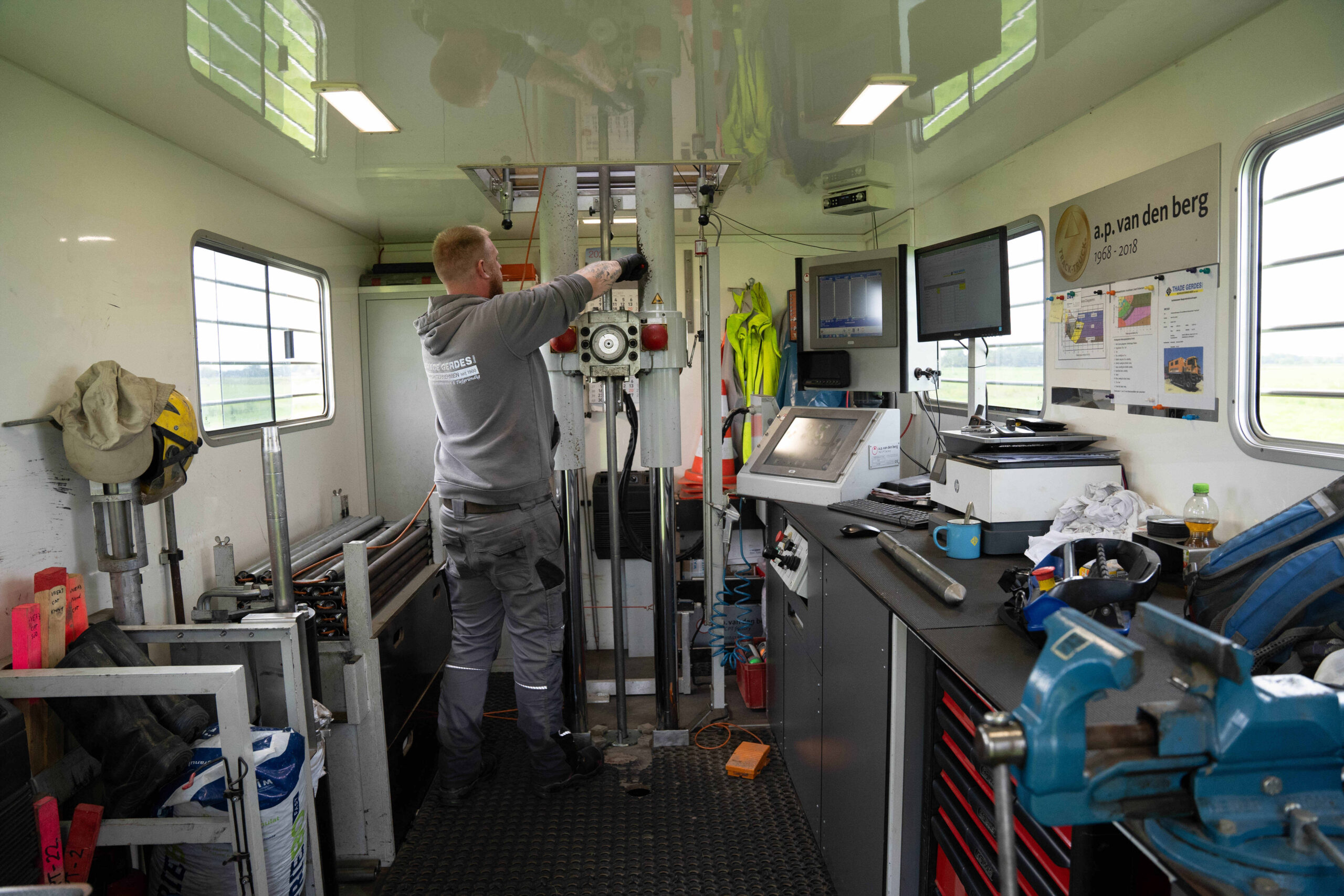
✔ Over 125 years of experience in deep foundation engineering and soil mechanics
→ This expertise reduces planning risks and ensures sound decisions regarding foundation design.
✔ Use of precision drilling technology to minimize noise and vibrations
→ Suitable for existing buildings and sensitive environments.
✔ The investigation, load-bearing capacity assessment, and implementation of the foundation are directly interlinked
→ no coordination issues between the engineer and the contractor.
✔ Quick project kickoff with coordination of planning, permits, and implementation
→ avoids delays in the construction process.
✔ Clear quotes with no surprises later on
→ Predictability for building owners and planners.
✔Installation in accordance with applicable guidelines for soil and groundwater protection (DVGW W120-1)
→ Safe installation even in water-bearing strata.
✔ Direct point of contact during planning and execution
→ Quick resolution of technical questions.
✔ Implementation for residential and commercial projects: Site investigation and deep foundation systems for single-family homes, residential and commercial buildings, and commercial construction projects
→ Foundation types are tailored to structural loads and soil conditions.
Book your free, no-obligation initial consultation with Thade Gerdes!
Conclusion: The Right Soil Assessment Leads to a Secure Foundation
It is not possible to calculate the bearing capacity of the soil without actual soil data. Only a site investigation provides the necessary data to correctly assess soil conditions and select the appropriate foundation. Those who rely on assumptions instead risk making poor decisions that could later lead to settlement, cracks, or costly repairs.
It is therefore crucial not to consider bearing capacity in isolation, but to always evaluate it in the context of soil type, stratigraphic structure, and moisture conditions. On this basis, a reliable decision can be made as to whether a shallow foundation is sufficient or whether a deep foundation or pile foundation is necessary.
If you want to build your construction project on a reliable foundation, you should determine the soil conditions early on. Thade Gerdes can assist you with everything from soil investigation to the installation of the appropriate foundation. Have Thade Gerdes calculate the bearing capacity of your soil and assess your site investigated!
Frequently Asked Questions About Calculating Soil Bearing Capacity
How can you calculate the bearing capacity of the soil?
The bearing capacity of the soil is not simply calculated; rather, it is based on actual soil properties. These are determined through a site investigation and then analyzed in a geotechnical calculation. Without this data, a reliable calculation is not possible.
Which soil properties are important for the bearing capacity calculation?
The most important factors include soil type, stratigraphic structure, moisture conditions, and parameters such as density, angle of internal friction, and settlement behavior. These factors determine how the soil reacts under load and what type of foundation is feasible.
Why isn't a calculation alone sufficient without a soil investigation?
Without a site investigation, the necessary input data is missing. A calculation is then based on assumptions rather than actual data. This often leads to incorrect estimates of bearing capacity and, consequently, to inappropriate foundation decisions.
When is a soil investigation absolutely necessary?
A site investigation is particularly important in cases of soft soil, high groundwater levels, or varying soil layers. In these cases, it is difficult to assess the bearing capacity, and the risk of making incorrect decisions is significantly increased.
When is a deep foundation or pile foundation necessary?
Deep foundations are required when the bearing capacity of the soil near the surface is insufficient. In such cases, piles are used to transfer the loads to deeper, stable layers and ensure structural stability.
What are the consequences of an incorrect assessment of load-bearing capacity?
An incorrect assessment can lead to settlement, cracks in the structure, and high repair costs. Often, the foundation must be retrofitted, which delays the construction process and results in significant additional costs.

