

Table of Contents
Many construction projects today take place in densely built-up areas. Existing buildings stand right next to the construction site, space is limited, and any vibrations can affect the surrounding structures. This is exactly where the displacement pile comes into play.
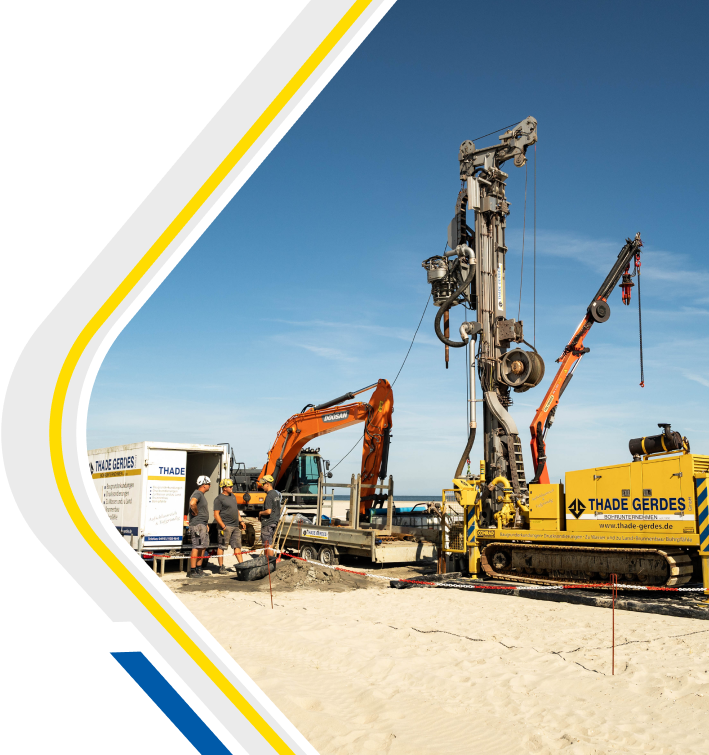
Displacement bored piles allow for vibration-free deep foundation installation without excavating the soil. Instead, the soil is displaced laterally. This creates a load-bearing pile without generating large amounts of excavated material or causing significant vibrations.
In this article, you will learn how a displacement pile works from a technical standpoint, which soil types and ground conditions are suitable for this method, and in which construction projects displacement piles are used particularly frequently.
Key Facts About the Displacement Pile at a Glance
- Displacement piles allow for vibration-free deep foundation installation because the pile is not driven into the ground. Instead, a rotating drilling tool displaces the soil laterally, resulting in minimal cuttings and less stress on adjacent buildings.
- The bearing capacity of a displacement pile results from skin friction and tip pressure. Lateral compaction of the soil can further improve load transfer in the subgrade.
- Cohesive to slightly cohesive soils—such as clay, loam, silt, or sandy mixed soils—are particularly suitable. The decision to use a displacement pile is always based on a site investigation.
- Typical applications include construction projects in residential areas, existing buildings, or infrastructure projects where minimizing vibrations, controlled execution, and predictable disposal costs are important.
1. Why Vibrations During Construction Are a Problem for Your Project
Pile driving methods are used for many pile foundations. In this process, the pile is driven into the ground with repeated blows. This method is technically proven, but it generates significant vibrations and noise that can be transmitted through the ground to adjacent buildings.
This poses a risk to existing structures, particularly in residential areas or densely built-up urban areas. The vibrations can be transmitted through the ground and lead to settlement, cracks in masonry, or damage to sensitive structural components. Older buildings, in particular, are often especially susceptible to such stresses.
For this reason, designers prefer vibration-free methods for many projects. These include, among others, displacement bored piles. In this method, the pile is not driven into the ground but is installed using a rotating drilling tool. This results in significantly less dynamic stress on the surrounding area.
Another advantage lies in the construction process:
- No vibrations for adjacent buildings
- less noise on the construction site
- Very little drill cuttings and lower disposal costs
These factors are becoming increasingly important. Cities are becoming denser, vacant building sites are rare, and construction projects are increasingly taking place within the existing built environment or in the immediate vicinity of existing buildings. For this reason, vibration-free foundation methods—such as displacement piles—are playing an ever-greater role in specialized civil engineering.
2. How a displacement pile works from a technical standpoint
With a displacement pile, the soil is not excavated. Instead, a special drilling tool displaces the existing soil laterally into the subgrade. This creates a borehole without the need to remove large quantities of cuttings.
Unlike pile-driving methods, this system does not rely on dynamic impact energy. The pile is not driven into the ground, but is installed by rotating it while applying constant pressure. As a result, no sudden impacts are generated that could propagate as vibrations through the ground.
Pole production consists of four steps:
- A special drilling tool is driven into the ground using a rotating motion and pressure.
- The tool displaces the soil to the side, thereby forming the cross-section of the pile in the ground.
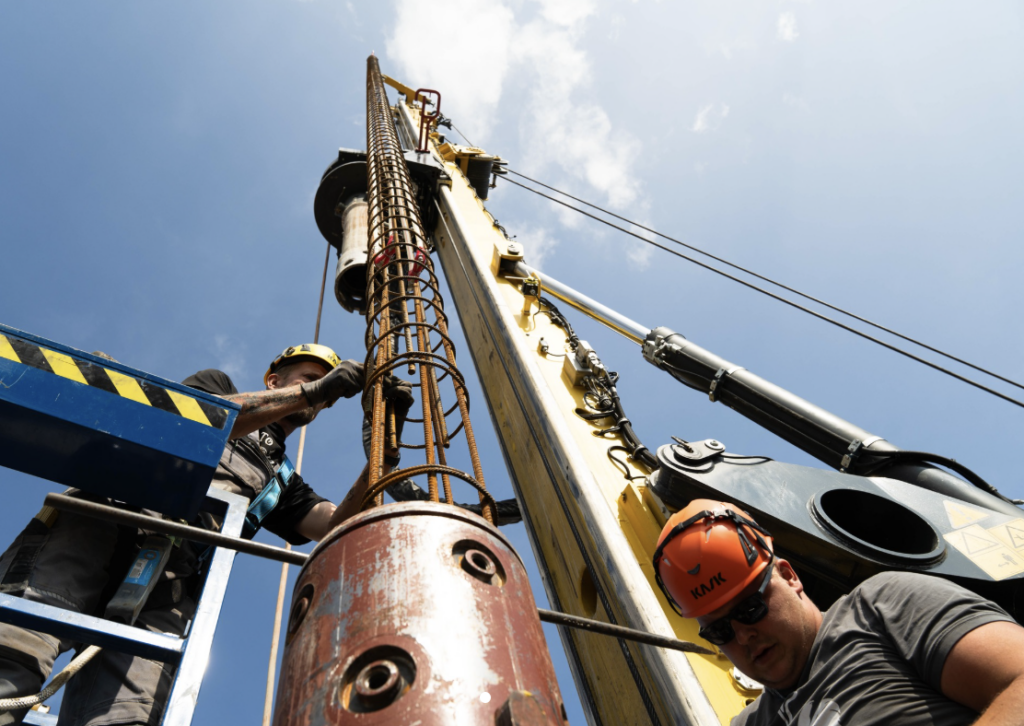
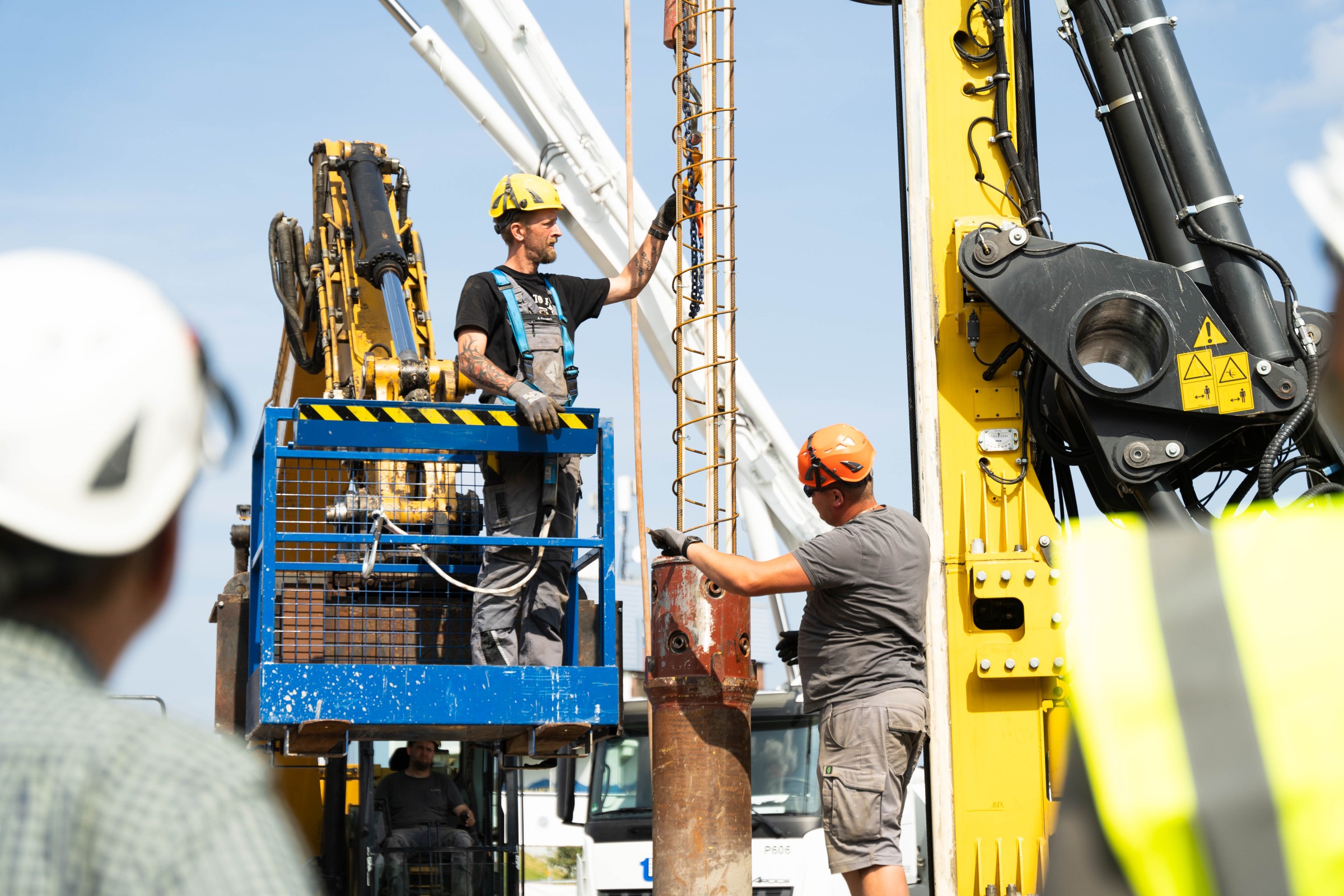
- Next, a steel reinforcement cage is installed to ensure the pile’s load-bearing capacity.
- After installing the reinforcement, which runs from the base of the pile to the top, the pile is filled with special pile concrete.
With this method, the soil remains largely in place. At the same time, the transmission of vibrations is significantly reduced. Especially in sensitive construction environments with adjacent buildings, the displacement bored pile therefore offers a technical alternative to traditional pile methods.
3. How Displacement Piles Safely Transfer Loads into the Subsoil
The bearing capacity of a displacement pile results from two key mechanisms: skin friction and tip pressure. Loads are transferred along the pile shaft into the surrounding soil via the pile’s lateral surface. In addition, the pile tip transfers the load into deeper, load-bearing layers of the subsoil.
A unique effect occurs due to the displacement of soil during pile construction. Since the soil is not excavated but rather displaced to the sides, the surrounding soil can become locally compacted. This compaction often increases the friction between the pile and the soil and also enhances the pile’s load-bearing capacity.
This offers a significant advantage for the structure:
The compacted soil surrounding the pile can have a positive effect on settlement behavior. In many projects, this results in stable load transfer and less settlement compared to methods in which soil is completely removed.
This interplay of skin friction, tip pressure, and soil compaction results in the high bearing capacity of displacement piles, making them suitable for many applications in special civil engineering.
4. Which soil types are suitable for displacement piles in your construction project
Displacement piles are primarily used in cohesive to weakly cohesive soils. These include, among others, clays, loams, silts, sandy mixed soils, or loosely deposited layers in which the soil material can be displaced laterally. During pile construction, the soil is compacted by the rotating drilling tool. This creates a stable bond between the pile and the subsoil.
In such soil conditions, the bearing capacity of a displacement pile can be fully utilized. The lateral displacement of the soil causes compaction around the pile, which increases the skin friction. .
Limitations may arise with other soil types. Very densely compacted or highly cohesive soils make it difficult to displace the material. Coarse-grained layers containing large stones or rock fragments can also affect the execution of the work.
That is why a site investigation always serves as the basis for foundation design. It provides information about soil composition, bearing capacity, and suitable pile systems. Based on this information, it is possible to determine whether a displacement pile is suitable for the specific construction project and what depth and diameter are required.
5. Typical Applications of Displacement Piles
A displacement pile is primarily used in construction projects in sensitive environments. When adjacent buildings need to be protected or space on the construction site is limited, this method offers clear advantages.
Typical applications for displacement piles include:
Residential Areas and Inner-City Construction Projects
New buildings are often constructed among existing structures. Vibration-free pile systems reduce the risk of damage to neighboring buildings and minimize noise pollution at the construction site.
Construction Projects in Immediate Proximity to Existing Structures
When adding stories, expanding, or constructing new buildings adjacent to existing structures, the choice of foundation plays a key role. A displacement bored pile allows for a foundation with very little vibration transmission into the subsoil.
Infrastructure and Special Civil Engineering
This method is also used in larger construction projects. These include, among other things, foundations for bridges, industrial facilities, or engineering structures, where loads are reliably transferred through a pile system into deeper and more stable soil layers.
Consequently, especially in densely built-up areas, it is becoming increasingly clear that displacement piles are a suitable system when structures need to be founded without causing ground vibrations.
6. When a displacement pile Is the Right Foundation for Your Construction Project
The selection of a suitable pile system is never a one-size-fits-all decision. Several factors are always decisive: the existing soil conditions, the planned loads on the structure, and the conditions in the immediate construction environment. Only by considering these factors together can one determine which foundation systems are technically and economically suitable.
The most important planning principles include:
- Results of the site investigation and the composition of the soil
- Required load-bearing capacity and planned pile diameter
- Available building lot and proximity to existing buildings
- Requirements Regarding Vibration-Free Construction, Construction Time, and Construction Site Logistics
Based on this, designers and building owners decide which system to use for each project. In many construction projects involving sensitive surroundings, the choice falls on the displacement bored pile because it allows for a foundation with very low vibration transmission.
Thade Gerdes GmbH is one of the specialized civil engineering firms that focus on such methods. The company installs vibration-free displacement bored piles for construction projects in northern Germany and assists designers and building owners in implementing complex deep foundation systems.
If you’re planning a construction project in a sensitive environment or on challenging ground, it’s worth taking a look at deep foundations in special civil engineering. For an initial assessment of your project, you can submit a request now and schedule a free initial consultation with Thade Gerdes!
An Overview of the Benefits of Working with Thade Gerdes
A reliable deep foundation depends on two factors: a thoroughly investigated site and a company that reliably implements the appropriate methods. Thade Gerdes combines many years of experience in specialized civil engineering with technically optimized foundation systems such as displacement piles.
✔ Many Years of Experience in Specialized Civil Engineering
For more than a century, Thade Gerdes has been working with building sites, pile systems, and technical foundation solutions. This expertise helps planners and building owners select the right pile foundation for every project.
✔ Low-Vibration Foundation Methods
In densely built-up areas in particular, low-impact construction methods are crucial. Methods such as displacement bored piles reduce the transmission of vibrations into the ground and limit noise levels during construction.
✔ Foundation Work Under Various Conditions
Construction projects often pose unique technical and organizational challenges. Whether on a traditional construction site, in difficult soil conditions, or near bodies of water, the Thade Gerdes team carries out deep foundation work under a wide variety of conditions.
✔ Structured Preparation of the Construction Project
From the initial analysis of the building site to the installation of the piles, each step of the process is prepared in a structured manner. This ensures that construction projects can be carried out according to plan and without unnecessary delays.
✔ Clear Presentation of Services
All planned measures are clearly described. This provides building owners and architectural firms with a structured foundation for the technical and organizational planning of their project.
✔ Coordinated Construction Processes on the Job Site
Effective coordination of the individual work steps ensures that the installation of the pile foundation proceeds smoothly in conjunction with other trades.
✔ Certification for Work in Groundwater Areas
With certification under DVGW W120-1, Thade Gerdes meets the requirements for construction work in aquifers and sensitive geological areas.
✔ Direct Points of Contact During the Construction Phase
A dedicated contact person is available throughout the entire project. This keeps coordination clear and streamlined, allowing decisions to be made more quickly.
✔ Implementation of a Wide Variety of Construction Projects
From infrastructure projects to commercial construction projects and private construction projects: Thade Gerdes installs pile foundations and displacement piles in many areas of specialized civil engineering.
Are you planning a construction project and want to determine whether a displacement pile is suitable for your building site? Then get advice early on about possible deep foundations in special civil engineering and clarify the technical requirements for your project.
7. Conclusion: When a displacement pile is a worthwhile investment for your project
The displacement pile offers a suitable solution when structures must be founded without causing vibrations. This method is particularly effective for construction projects in residential areas, in densely built-up areas, or in the immediate vicinity of existing buildings. Through lateral displacement of the soil, minimal generation of drill cuttings, and controlled pile installation, structures can be reliably anchored in the subsoil.
Whether a displacement bored pile is suitable for a construction project, however, always depends on the specific conditions. The key factors are the existing soil conditions, the required bearing capacity, and the requirements regarding the construction environment, construction schedule, and execution. Careful planning of the deep foundation is therefore essential for safe implementation.
Are you planning a construction project and want to find out if a displacement pile is suitable for your building site? Then you can submit an inquiry now and discuss your project with the specialists at Thade Gerdes.
8. FAQ: Frequently Asked Questions About Displacement Piles
What is a displacement pile?
A displacement pile is a foundation pile constructed without excavating the soil. During pile construction, a special tool is rotated into the ground, displacing the existing soil to the sides. This creates a borehole that is fitted with a continuous steel reinforcement cage and is then filled with concrete.
How is a displacement pile manufactured?
The construction of a displacement pile involves several steps. First, the drilling tool is driven into the ground using a rotary motion and controlled torque. The tool displaces the soil to the sides without generating large amounts of cuttings. Once the planned depth is reached, a steel reinforcement cage is inserted and filled with special concrete.
What role do diameter and depth play in displacement piles?
The diameter and depth of a pile are key factors in determining its load-bearing capacity. Larger pile diameters increase the potential load-bearing capacity through skin friction and tip pressure. The exact dimensions depend on the requirements of the structure, the existing soil conditions, and the structural analyses in accordance with applicable DIN and DIN-EN standards.
What are the advantages of displacement piles over other pile systems?
A key advantage is that pile installation produces very little drill cuttings. This often reduces disposal costs at the construction site. At the same time, the process is vibration-free because the pile is not driven into the ground but is instead installed using a rotating drilling tool. This makes displacement piles particularly suitable for construction projects in sensitive areas.
What standards apply to displacement pile foundations?
The design and construction of pile foundations are carried out in accordance with various technical codes and standards. These include, among others, the requirements of DIN standards as well as the European DIN-EN standards for foundation engineering. These standards define, among other things, specifications for design, documentation of pile construction, and quality assurance during construction.
What are pile load tests?
Pile load tests are used to verify the actual bearing capacity of a pile in the soil. During these tests, a driven pile is subjected to a specific load to measure how the soil behaves under load. These tests are an important part of quality assurance for large-scale construction projects or when dealing with challenging soil conditions.
When are displacement piles used?
Displacement piles are primarily used in construction projects in sensitive environments or where space is limited. Typical applications include construction projects in residential areas, retrofit projects, and large-scale infrastructure projects where loads must be reliably transferred to load-bearing soil layers.

