

Table of Contents
Are you planning to install foundations in an existing building and facing space constraints, sensitive structures, or unfavorable soil conditions? In such cases, micropile foundations are considered a proven method in specialized civil engineering. Installed using small drilling rigs, micropiles can be used in locations where traditional foundation methods—such as large-diameter bored piles or displacement piles—are no longer feasible.
But how effective are micropile foundations? Where do they reach their technical and economic limits? And what alternatives are available when requirements for load-bearing capacity, buoyancy control, or settlement behavior increase?
This article provides a comprehensive overview of the application and limitations of micropile foundations in existing structures. You will also learn about typical application scenarios, practical differences compared to other pile systems, and best practices in specialized civil engineering.
Key Facts About Micropile Foundations at a Glance
- Micropile foundations are slender, drilled foundation elements that transfer loads to deeper soil layers through skin friction. They are particularly well-suited for confined construction sites, areas with difficult access, and existing structures with sensitive components.
- DIN EN 14199 defines requirements for design, installation, grouting, and documentation. In addition, DIN 1054 specifies the necessary safety verifications for load-bearing capacity and serviceability in earthworks and foundation engineering.
- Typical applications in existing structures include: foundation retrofits due to settlement damage, building additions with limited additional loads, extensions with insufficient foundation depth, or construction projects that require vibration-free work.
- However, micropiles reach their load-bearing limits when higher loads or complex soil conditions are present. In such cases, more powerful pile systems, such as large-diameter bored piles or displacement piles, are required.
- Anyone who wants to build a foundation that is structurally sound over the long term needs a system that can be adapted to soil types, loads, boundary conditions, and the specific intended use.
What is a micropile foundation?
When existing structures need to be stabilized or new loads need to be supported in challenging soil conditions, an adaptable foundation system is essential. Micropile foundations meet these requirements exactly: They enable deep load transfer even in locations where limited space, restricted working heights, or sensitive existing structures preclude the use of conventional methods.
How does a micropile foundation work?
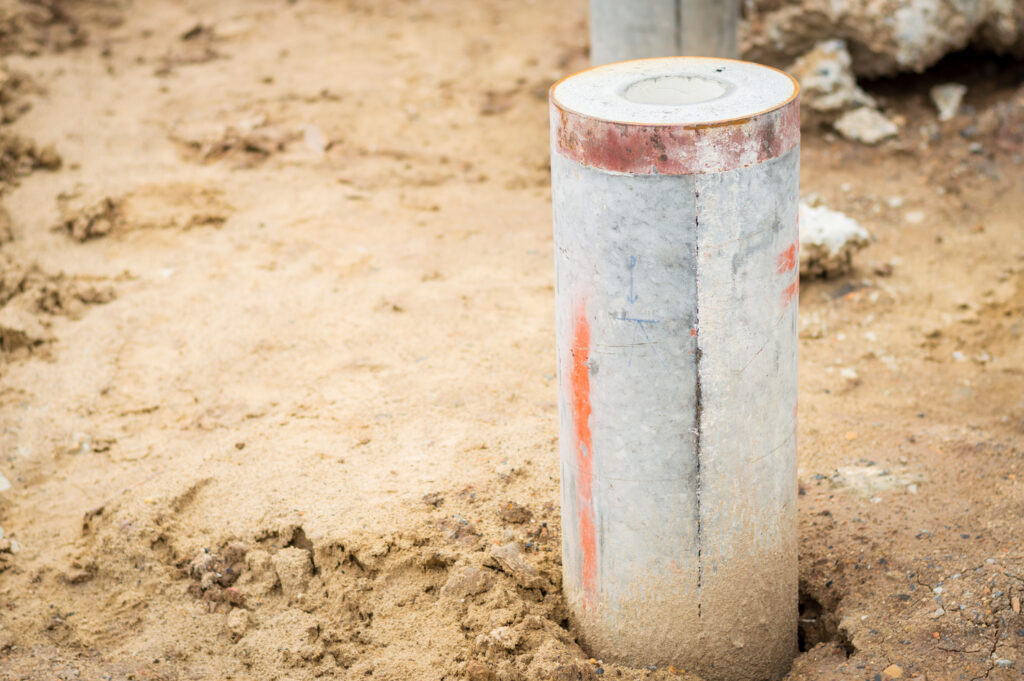
Micropiles, often referred to as GEWI piles, are slender foundation piles with a diameter usually less than 300 mm. They are classified as deep foundation elements and are used wherever loads need to be transferred to deeper, more stable soil layers.
Typically, micropiles are driven into the ground by drilling. They are then grouted with a cement slurry, which firmly anchors the steel structural member in the borehole within the surrounding soil. Load transfer occurs via the resulting composite zone between the mortar, the structural member, and the soil: a system that has proven particularly effective in heterogeneous soil layers and in existing structures.
Thanks to their small size and the fact that they can be installed using lightweight drilling equipment, micropile foundations can be installed even under restricted access conditions, such as in basements, courtyards, or while operations are ongoing.
Micropiles vs. Other Deep Foundations: What Are the Differences?
Among the various deep foundation methods, micropiles occupy a special position, primarily because of their load-bearing capacity. While drilled piles, driven piles, or displacement piles sometimes have significantly larger diameters and often transfer their loads to load-bearing layers via tip pressure or soil displacement, micro-pile foundations rely primarily on skin friction.
Here, the load is not primarily applied at the tip of the pile, but is transferred via the interface between the grouted mortar body and the surrounding soil. This principle allows for controlled load transfer, even in soil conditions that are unfavorable for other types of foundations, such as intermixed layers of clay, sand, or soft rock.
Especially when combined with tensile loading, settlement control, or buoyancy control, micropile foundations thus offer a flexible option that specifically complements other pile systems or replaces them in cases where they cannot be used for structural reasons.
Overview: Comparison of the Most Important Deep Foundation Methods
Procedure | Contribution | Support Principle | Suitable for | Special Features |
Micropiles | Drilling + Cement Grouting | Shear friction (pile–mortar–soil) | Confined spaces, existing structures, difficult access | Compact device size; also suitable for preventing buoyancy and withstanding tensile loads |
Drilled piles | Large-diameter drilling rig, concrete filling | Friction Between the Cylinder Wall and the Piston + Peak Pressure | Large-scale projects, medium to high loads | Highly adaptable; larger diameters are possible |
Driven piles | Driving with a pile driver | Peak Pressure + Soil Displacement | Homogeneous, non-rocky soil | Quick installation, high noise levels |
Displacement piles | Displacement Without Excavation | Soil Displacement + Friction Against the Casing | Soft soils (e.g., loam, clay, peat) | Little excavation, minimal vibrations |
Screw piles | Screwing into the ground | Mechanical Interlocking + Friction Between Surfaces | Light loads, temporary structures | Dismantlable, easy to install, low load capacity |
💡 At first glance, shallow foundations seem more cost-effective. However, they quickly reach their limits in difficult soil conditions and in the face of the effects of climate change. Deep foundations, on the other hand, ensure that structures remain stable over the long term.
When Micropiles Are Unbeatable in Existing Structures
When working on existing buildings, designers regularly encounter challenges where traditional foundation methods are no longer sufficient—whether due to limited access, sensitive building structures, or insufficient foundation depth. Micropile foundations are a specialized method for such situations: compact to install, yet capable of providing a stable foundation.
Thanks to their small size, low-vibration installation, and load-bearing capacity based on skin friction, micropiles can be used even where other methods fail. They offer clear advantages, particularly in inner-city locations, during renovations while operations are ongoing, or in hard-to-reach areas.
Typical use cases in existing systems:
- Post-construction foundation work for settlement damage:
When buildings settle unevenly, micropiles can be used to redistribute loads in a targeted manner—without requiring major alterations to the existing foundation. - Reinforcement of Existing Foundations:
Micro-piles provide the necessary structural reinforcement, particularly for historic buildings or renovations with new load requirements. - Horizontal additions with insufficient foundation depth:
Extensions can also be built on narrow lots without overburdening the existing structure structurally. - Additions with limited additional loads:
Micropiles make it possible to add new stories, even when the soil has limited bearing capacity. - Downtown locations with severely restricted access:
Compact drilling technology enables foundation work in tight spaces, such as courtyards or narrow alleys. - Construction projects with strict requirements regarding vibration control:
Low-vibration construction is particularly advantageous near sensitive structures such as historic buildings, hospitals, or laboratories.
Whether it’s renovation, remodeling, or expansion: micropiles adapt to the conditions on the construction site.
💡 The effects of climate change make it clear that shallow foundations are no longer a reliable foundation. Deep foundations protect structures against water, drought, frost, and dynamic loads. They provide the necessary resilience to ensure that projects will stand the test of time for decades to come.
Code-Compliant Micropile Foundations: These DIN Standards Are Mandatory
The use of micropile foundations in existing structures poses both technical and regulatory challenges. If you choose this method, you must ensure that all relevant DIN standards are met. Otherwise, there is a risk of issues with load-bearing capacity, the construction process, or obtaining permits.
Two sets of standards are particularly relevant for planning and construction: the DIN EN 14199, which deals specifically with micropiles, and the DIN 1054, which governs general safety verifications in earthworks and foundation engineering.
DIN EN 14199: Performance Requirements for Micropiles
DIN EN 14199 is the primary European standard for micropile systems. It governs the design, sizing, and construction of these foundation elements and ensures that they function reliably under various soil conditions.
Key provisions of the standard:
- Installation under various soil conditions:
Whether the subgrade consists of sand, clay, or rock, the standard specifies how to safely install micropiles in different soil types. - Grouting, Corrosion Protection, and Reinforcement:
The standard specifies clear requirements for grouting with cement slurry, protective measures for the structural member, and the technical design of the reinforcement. - Documentation and Quality Assurance:
Construction work, test reports, and acceptance procedures are clearly defined to ensure that evidence can be provided to authorities and building owners at a later date.
DIN EN 14199 provides the necessary planning certainty—from the bidding process through to final acceptance—especially for complex construction projects involving existing buildings.
DIN 1054: How to Ensure Load-Bearing Capacity and Approval
DIN 1054 supplements the micropile standard and addresses general safety verification in foundation engineering. It applies to all foundation measures and thus also to micropiles.
The focus is on:
- Limit States for Load-Bearing Capacity and Serviceability:
The design must ensure that the piles can safely bear loads over the long term without causing any impermissible settlements. - A key consideration for existing buildings:
In existing buildings, the interaction between the existing structural elements and new loads—for example, in the case of foundation retrofits or building additions—is particularly important. Here, the standard requires explicit verification for the transition zones.
Together, these two standards form the binding basis for the safe, code-compliant installation of micropile foundations in existing structures and should be incorporated into every planning process from the very beginning.
How much weight can a micropile support, and when is that not enough?
Micropiles are a proven foundation system for many applications in existing structures. They stabilize foundations, redistribute loads in a targeted manner, and enable foundations to be constructed under challenging conditions. However, despite their practical advantages, micropiles quickly reach their physical and economic limits in terms of load-bearing capacity.
Why Micropiles Aren’t Always Enough
Due to its small diameter, the load-bearing capacity of a micropile is significantly lower than that of a conventional bored or driven pile. Although uniform load distribution can be achieved through skin friction, this is often insufficient when dealing with high individual loads, large structure dimensions, or difficult soil conditions.
Aside from these limitations, there are other practical drawbacks that quickly push micropile foundations to their limits:
- In areas with groundwater, the grout injected into the ground may be washed out. To ensure load-bearing capacity, service load tests are required, which drive up testing costs significantly.
- Cement consumption is difficult to plan for and is billed based on actual usage. Budget overruns are not uncommon.
- The vertical load-bearing capacity per pile is limited. For heavier loads, you will need many micropiles, which involves significant effort in terms of construction and coordination.
- Grouting the piles with cement causes significant mess on the construction site, on equipment, and on workers. Cleaning, waste disposal, and the resulting additional effort and costs must be factored into the planning accordingly.
In practice, a single large-diameter bored pile can support the load of several micropiles, while offering greater structural safety and economic benefits.
More Durable Alternatives for Special Construction Projects
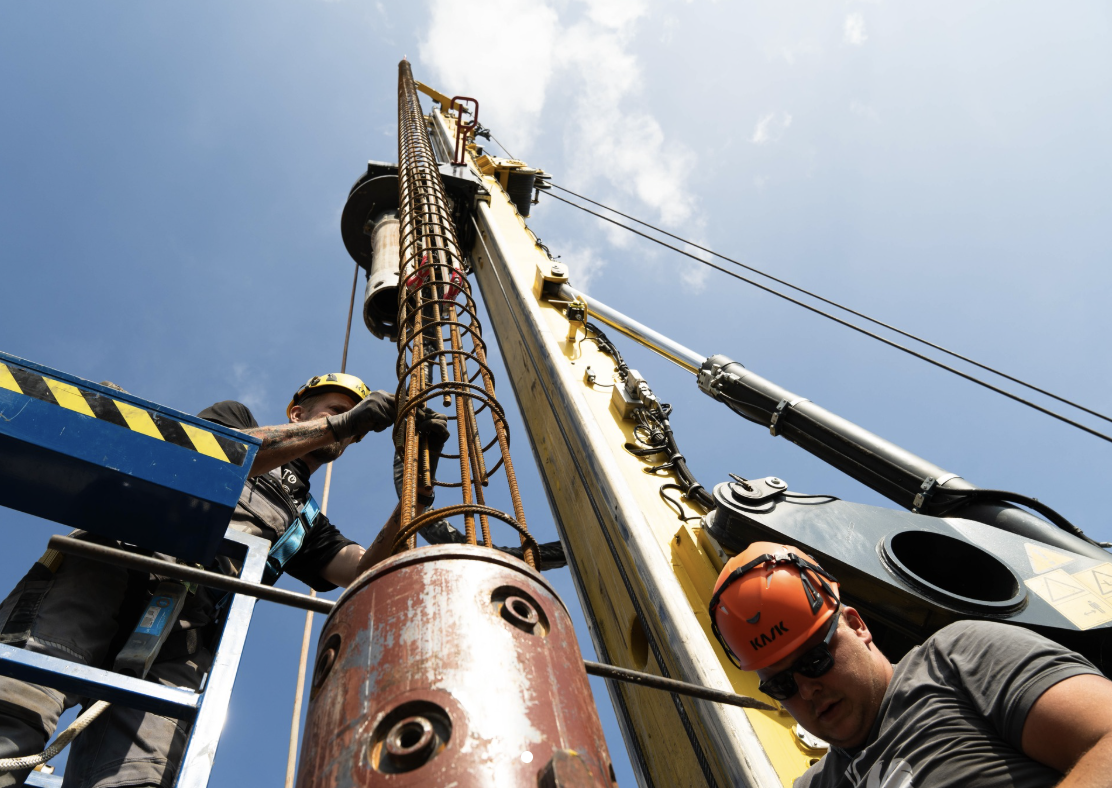
When micropiles are no longer sufficient, foundation systems are needed that can safely transfer loads deep into the subsoil on a permanent basis. These systems must be tailored to the specific soil types, building loads, and site conditions.
Possible alternatives:
- Large-Diameter Drilled Piles: High load-bearing capacity due to large diameters and the combined effect of tip pressure and skin friction. Ideal for heavy loads and large foundation slabs.
- Displacement Piles: Compact installation without excavation, particularly cost-effective in soft soils such as clay or loam.
- Driven piles: Quick to install in suitable soil conditions; ideal for temporary or modular structures.
- Screw piles: Ideal for lighter construction projects with a short construction time and minimal disruption.
The most compelling alternative to micropiles: vibration-free displacement bored piles from Thade Gerdes
Thade Gerdes specializes in specialized civil engineering and is called upon precisely when micropile foundations reach their limits. We do not install micropiles ourselves, but we have a very thorough understanding of their applications and limitations. Our focus is on vibration-free displacement bored piles, which function reliably even under high loads, in difficult soil conditions, or in complex existing structures.
Learn more here about pile foundations and how they can be used in challenging construction projects!
Vibration-Free Displacement Drilled Piles Instead of Micropile Foundations: Your Benefits with Thade Gerdes

✔ Specialized civil engineering for unique soil conditions:
Micropiles are one option, but not the only one. We step in precisely when special measures are required: for high loads, deep foundation depths, or challenging ground conditions.
✔ 125 years of experience with structural systems:
We design and build foundation systems tailored to load-bearing capacity, durability, and site-specific conditions.
✔ Low-vibration methods for existing structures:
Even though micropiles are often the first choice due to space constraints, many of our systems can be installed just as gently. Ideal for sensitive existing structures and urban locations.
✔ Technology for Civil and Water Engineering:
Whether it’s foundation work on land or along the shoreline: Our fleet of machinery and our team are equipped to handle any situation.
✔ Fast project execution with clear processes:
From the feasibility study to the very last meter drilled: We handle the technical planning, permits, and prompt execution.
✔ Transparent Cost Planning:
Instead of surprises down the road, we provide you with solid quotes featuring clear, transparent, and reliable cost breakdowns.
✔ Certified for work in groundwater:
With certification under DVGW W120-1, we are authorized to work in aquifers. This opens up additional possibilities in challenging situations.
✔ Reliable contacts instead of a service hotline:
With us, you’ll be assigned a dedicated project manager who will guide you from the initial consultation through to the final implementation.
Now Request a quote for deep foundation work: Thade Gerdes is here to support you as your partner in specialized civil engineering!
Conclusion: The choice of startup model determines the project's success
Micropile foundations have become an established part of specialized civil engineering, especially in situations where space constraints, vibration control, or difficult access are factors. However, not every construction project can be solved using this method. Those who need to safely support heavier loads or work in particularly complex soil conditions require more robust systems and experienced specialized contractors who can implement them both technically and logistically.
Thade Gerdes specializes in exactly that: We develop foundation designs even for complex construction projects. Are you planning a project involving an existing building and want to know which foundation system is truly the right fit? Then request a deep foundation quote now!
Frequently Asked Questions About Micropile Foundations
What exactly is a micropile foundation?
In micro-pile foundation work, slender foundation piles—known as micro-piles—are driven into the ground, usually through boreholes created with small drilling equipment. The piles are then grouted with a cement slurry, creating a strong bond between the pile, the grout, and the soil. The load-bearing capacity is primarily achieved through skin friction. Typical applications include retrofitting, renovations of existing structures, and construction projects with limited space.
When is the use of micropiles recommended?
Micropiles are used wherever conventional pile foundations (e.g., large-diameter bored piles) are not feasible due to space constraints, access issues, or noise concerns—such as in inner-city renovation projects, situations with limited working heights, or near sensitive structures. They are also suitable for counteracting buoyancy, redistributing loads during settlement, and providing rear anchoring for excavation pits.
What role does DIN EN 14199 play in micropile foundations?
DIN EN 14199 is the authoritative standard for the design and construction of micropile systems. Among other things, it specifies requirements for grouting, the properties of the steel structural member, installation in rock or clay, as well as documentation and quality assurance. Compliance with this standard is mandatory for all micropile foundations.
How do micropiles differ from other foundation piles?
Unlike bored piles or driven piles , micropiles transfer loads primarily through skin friction into the surrounding soil layers, rather than through tip pressure. Due to their small diameter and installation using lightweight drilling equipment, they are particularly well-suited for confined construction sites and complex soil conditions. However, their load-bearing capacity is limited: depending on the soil conditions, large-diameter bored piles can bear many times the load.
What types of soil are suitable for micropile foundations?
Micropiles can be installed in virtually all types of soil: from cohesive clay to non-cohesive sand to bedrock. The key is to carefully adapt the method to the site conditions. A site investigation provides the basis for the proper design of the foundation piles.
Can micropiles support tensile loads?
Yes, micropiles are also suitable for tensile loads, for example, to prevent uplift when the groundwater level is high or to anchor structures. This requires appropriate design, which is typically based on a verification of skin friction in the soil.
What equipment is used for micropiles?
Specialized small-diameter drilling equipment is used, which can operate even in confined spaces, such as courtyards, existing basements, or beneath existing buildings. The support members are typically installed by driving steel bars or pipes into the ground and grouting them with cement slurry.
What are small-diameter drilled-in piles?
The term “small-diameter grouted pile” is often used interchangeably with “micropile.” Technically, these are small-diameter foundation piles that are installed using the grouting method and anchored in the subsoil: ideal for renovation projects or in sensitive areas with challenging site conditions.

