

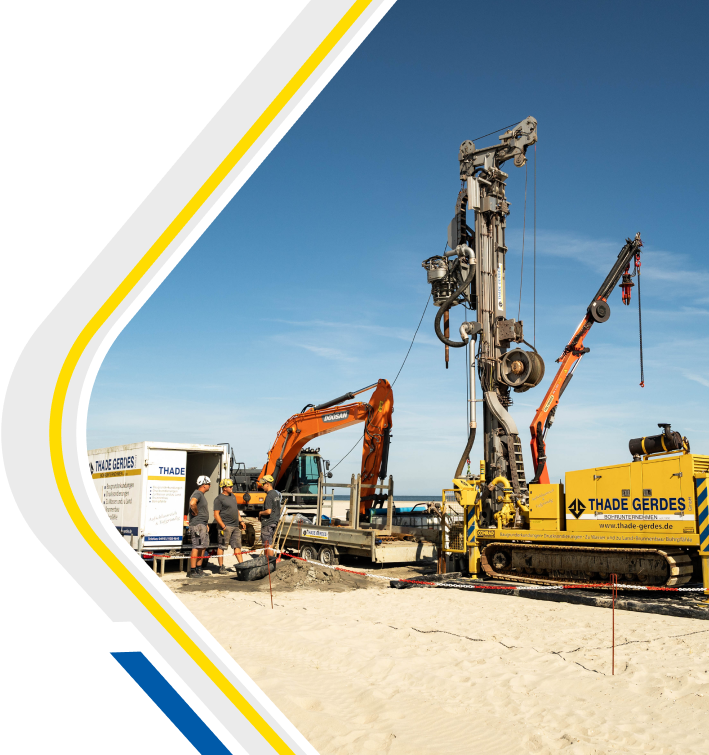
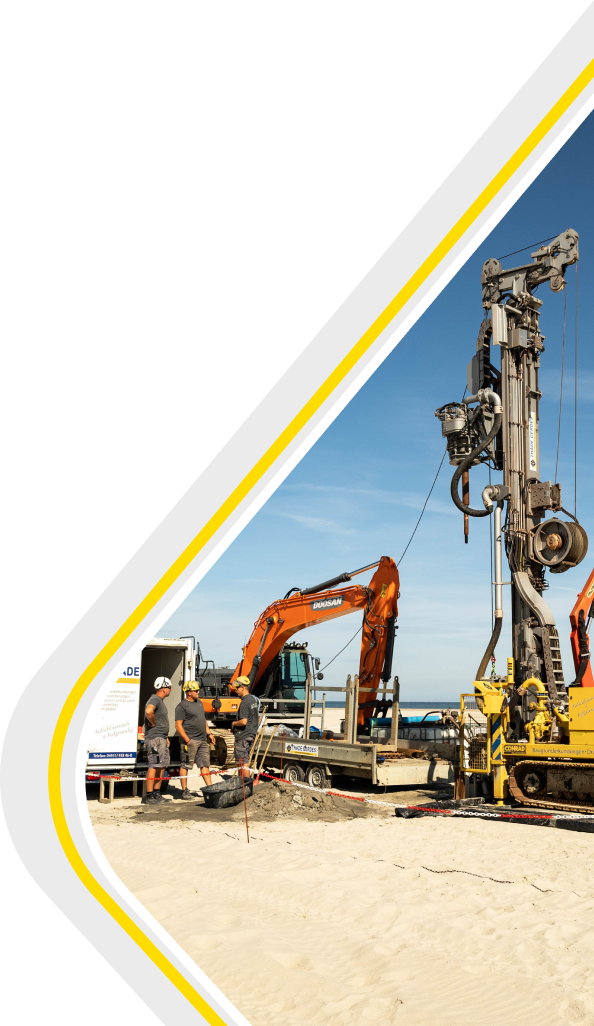

A house is only as strong as its foundation. If your building site isn’t stable enough, cracks, settlement, and even severe structural damage can occur. It doesn’t matter how modern the construction method is or how sturdy the materials are. In northern Germany in particular, the soft soils do not provide the necessary strength to support structures over the long term. Without foundations extending into deeper layers, they would sink over time.
A pile foundation provides a solution here. By anchoring deeply into load-bearing soil layers, the weight is safely transferred. This ensures the structural integrity of your building, even under challenging soil conditions. In this article, you’ll learn what a pile foundation is and what risks exist without one, particularly in northern Germany. In addition, we’ll provide you with a detailed cost-benefit analysis to serve as a reliable basis for making decisions about your building site.
Table of Contents
Key Points About Pile Foundations:
Pile foundations are necessary when the soil near the surface is not stable enough to support a building over the long term. Without these foundations, there is a risk of settlement and cracks, especially in northern Germany, where the soil is soft. In the worst-case scenario, costly repairs in the six-figure range may be required.
Typical signs of a compromised foundation include cracks in the masonry, sinking extensions, and moisture problems caused by frost or groundwater.
The additional cost of pile foundations (approximately €20,000–50,000 for single-family homes) is relatively low, since they can prevent damage costing well over €250,000.
What is a pile foundation?
Pile foundations are a special type of foundation. They are used when the soil near the surface is not stable enough to permanently support a building. Instead of transferring the structure’s loads to a shallow slab or strip footings, long piles are driven deep into the ground. These reach load-bearing layers or bedrock that reliably support the weight. Typical applications include:
- Construction projects near the coast or in river basins
- Single-family or multi-family homes in regions with challenging building sites
- Bridges, port facilities, or industrial buildings
- High-rise buildings and large structures with heavy loads
A pile foundation offers several key advantages. It provides the necessary stability even on soft ground such as peat or loose sand, thereby extending the service life of the entire structure. At the same time, they provide reliable protection against settlement and the resulting cracks in walls or floors. Last but not least, pile foundations prevent costly retrofits, which often become necessary after just a few years if the foundations are inadequate.
💡 Difference from shallow foundations: With a shallow foundation, the load is distributed only across the upper soil layers. This is sufficient only if the subsoil is firm and load-bearing. On soft soils such as peat, marshland, or clay, however, shallow foundations fail within a few years because the subsoil gives way and the building subsides.
What happens if you don't use pile foundations?
A stable foundation is essential for any structure. Are you building in an area with soft or low-bearing soil, such as peat bogs, marshes, or loose sand? If so, the following types of structural damage are inevitable if you do not use pile foundations.
Subsidence and Instability
Without deep foundation support, buildings sink slowly but steadily. Even subsidence of just a few centimeters can be enough to jam doors and windows or cause load-bearing structural elements to become out of plumb. Over time, the entire structural integrity is compromised. This not only reduces living comfort but also jeopardizes the long-term safety of the building.
Cracks and structural damage
The first visible signs are cracks in walls, ceilings, and floors. These are not just a cosmetic issue; they can weaken the building’s structure and allow moisture to penetrate. This, in turn, promotes mold growth, frost damage, or corrosion of metal parts, which further exacerbates the damage. In addition, gas lines, for example, are not flexible, so they can tear. There is a risk of an explosion.
Inadequate Foundations
Conventional strip footings or slab foundations quickly reach their limits on weak soil. They support loads only near the surface. If settlement occurs, they lose their function, and the loads are distributed unevenly. The damage increases exponentially over time.
Renovation: A Cost Trap
Many homeowners underestimate the financial consequences. Even correcting minor settlement often requires extensive repair work. Retrofitting a single-family home costs at least between €50,000 and €100,000. This makes this measure significantly more expensive than a pile foundation that is planned from the outset.
Lifting or additional foundation reinforcement often costs up to 250,000 € and can reduce the value of your building in the long term. In some cases, a complete renovation is hardly cost-effective, meaning you can no longer use the house.
⚠️ If you choose not to use pile foundations, you risk compromising the stability and service life of your structure. The initial savings will turn into high follow-up costs, sometimes far exceeding the original construction costs.
These signs will help you determine whether your foundation is at risk
Damage to the foundation rarely occurs overnight. It usually develops gradually. And that is precisely where the danger lies: At first, the symptoms seem harmless, but if left untreated, they can seriously compromise the structural integrity of your building. If you recognize the warning signs early, you can avoid high repair costs.
1.
Cracks in the masonry
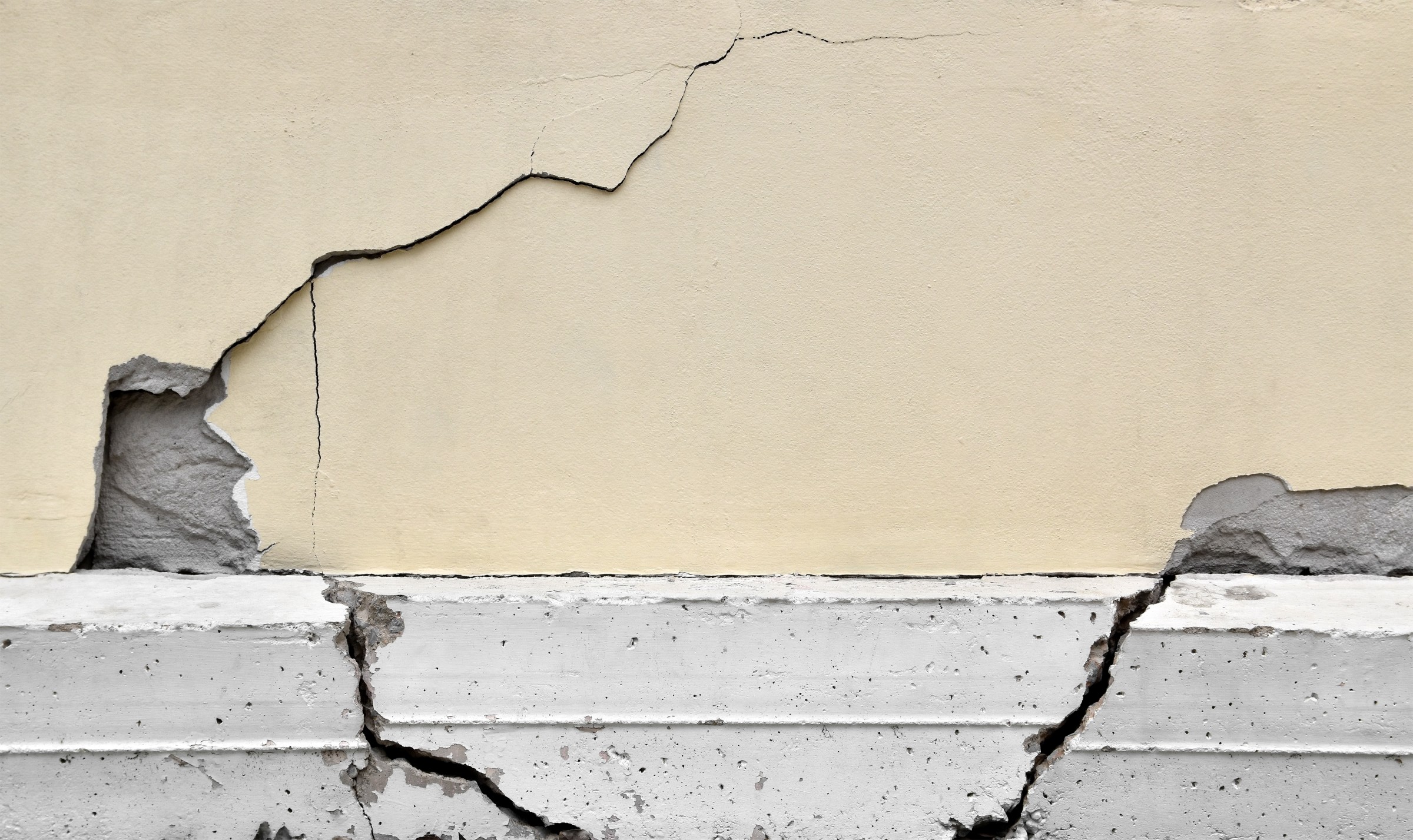
Cracks are the most common sign of a weakened foundation. They occur particularly often around windows, doors, or in the corners of rooms.
- At first, fine hairline cracks appear that are barely noticeable.
- Over time, they expand, run diagonally, and can grow to be several centimeters wide.
Cracks like these are a clear indication that the building’s loads are not distributed evenly. The sooner you identify them and have them inspected, the easier it will be to take corrective action.
2.
Sagging Extensions and Terraces
Settlement does not affect only the main house. Additions and outbuildings such as garages, patios, or sunrooms also show typical signs of foundation problems:
- The joints are uneven.
- Doors and windows are sticking.
- The floors are visibly sloping to one side.
The problem is often caused by pile foundations that were not driven deep enough. On soft ground, they quickly lose their load-bearing capacity.
3.
Effects of Frost and Groundwater
Even small differences in foundation depth can have a massive impact. When environmental factors are added to the mix, the problem is exacerbated:
- Frost causes the ground to expand and lift.
- Excessively high groundwater levels soften the subsoil and reduce its load-bearing capacity.
- Groundwater levels can drop during dry spells. As a result, cohesive or organic soils lose their bearing capacity.
The result: additional stresses, uneven loads, and, in the worst case, uneven settlement affecting the entire structure.
Checklist: An Overview of Early Warning Signs
⚡ Cracks in windows, doors, or corners
⚡ Jamming doors and windows
⚡ Interior doors or cabinet doors open as if by magic
⚡ Uneven surfaces on patios, additions, or garages
⚡ Uneven joints and sloping floors
⚡ When mopping the floor, the mop water flows in one direction
⚡ Moisture or groundwater in the basement area
⚠️ If you notice any of these signs, you should act quickly. Often, the damage can be traced to the foundation not being deep enough or being constructed without any piles at all. The sooner you consult experts, the lower the resulting costs will be. And the longer your building will remain stable.
Specific Risks Associated with Starting a Business in Northern Germany
Northern Germany has unique soil conditions that pose significant challenges for construction projects. The biggest risk factors are:
- Marsh and bog areas offer virtually no bearing capacity. Their high water and peat content makes them very soft and unstable. Shallow foundations often fail here just a few years after completion because settlement accumulates over time and the building sinks.
- Sandy soil is sensitive to moisture. Rain, groundwater, or high water pressure can significantly impair the soil’s composition and load-bearing capacity. In some regions of northern Germany, there are loosely packed, uniform (same-sized) sand particles that lack load-bearing capacity. Water washes away finer particles, causing the soil to become soft. As a result, the foundation loses some of its load-bearing capacity.
Real-world examples: For deep foundations in the coastal strip stretching from the Dutch border up to Schleswig-Holstein and the Danish border—including the moor and marsh areas—piles ranging from 8 m to 20 m or more were driven to ensure stable ground conditions. Without appropriate pile foundations, shallow foundations would not have been load-bearing.
💡 Are you planning to build in northern Germany? If so, you should make sure that soil tests are conducted and that the foundation (preferably a pile foundation) is supported by deeper, load-bearing layers. This is the only way to avoid costly repairs, settlement issues, and damage to the building structure.
How a Pile Foundation Protects Your Building
A pile foundation acts as an invisible protective shield for any structure. The piles transfer the loads deep into load-bearing soil layers. This keeps the building stable even when the soil near the surface—such as peat, marshland, or loose sand—offers little support. Depending on the soil conditions and the loads, different types of piles are used:
- Bored piles are drilled into the ground and filled with concrete.
- Driven piles are driven deep into the ground using special machines.
Both types can support enormous loads and are therefore used not only to secure single-family homes, but even bridges, industrial buildings, and high-rises. In many construction projects today, piles are standard because they provide a permanently stable foundation.
Historical examples demonstrate their effectiveness: You can see from Venice that piles provide reliable support for centuries. The entire city stands on countless wooden piles anchored in the ground. Without this foundation technique, the lagoon city would have sunk into the water long ago.
Why Pile Foundations Are More Cost-Effective Than Renovation Costs
At first glance, pile foundations seem more expensive than traditional shallow foundations. In fact, construction and material costs are higher because piles must be driven into the ground, which requires the use of specialized equipment. However, these additional costs are not an expense but an investment in safety and value retention.
This is because the actual costs do not arise during construction, but rather from damage that occurs when the foundation is not stable. Settlement, cracks, or sinking extensions can result in renovation costs in the six-figure range. In most cases, the resulting costs significantly exceed the initial savings made on the foundation.
A pile foundation protects structures from such risks over the long term. For builders and investors, this means greater predictability, greater security, and the preservation of property value across generations.
Cost Overview: Pile Foundations vs. Shallow Foundations
Shallow Foundation | Deep Foundation | |
Construction Costs | approx. 150–250 €/m² Foundation area | approx. 300–500 €/m² |
Risk | High: Settlement, cracks, sagging extensions | None, since loads are derived from lower levels |
Follow-up Costs in the Event of Damage | often €50,000–150,000, in extreme cases > €250,000 | Not relevant; stakes provide long-term stability |
Cost Examples
Example: Single-Family Home (120 m² foundation slab)
Shallow foundation: Approx. €25,000 in construction costs → high risk of settlement → potential remediation costs >,100,000
Pile foundation: Approx. €48,000 in construction costs → additional costs ~€23,000 → but protection against damage for decades
Example: Commercial Building / Warehouse (1,000 m² foundation)
Shallow foundation: Approx. €200,000 in construction costs → Risk of settlement, potential damage quickly > €500,000
Pile foundation: Approx. €400,000 in construction costs → Additional costs of €200,000 → but preserves value and ensures safe use throughout the entire service life
This makes it clear: The additional costs of pile foundations are minimal compared to the potential damage caused by settlement. They function like insurance, except that in this case, the risk is eliminated from the outset.
Are you looking for a specialized contractor for your pile foundation? Thade Gerdes is your expert in specialized civil engineering. Schedule your free, no-obligation initial consultation.
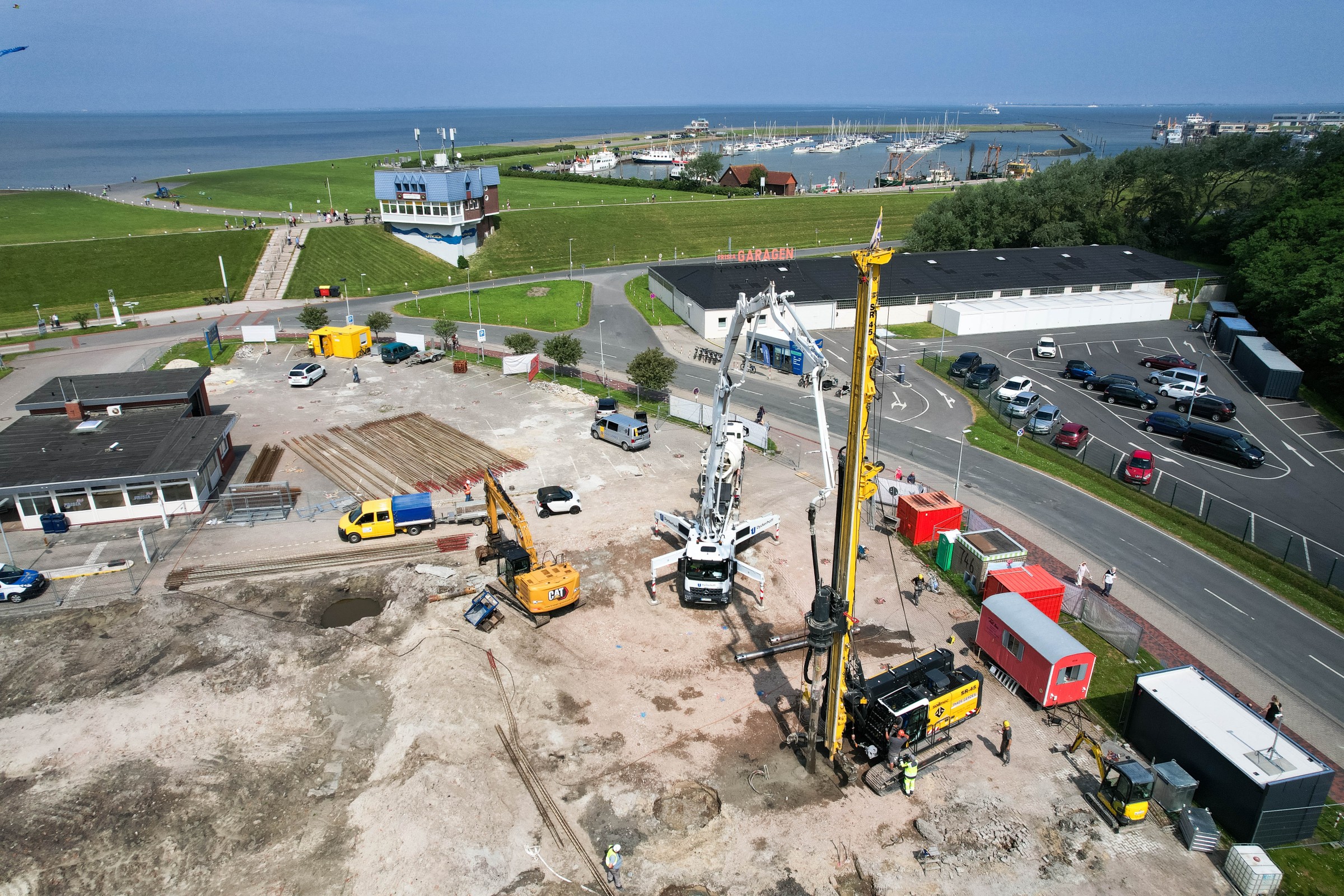
The Benefits of Pile Foundations from Thade Gerdes
✔ Over 125 years of experience in pile foundations and specialized civil engineering
Since 1900, we have been supporting construction projects in the fields of civil engineering and pile foundation work. This knowledge, passed down through generations, ensures that your construction project is carried out professionally today.
✔ Low Noise Emissions
Using modern drilling techniques, we minimize noise and vibrations. Ideal for sensitive environments.
✔ For construction projects on land and in water
We reliably handle your foundation work on land, near the coast, or directly in the water—from soil investigation to deep foundation work.
✔ Quick Project Launch
Our well-coordinated team handles the coordination of permits, planning, and resources so that your construction project can begin without delay.
✔ Clear and Fair Pricing Structure
Our quotes are 100% transparent. This way, you always have a clear overview and don’t have to worry about any hidden costs.
✔ Reliable Scheduling
We place great importance on on-time completion. Through structured processes and careful planning, we reliably meet agreed-upon deadlines.
✔ Sustainable Practices
Environmental protection and resource conservation are an integral part of our work. With DVGW W120-1 certification, we meet all relevant standards for the protection of soil and groundwater.
✔ Personal Support
Throughout the entire project, a personal contact person will be available to you and will keep you regularly updated on progress.
✔ Professional Execution of Public and Private Projects
We deliver reliable results and adhere to agreed-upon terms, whether your construction project is public or private.
Take advantage of these benefits at Thade Gerdes and schedule your no-obligation, free initial consultation!
Conclusion: Pile foundations as protection against costly damage
A structure is only as stable as its foundation. Especially in regions with soft soil—such as peat bogs, marshlands, or loose sand in northern Germany—a shallow foundation is not sufficient. Without deep piles, there is a risk of settlement, cracks, and remediation costs in the six-figure range. A pile foundation, on the other hand, safely transfers loads to load-bearing layers and maintains structural integrity for decades.
The additional costs incurred during construction are minimal compared to potential damage and ensure that your property retains its value over the long term. Plan your construction project with confidence: Schedule your no-obligation, free initial consultation with Thade Gerdes for your pile foundation.
Frequently Asked Questions About Pile Foundations
What is a pile foundation?
A pile foundation is a special type of foundation used when the upper layers of soil are too soft. In a pile foundation, long piles are driven deep into the ground. They extend down to load-bearing soil layers or bedrock that can permanently support the weight of the building. This ensures structural stability even on challenging building sites.
How does a pile foundation differ from a shallow foundation?
The main difference lies in the method of load transfer. With shallow foundations, the structure’s loads are distributed across the topsoil via a slab or strip foundations. This method works only on firm ground but fails in loose or water-saturated soils. With pile foundations, the loads are transferred via piles to deeper, load-bearing layers. This ensures that the foundation remains stable even if the upper layers give way.
What types of posts are there?
In practice, two main types of piles are used. For bored piles, a hole is drilled, reinforced, and filled with concrete. This method is particularly suitable for densely built-up areas, as it causes minimal noise and vibration. Driven piles are prefabricated concrete or steel piles that are driven into the ground using specialized machinery. They are particularly suitable for large-scale projects with heavy loads and offer very high load-bearing capacity.
What costs should I expect?
The costs depend on the size of the project, the depth of the piles, and the soil conditions. A pile foundation costs 300–500 €/m², which means additional costs of about 25,000–50,000 € for a single-family home. The additional costs stem from machinery, labor, soil tests, and the piles themselves. However, this investment pays off: If settlement or cracks caused by inadequate foundations need to be repaired later, the costs can quickly rise into the six-figure range.
What is surface friction?
Sheath friction is a static principle by which piles transfer loads into the ground. Skin friction utilizes the friction between the pile’s surface and the surrounding soil. This means that the pile “holds” not only through its tip but also through the large contact area along its shaft.

