


The success of a construction project depends entirely on having the right foundation. However, many homeowners neglect the crucial soil investigation when building a house, which can lead to costly problems later on. This is because the soil on which a building stands has a significant impact on the choice of foundation technique and the long-term stability of the structure.
A site investigation ensures that you choose the right foundation technique and avoid future risks such as settlement or instability. In this article, you’ll learn what a site investigation is and what techniques are used for it. We’ll also provide information on the associated costs and legal aspects. We’ll also highlight the 7 risks you face if you skip a site investigation.
Table of Contents
Key Points About Site Investigation:
A site investigation is a crucial step in ensuring that the structure is built on a stable foundation. It helps prevent potential risks such as settlement or instability.
Site investigation involves various techniques, including soil sampling, drilling, geophysical surveys, and test pits. All of these help determine soil conditions and bearing capacity.
Without a thorough site investigation, there is a risk of costly repairs, delays in the construction process, and potentially legal issues. The cost of a site investigation is minimal compared to the potential follow-up costs. However, its precise results help minimize future risks and safeguard the construction project in the long term.
What is a site investigation?
A site investigation involves a series of geotechnical tests. These tests are designed to determine the soil conditions and the bearing capacity of the site. This investigation provides information on both the soil types and geological characteristics of the property and the behavior of the soil under various loads.
💡A soil investigation determines whether the soil has sufficient bearing capacity for a shallow foundation or whether special deep foundation methods, such as pile foundations, are necessary.
To this end, the soil conditions are assessed through drilling and sampling of the construction site. Based on the data collected, the appropriate foundation technique can then be selected. However, it is not only the current conditions that are important. Future developments, such as a rise in the groundwater table or geological changes, must also be taken into account, as they can affect the long-term stability of the structure.
Another important aspect of a site investigation is assessing the soil’s bearing capacity. If the soil is too soft to support the load, a deep foundation is required. This ensures that the weight of the structure is transferred to deeper, firmer soil layers.
The Various Techniques for Site Investigation
A site investigation involves various techniques to accurately determine the properties of the soil and its bearing capacity. Different methods are used depending on the requirements of the construction project and the specific soil conditions.
1.
Soil samples
Soil sampling is a fundamental method for analyzing soil properties. Samples are taken from various depths of the construction site. They are then examined in a laboratory to determine soil types, grain size, moisture content, and other important parameters.
2.
Drilling
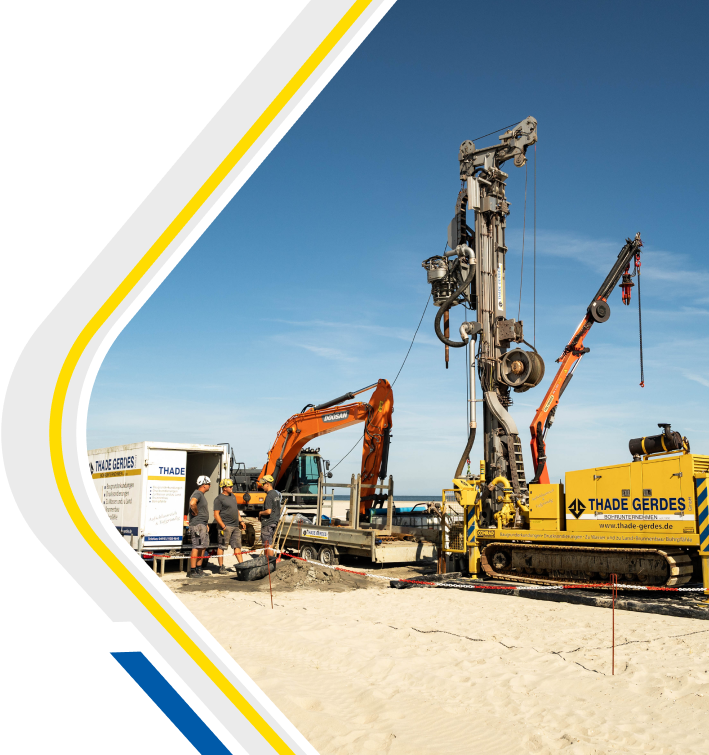
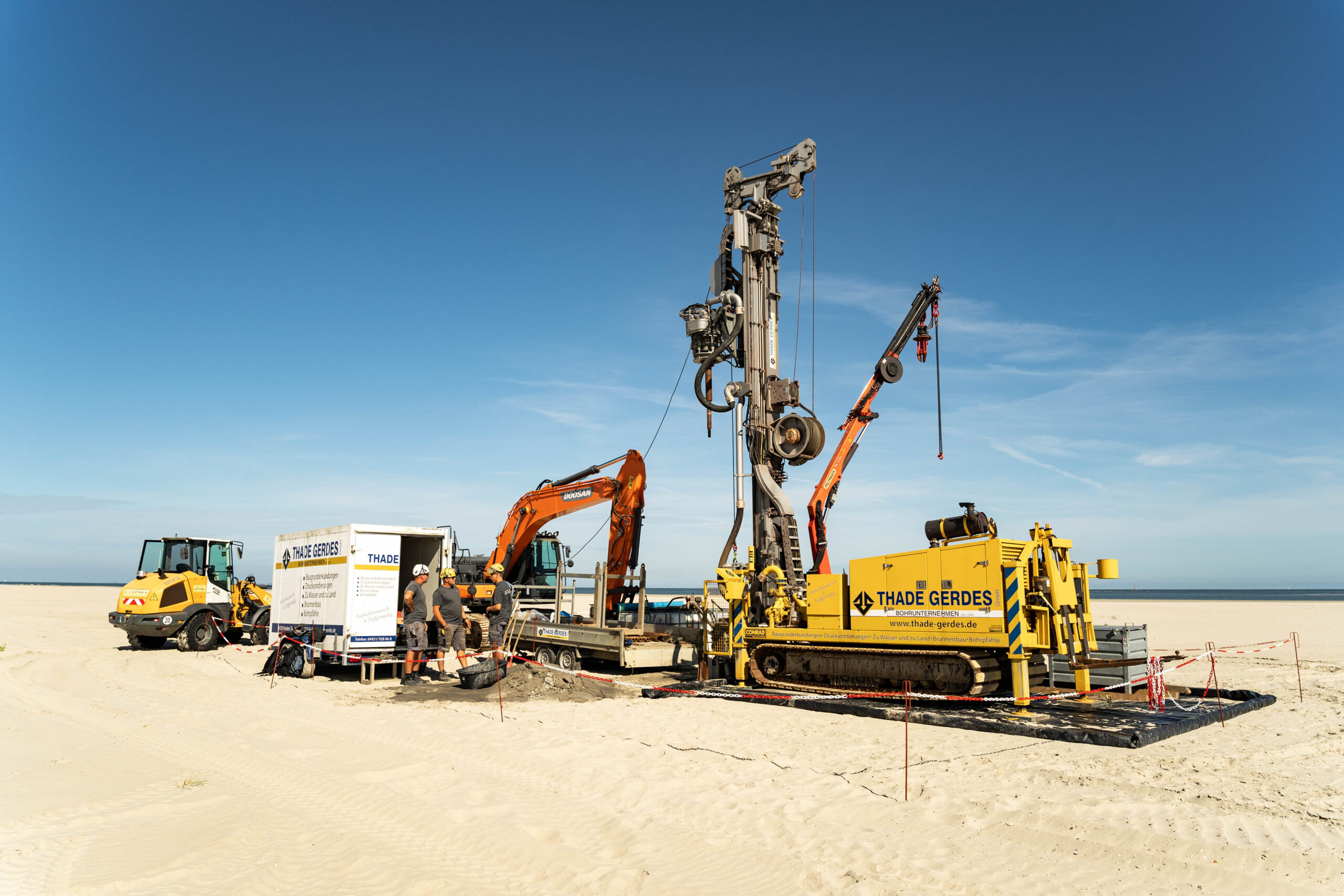
Drilling is a widely used method for collecting deeper soil samples and assessing the geological structure of the building site. In this technique, a drilling rig is used to drill a hole into the ground to collect samples from various depths. These samples provide valuable information about stability, bearing capacity, and potential challenges—such as whether environmental toxins are present in the soil.
3.
Small-diameter drilling
In this specific method, soil samples are collected using a small pile driver. This technique is particularly suitable for smaller construction projects or areas where access for heavy drilling equipment is limited. The soil samples collected are classified according to geological type and, if necessary, analyzed to determine the soil types and bearing capacity more precisely.
4.
Pile Driving Tests
This technique is used to quickly determine the bearing capacity of the soil. It involves driving a probe into the ground to measure the resistance. This allows conclusions to be drawn about the soil structure and strength. This method is particularly helpful in areas where a rapid assessment of soil conditions is required and the soil in question tends to be firm.
5.
Geophysical Surveys
Geophysical surveys are used for non-invasive assessment of the subsoil. Physical measurements such as seismic waves, magnetism, or electrical resistivity are used to determine the properties of the soil. They are particularly useful for conducting large-scale site investigations without having to disturb the ground. They are especially well-suited as a supplement to drilling and cone penetration tests.
6.
Pressure Soundings
In a cone penetration test, an electronic measuring instrument is pushed into the ground to measure the penetration resistance and stratigraphic conditions. This method provides quick and cost-effective information about soil strength at various depths and is particularly helpful in determining soil bearing capacity. The results help determine and clarify the type and depth of the necessary foundations.
7.
Plate Compression Tests
Plate load tests are used to determine the bearing capacity of the soil under compressive loading. In this test, a flat plate is placed on the ground and loaded with controlled weights. By measuring the deformation of the soil under pressure, conclusions can be drawn about the bearing capacity of the subsoil and its tendency to settle. This method is particularly important in areas with soft soil or when planning transportation routes.
8.
Moisture Content and Consistency Tests
In addition to the methods mentioned above, the soil’s moisture content is often determined using methods such as consistency tests. These tests provide information on how the soil behaves under different moisture conditions. Such tests are essential, particularly in areas with high groundwater levels or in regions prone to flooding, for evaluating the effects of moisture content on the foundation.
Each method of soil investigation has its own specific benefits. Often, a combination of these methods is used to obtain the most complete picture possible of the soil. The choice of the right investigation technique depends on the geological conditions, the requirements of the construction project, and the budget. A thorough site investigation ensures that the foundation meets the necessary requirements and that the structure remains stable and safe.
Legal Considerations: Is a Site Investigation Required?
Unlike in many neighboring countries, there is no general legal requirement in Germany for building owners to conduct a site investigation. However, it is highly recommended and is required by most building authorities as a prerequisite for issuing building permits. Even for smaller construction projects, the survey provides valuable information that is crucial for selecting the right foundation technique and ensuring the building’s long-term stability.
Legal Requirements and Recommendations for Site Investigations
For certain projects, a site investigation may be mandatory due to safety regulations and building codes. This includes the construction of:
- High-rise buildings
- Bridges
- Structures in high-risk areas (such as flood zones)
DIN EN 1995-1-1 (formerly DIN 4020—Site Investigation for Building Construction) stipulates that the soil conditions must be thoroughly examined before construction begins.
The building codes of the individual federal states also frequently require that a geotechnical report be submitted for certain construction projects. This ensures that the soil provides the necessary bearing capacity and that there are no unforeseen risks to the structure.
In this context, reference is often made to DIN 18300 (Technical Rules for the Performance of Site Investigations), which sets forth detailed requirements for conducting and documenting the investigation.
The Importance of a Site Investigation Report in the Context of Permitting Procedures
The soil investigation report plays a crucial role in the permitting process. It serves to ensure compliance with structural engineering requirements. It is also an important document for the authorities to use in assessing the feasibility of the planned construction project.
A soil survey is particularly important for projects that have a significant impact on the public or are located in areas with challenging soil conditions. These include, for example, sloped sites, floodplains, or situations where the building site is located near bodies of water.
A complete and properly prepared geotechnical report demonstrates to the authorities that the building owner has conducted all necessary geotechnical tests to ensure the safety of the building. In many cases, the report is part of the application documents for a building permit and is reviewed by the building authorities.
⚠️ If a proper inspection is not conducted or the required standards are not met, approval may be delayed or even denied.
Furthermore, the site investigation report also has legal significance. If damage to the building occurs later due to incorrect or inadequate foundation decisions, the site investigation report can prove that the building owner took the necessary precautions. It protects the building owner from potential liability claims and ensures that he has fulfilled his obligations under the building code.
Cost of a Site Investigation: Why It's Worth It for Your Construction Project
The cost of a site investigation is a small but crucial part of the overall construction process. Many builders are tempted to skip this investigation or opt for a simplified version. But be careful: This can lead to much higher costs in the long run.
A thorough site investigation ensures that the building’s foundation is optimally adapted to the geological conditions. It also minimizes the risk of unforeseen problems arising during the construction process.
Breakdown of the Typical Costs of a Site Investigation
The cost of a site investigation depends on various factors, such as the size of the construction project, the type of terrain, and the complexity of the required investigations. In general, a site investigation can be divided into three main categories:
Preparation and Planning | Conducting the Study | Laboratory Analysis and Report Preparation |
|
|
|
| Cost: 500–1,500 EUR | Cost: 1,500–5,000 EUR | Cost: 500–2,000 EUR |
Cost Comparison: Potential Repair Costs If an Inspection Is Not Performed
Although the initial costs of a site investigation may seem high at first, it is crucial to consider them in light of the potential repair costs. Without such an investigation, these costs can quickly become significantly higher due to unforeseen problems such as settlement, water damage, or improper foundation techniques. The consequences of an inadequately analyzed building site can thus result in massive follow-up costs.
Structural damage | Water Damage | Increased construction costs due to retroactive modifications | Legal and insurance-related issues |
|
|
|
|
| Renovation costs: 30,000–150,000 EUR | Renovation costs: 25,000–50,000 EUR | Renovation costs: 30,000–250,000 EUR | Costs: up to 50,000 EUR |
Here are 7 risks you face if you skip the soil investigation
- Incorrect Installation Technique
If there is a lack of knowledge about the geotechnical properties of the soil, the wrong foundation method may be chosen. If a builder opts for a shallow foundation even though the soil is unsuitable for this technique, the building may settle or become crooked. A deep foundation or pile foundation may be necessary to ensure stability. If this need is not recognized, the costs of subsequent corrections will increase significantly.
- Hidden Environmental Hazards and Contamination
A serious problem that is often overlooked is the risk of soil contamination. Without a thorough site investigation, environmental toxins such as heavy metals, solvents, or chemical waste may remain undetected in the soil. These contaminants pose a threat not only to the environment but also to the health of the future building’s occupants. Remediating contaminated soil is expensive, time-consuming, and can lead to significant construction delays.
- Unstable Foundations and Settlement
The most common risk associated with failing to conduct a soil investigation is insufficient bearing capacity of the soil. If the soil is not firm enough to support the weight of the building, settlement can occur. This means that the building sinks unevenly, which can lead to cracks in the walls, warped doors and windows, or even collapse. This risk is particularly high in areas with soft soil.
- Water Damage and Flooding
Without a site investigation, the building owner cannot know whether the building is located in an area with a high water table or a risk of flooding. Without such a survey, the building site could become unstable if the water level in the ground rises. This can lead to foundation erosion, mold growth, and long-term structural damage. Water intrusion can be particularly problematic and very costly, especially in underground parking garages or basements.
- High unforeseen costs
Another serious risk is the occurrence of unforeseen costs. If problems with the building site arise during the construction process—such as undetected water infiltration, soft soil, or insufficient bearing capacity—expensive corrective measures may be required. In some cases, it may even be necessary to demolish parts of the structure and carry out extensive repairs, which can significantly increase the total cost.
- Delays in the construction process
If soil-related problems are discovered only during construction, they can lead to significant delays, as new measures must suddenly be taken. These delays not only affect the timeline but can also result in a loss of resources and higher construction costs.
- Legal and Insurance-Related Issues
Failure to conduct a site investigation can have serious legal consequences. If problems with the building arise later—whether during a sale or in a legal dispute—the builder could be held liable for the defects. If it can be proven that an adequate site investigation was not conducted, the builder must cover the resulting damages and repair costs. Insurers also often refuse to pay in the event of a claim.
Avoid these kinds of risks and take advantage of the benefits of a site investigation! Are you still looking for an expert for your civil engineering project? Then schedule your free, no-obligation initial consultation with Thade Gerdes.

An Overview of the Benefits of Working with Thade Gerdes
✔ Over 125 Years of Expertise in Civil Engineering
With our many years of experience, we know exactly how to carry out your construction project safely and efficiently.
✔ Minimal Noise Emissions
Thanks to state-of-the-art drilling techniques, we ensure that deep foundation work is carried out quietly and without vibrations.
✔ A Wide Range of Services—Both on Land and in Water
Our services range from comprehensive soil investigations to deep foundations—both on land and in bodies of water.
✔ Quick Project Launch
With our experienced team, we ensure that your project gets off to a quick start. We coordinate every step, from approval to resource planning.
✔ Full Cost Transparency
Thanks to our clear pricing structure, you always know exactly what services you’re getting, without having to worry about unexpected additional costs.
✔ Reliable, on-time execution
Our project managers ensure that all deadlines are met—through structured and reliable execution.
✔ Sustainable Practices
We place great importance on protecting the environment and resources and comply with all relevant regulations to safeguard the soil and groundwater. In addition, we are certified as well contractors under DVGW W120-1 and are therefore authorized to work in and with groundwater.
✔ Personal Support
Your personal contact person is available to answer your questions and will keep you regularly updated on the project’s progress.
✔ Professional execution for private and public projects
Whether private or public—we always deliver reliable results on time.
Take advantage of the benefits Thade Gerdes has to offer and take advantage of your free, no-obligation initial consultation!
Conclusion: Your site investigation is an essential step in a long-lasting construction project
A site investigation helps determine the appropriate foundation method. It also minimizes potential risks and saves costs by identifying problems early on. From structural damage to legal and insurance-related issues—the risks of not conducting an investigation can quickly lead to significant additional costs.
By choosing an experienced provider and conducting a thorough investigation, you’ll protect your investment, ensure the building retains its value, and be better able to plan for future expansions or renovations. Take this opportunity to lay a solid foundation for your project and avoid costly mistakes—with a professional site investigation.
Get your construction project off to a safe start with Thade Gerdes and schedule your no-obligation, free initial consultation!
Frequently Asked Questions About Site Investigation
What is a soil investigation, and why is it important?
A site investigation assesses the geotechnical properties of the building site, such as bearing capacity and stability. It helps in selecting the appropriate foundation method and minimizes risks such as settlement and instability.
Is a site investigation required by law?
In Germany, there is no general requirement to conduct a site investigation. However, most building authorities require it for larger projects as a prerequisite for obtaining a building permit.
How much does a site investigation cost?
The cost varies depending on the scope of the project and the tests required. However, the cost is usually between 2,000 and 5,000 EUR.
What are the risks of not conducting a site investigation?
Without a survey, serious problems can arise, such as improper foundation construction, soil contamination, unstable foundations, or water damage. Later on, such problems can lead to high repair costs and delays.
What are the long-term benefits of a soil investigation?
A thorough investigation helps preserve the building’s value, minimizes repair costs, protects against unexpected expenses, and facilitates future renovations or expansions. Overall, a site investigation lays the foundation for a construction project that remains stable over the long term.

